Water is coming into the building right now
Call us and tell us where the water is showing up. We will get a crew on the roof to stop the leak and protect the space below.

Commercial Roofing Services
Get a measured commercial roof repair in Rochester with leak tracing, compatible materials, detail work and a record of what remains to monitor.
Call us and tell us where the water is showing up. We will get a crew on the roof to stop the leak and protect the space below.
We walk the roof, photograph what we find and give you a written scope with repair options before any work starts.
Rochester, MN
The repair path can extend beyond the ceiling stain. We map the affected interior zone, follow the likely drainage path across the membrane and inspect the seam, curb and outlet before deciding where sound material begins. The April 17, 2026 weather log lists 1.5-inch hail in northwest Rochester; that regional report prompts an address-level inspection but does not establish that this roof sustained damage.
Our repair scope identifies the failure, compatible materials, repair boundary and any nearby conditions that could reopen the detail. The South Broadway Business Center sits along a commercial corridor, while Downtown Rochester includes medical, office, retail and civic uses with different access patterns. We coordinate around the building’s operating needs, then photograph the completed work by roof section. When the leak source is not visible from the interior report, a focused leak investigation can locate the path before material is cut or applied.
Send the Rochester property address, the leak or roof concern, available system records and the portfolio contact. We will tie the inspection and repair record to the correct section and state what remains outside the work.
We check more than the spot directly over the stain. Water can travel beneath a membrane, along a seam or beside a penetration before it appears indoors. The roof walk includes nearby laps, fasteners, curb corners, metal transitions, drains and any prior repair. We mark the location of each observation on a roof sketch and photograph the detail at close range and in context. This makes it possible to distinguish a visible opening from a suspected route that still needs testing.
A repair boundary should stop at material that can accept a sound tie-in. We inspect the membrane around a puncture or split for brittleness, contamination and loss of adhesion, then check whether insulation below feels firm or shows moisture. At a medical office or a warehouse, we confirm the interior location with the facility contact while keeping that report separate from the roof evidence. If findings are broader than one detail, a condition inspection may be needed to map the remaining roof before the repair plan is approved.
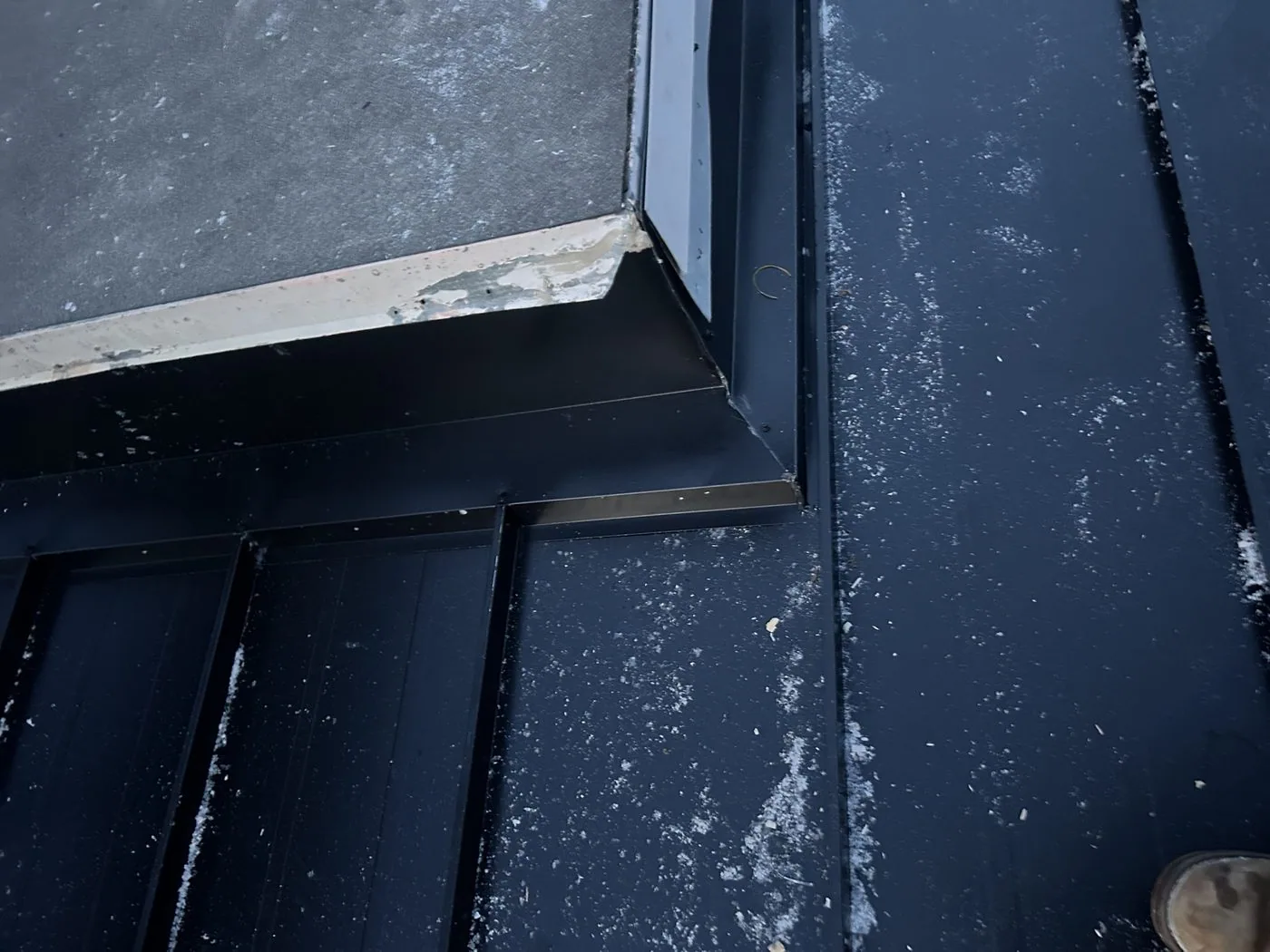
Each repair note describes the component and what failed: an open seam lap, loose termination bar, split flashing, puncture, failed sealant, blocked drain or separated metal transition. We avoid a vague label such as “patch leak” because it does not tell the owner what changed or where to check later. The written record pairs the description with a roof-section reference, photograph and repair material. Where the exact system cannot be confirmed visually, we state what information is needed to select a compatible product.
Rochester's major corridors and downtown include retail, service, hospitality and office uses. A multi-tenant property therefore benefits from repair notes that distinguish roof sections and interior areas, instead of merging several calls into one ticket. At South Broadway Business Center, we verify the property's roof system and map each repair to its section. The same discipline helps owners compare work at separate sites and keep a useful roof condition record for future maintenance.
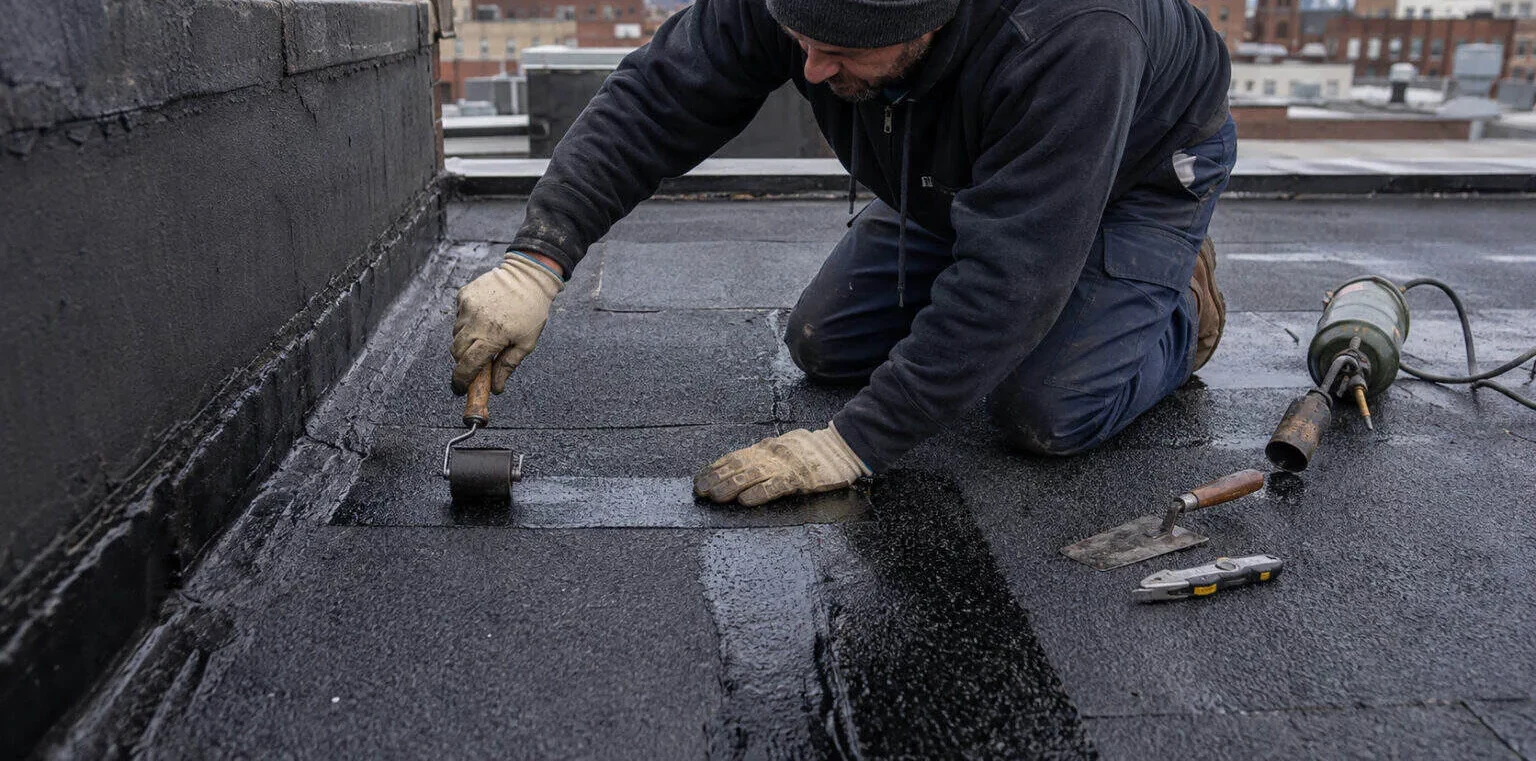
Before repair material is installed, we prepare the area to the requirements of the selected system. That can include removing loose material, cleaning the surface, drying the substrate and confirming the membrane type. A patch must extend onto sound material and secure the full edge; a bead of sealant across a moving seam is not a substitute for rebuilding the detail. At a curb or wall, flashing height and termination matter as much as the field repair.
An open repair is also a chance to confirm that the drainage detail will remain serviceable. We clear only the obstruction included in the scope, inspect the bowl and surrounding membrane, and note whether a raised patch or damaged sump needs separate pricing. With Rochester’s 46.3-inch normal seasonal snowfall, the closeout should leave the outlet accessible for winter checks and show any unresolved elevation issue.
A local repair makes sense when the defect is bounded and the surrounding membrane can support a dependable tie-in. We recommend expanding the investigation when similar failures appear at separated details, moisture extends beyond the opening, or the material around the repair is no longer stable. A single repair should not be used to imply that the entire roof is sound. We report the observed area, test only when a result can change the recommendation and list any untested sections clearly.
Rochester’s April 17, 2026 weather entry documents 1.5-inch hail in the northwest part of the city. We use that reported area to frame an inspection question, then note any damage only where the named property’s roof provides evidence. If wind-related movement is present, a wind damage repair scope remains tied to the edge, flashing or membrane condition observed.
After the tie-in is complete, we photograph the repaired seam, curb or drain detail and label the roof section. The closeout note records material used, preparation performed, weather limitation if one affected the work, and any condition left outside the repair. This creates a baseline for the next walk. If water returns, the owner can compare the new location with the repair boundary and decide whether the original defect reopened or a separate route is involved.
For a Rochester property manager, the practical handoff is a clear address, named roof section, contact for interior access and date for follow-up. On a retail or medical-office property near Downtown Rochester, that detail also helps staff coordinate tenant communication and keep access routes clear. We can put the repaired area into a preventive schedule and flag details that need observation after snow or a significant storm. A repair is complete when the physical detail and its record agree, and the next decision has a known starting point.
Other services, systems and buildings that often come up alongside this work in Rochester.
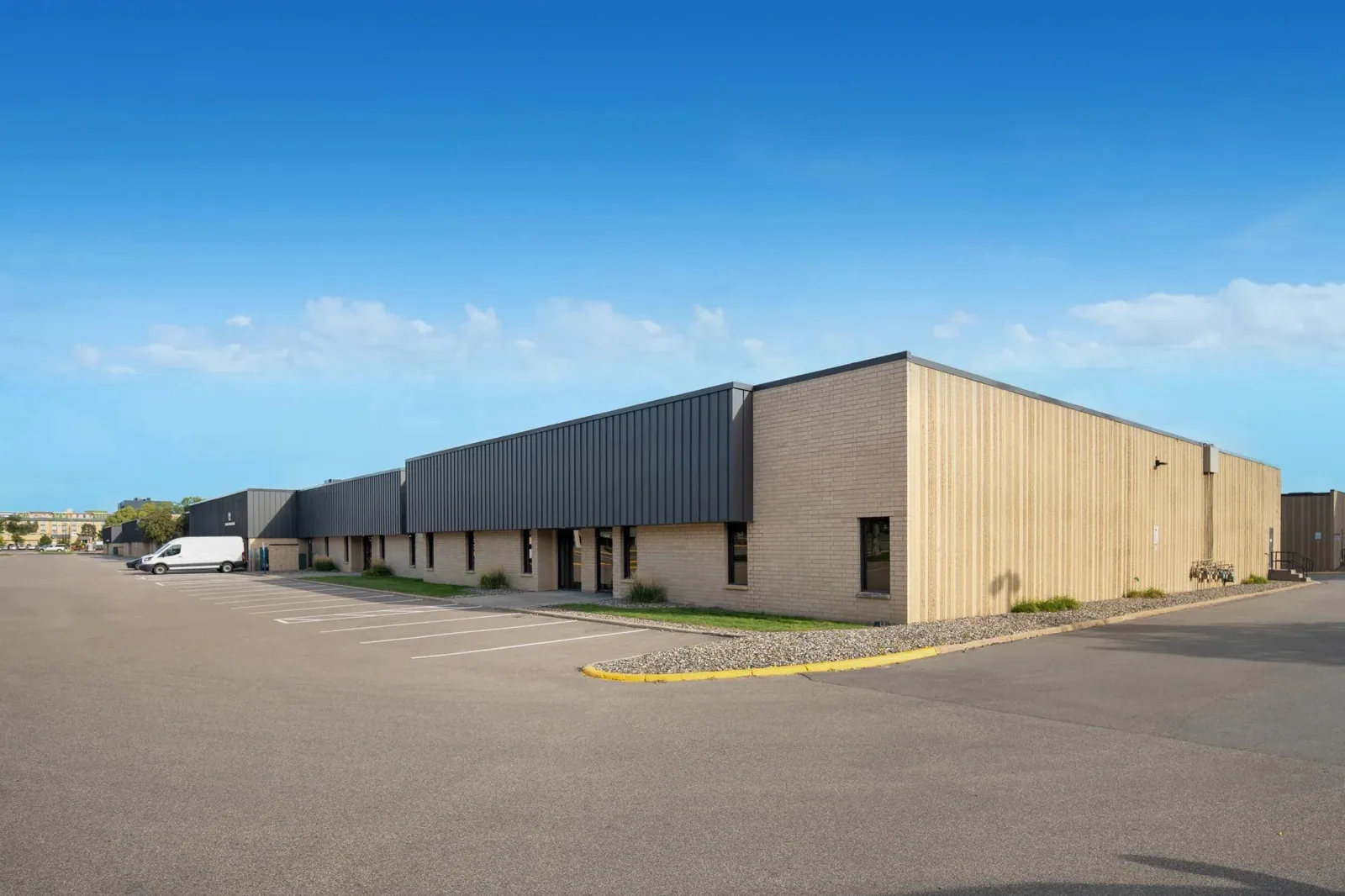
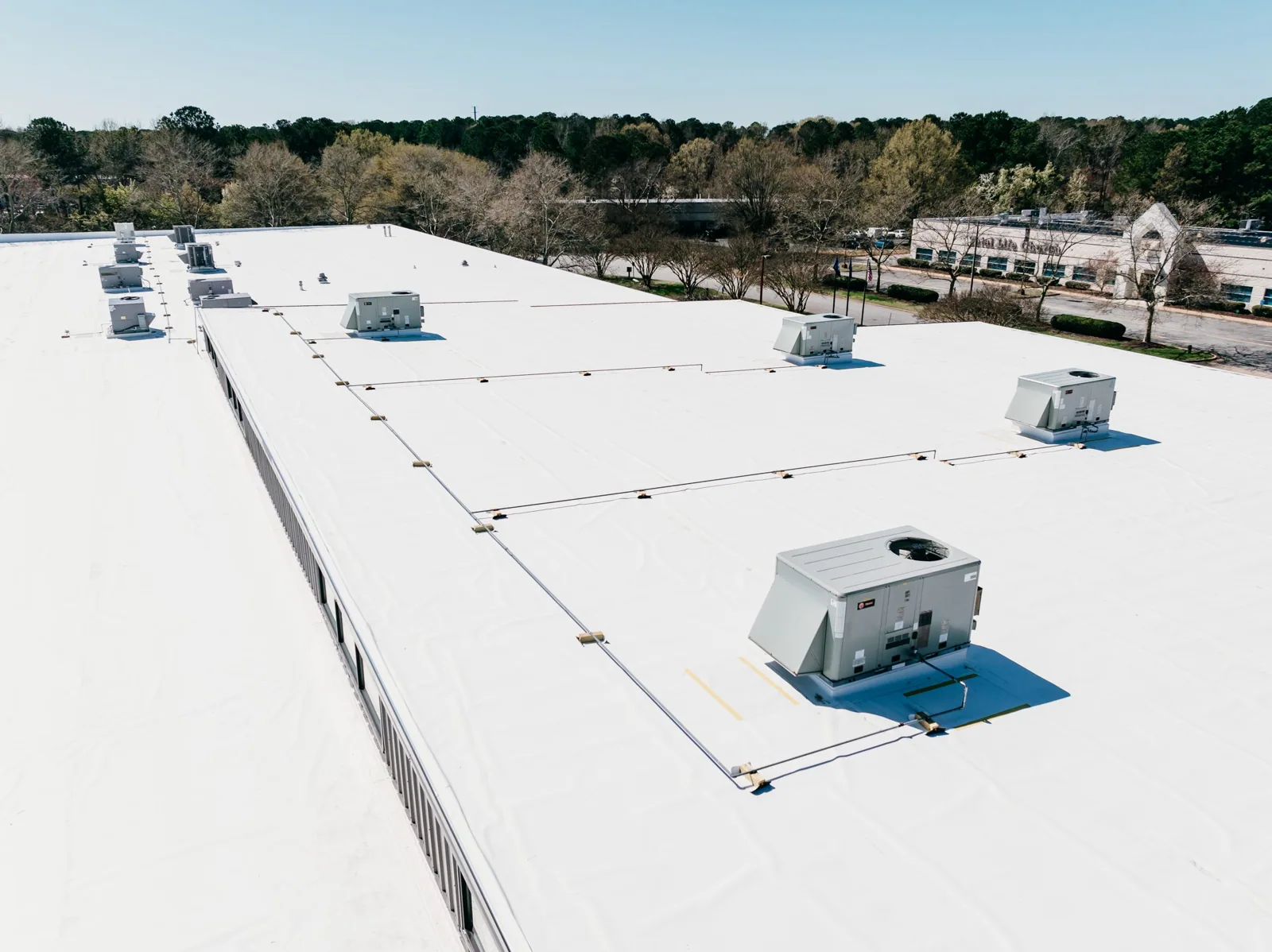
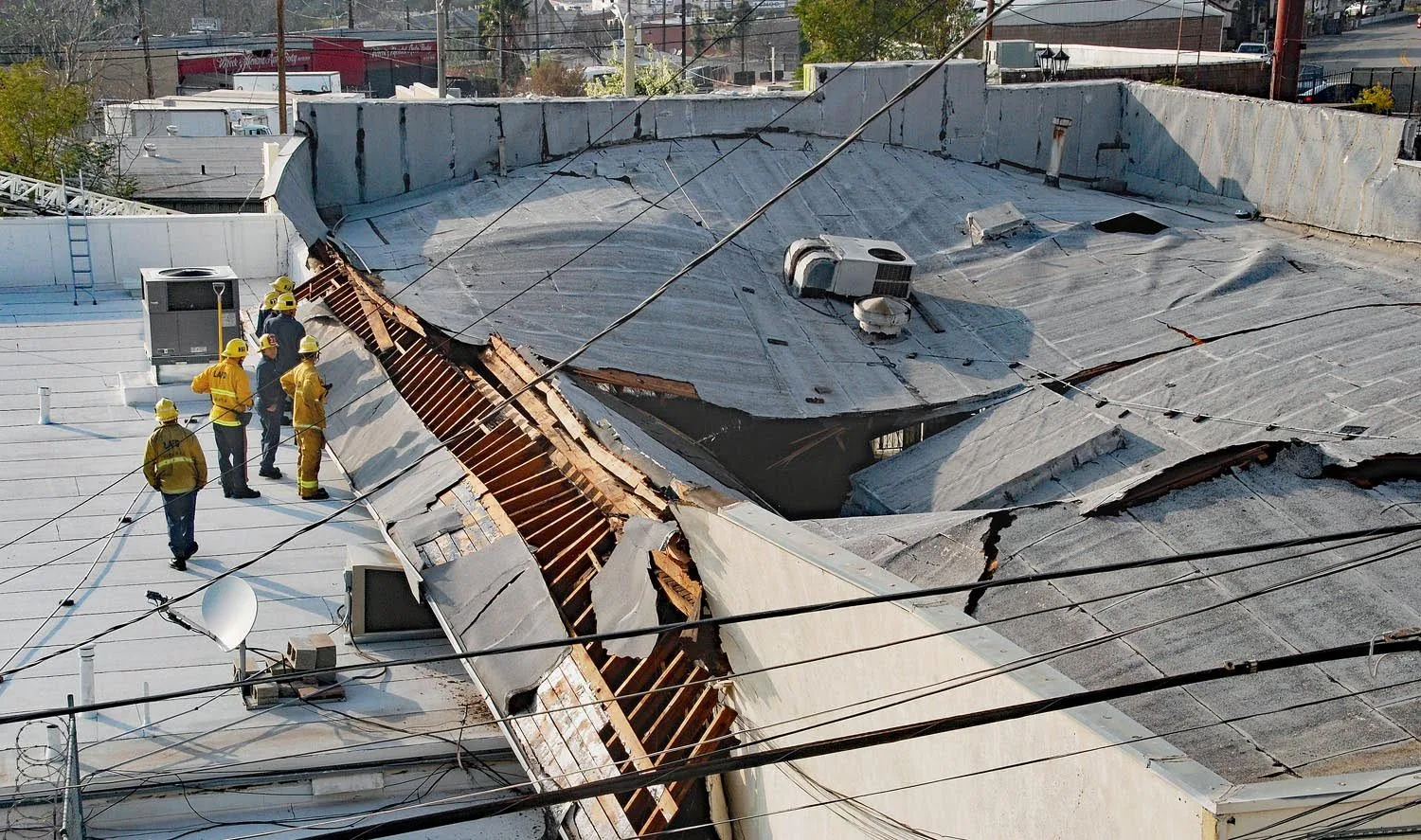

From distribution centers to clinics and schools, we roof the buildings Rochester depends on.
We can repair a localized defect when the surrounding material is sound and the water path supports that boundary. First we inspect nearby seams, penetrations and drainage because the ceiling stain may sit away from the roof opening. If the surrounding membrane is wet or unstable, we mark the wider area and show the owner the evidence before expanding the scope.
The report identifies the roof section, failed component, repair material, preparation and completed tie-in, with photographs that show the detail in context. It also records excluded or untested areas. That lets a facility manager compare later observations with the repair boundary rather than relying on a short work-order note.
No single weather report establishes the condition of a specific roof. The NWS recorded 1.5-inch hail in northwest Rochester on April 17, 2026. We inspect the property itself for observable impact, punctures or displaced details and record the location before recommending repair or further testing.
A larger inspection is appropriate when separated details fail, water appears in multiple areas, the membrane around a repair boundary is deteriorated, or moisture testing shows a wider condition. We list each finding and its location so the owner can compare a targeted repair with a broader roof plan.