Water is coming into the building right now
Call us and tell us where the water is showing up. We will get a crew on the roof to stop the leak and protect the space below.

Roof Systems
Inspect and repair commercial PVC roofing in Rochester, MN. We assess welded seams, chemical exposure, flashing transitions and drainage before setting scope.
Call us and tell us where the water is showing up. We will get a crew on the roof to stop the leak and protect the space below.
We walk the roof, photograph what we find and give you a written scope with repair options before any work starts.
Rochester, MN
A PVC field seam is a heat-welded joint, but a roof rarely fails in the open field alone. At a curb, drain, perimeter or walkway transition, sheet, flashing and attachment meet under different movement and exposure. We start by tracing those connections and recording the installed assembly. Rochester's winter cycle makes a dated look at laps and drainage useful, while the actual repair boundary comes from the roof in front of us.
Our visit ties photos to the address, roof section and detail. That distinction matters in downtown Rochester, where business, civic and medical uses share an active urban center, and at the Airport Business Park, which is part of an operating aviation campus. Discovery Square is a biomedical research, education and technology district. At specialized facilities, we confirm the roof material and operating limits with the property contact before setting the work sequence.
Share the Rochester property address, roof concern, PVC product or closeout records and the portfolio contact. We will tie the inspection to each roof section and provide a dated record of welds, transitions, tested areas and repair boundaries.
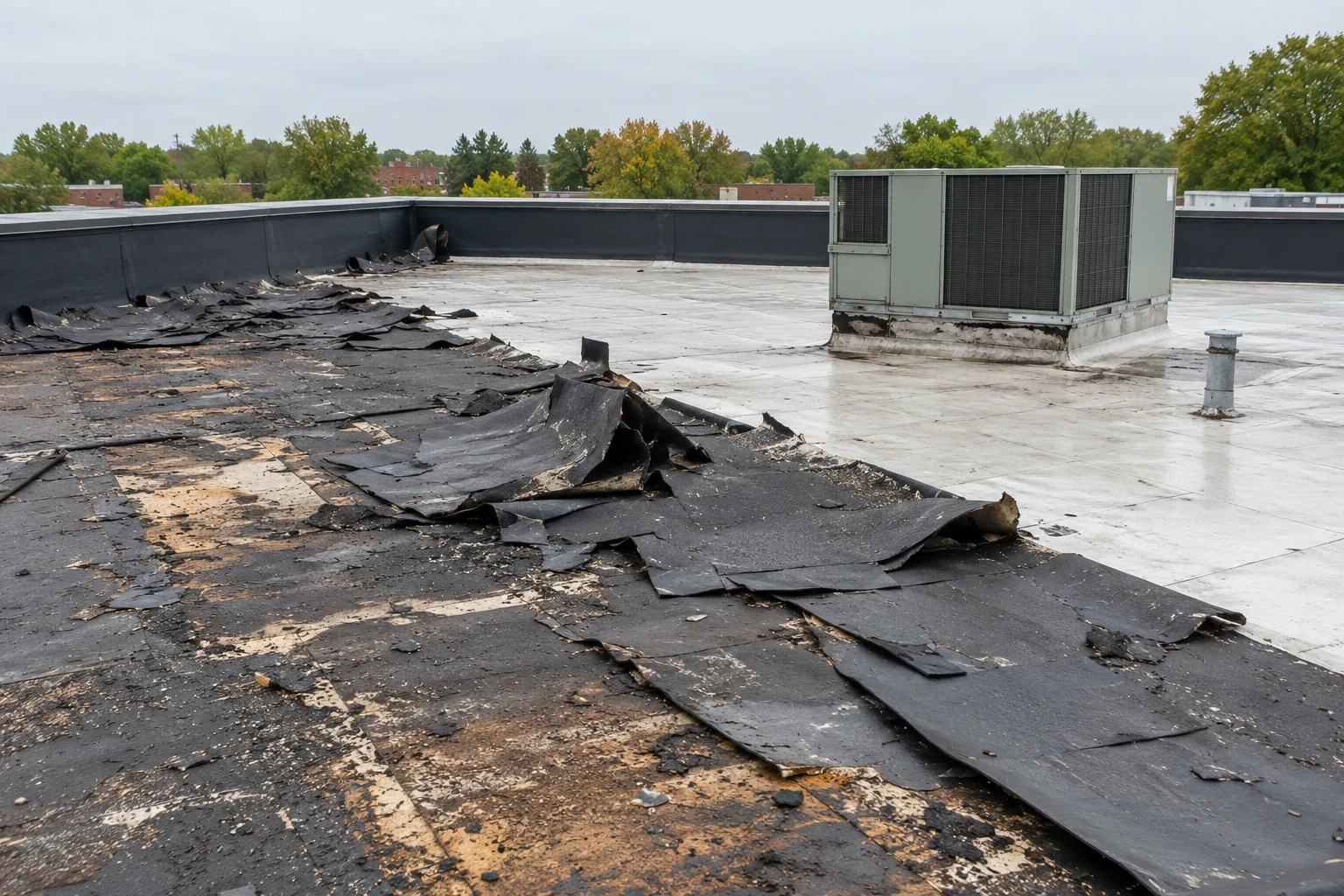
We examine PVC seams for weak fusion, open edges, wrinkles, contamination, prior patches and stress where the sheet turns up a wall. At a penetration curb, the field seam may meet flashing or a prefabricated boot; each connection needs a compatible, continuous water path. We probe carefully and note whether the membrane surface is clean and workable. A loose edge, a discolored area and a failed weld are different observations, so each gets its own image and location.
At drains, scuppers and overflow points, we check the membrane termination, clamping ring, bowl, strainer and nearby slope. Water marks can help identify a recurring low point, but they do not alone prove a blocked drain. We map the discharge route and record whether rooftop equipment or later trade work interrupts the membrane. A drainage detail inspection keeps outlet corrections separate from sheet repair, and a penetration flashing review addresses curbs and openings in their own scope.
PVC is selected in some settings for its resistance to certain oils and chemicals, but the roof history still matters. We ask what discharges or exhausts above the membrane, whether a process changed, and where grease, solvents or cleaning agents may contact the surface. The product and exposure need confirmation before choosing a repair method. Before selecting a repair detail, we confirm the membrane formulation and the actual process or chemical exposure at the property.
We also record prior repairs, walk pads, equipment supports, edge metal, cover board and any visible plate pattern. A patch applied over contamination can fail at its perimeter even if the weld is sound. Where hidden layers could change the recommendation, we define a test area, photograph the material sequence and close the opening. For portfolio tracking, a condition report by roof section preserves the difference between observed facts and unresolved questions.
Repair begins with cleaning and preparation appropriate to the membrane. The damaged area is cut back only as needed to reach material that can accept a sound weld. We fit a compatible patch with rounded corners and enough overlap to extend beyond the defect, then heat-weld the perimeter in controlled passes. A probe checks the finished edge after it cools. At a complex corner, the detail is formed so the weld does not leave a channel or a bridged void.
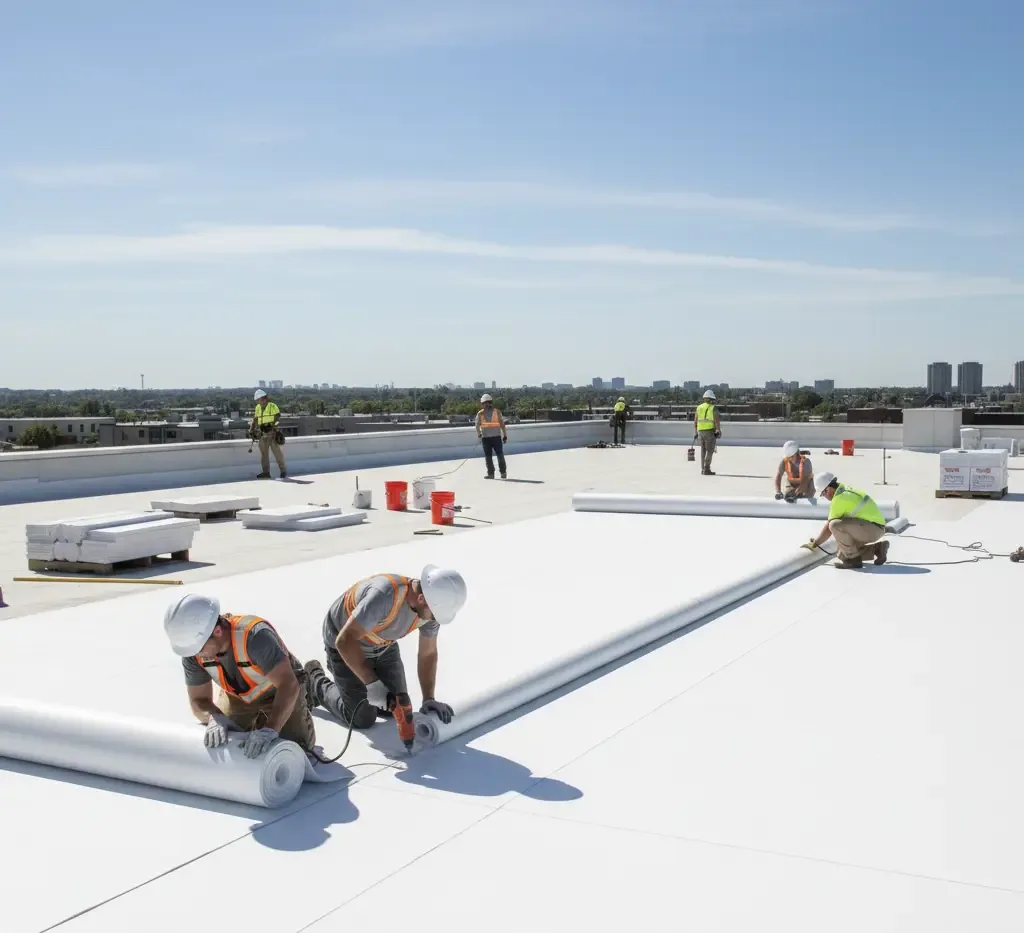
Temperature, wind, moisture, surface condition and access influence the work window. We protect the opening if conditions interrupt the sequence, and the closeout record shows the prepared area, completed weld and final probe. A larger project also needs a plan for sheet layout, attachment, perimeter securement, penetrations and daily tie-ins. The commercial repair scope can isolate a leak location, while replacement planning considers the full assembly and its termination details.
A building can contain more than one roof system after additions, repairs or phased capital work. We identify the boundary before blending details. PVC and TPO are both thermoplastic membranes that can be heat-welded, yet their formulation and accessory compatibility are not interchangeable assumptions. If records show an adjoining TPO membrane section or an KEE roof assembly, we verify the exact material and approved transition approach before connecting work across the line.
Rochester's normal seasonal snowfall is 46.3 inches, generally concentrated from December through March. Before winter, we review drains, edge conditions and accumulated debris at the property. The decision between repair, recover and replacement depends on moisture, attachment, remaining serviceable material, drainage elevation and scope of prior work. A recover assessment should document each of those conditions before another layer is considered.
Recurring maintenance checks repair perimeters, exposed welds, curb flashings, walkway transitions, strainers and perimeter metal. The visit record should state where a detail sits, what changed since the last inspection and whether follow-up testing is needed. We flag loose debris and trade damage separately from a membrane condition that needs a defined repair. A small observation becomes more useful when it is tied to a photograph, roof plan reference and portfolio date.
For an occupied office or a support facility, roof access and work hours affect sequencing. We coordinate entry, material staging and protection for the activities below, then keep the daily boundary weather-tight. Rochester's South Broadway corridor includes varied commercial uses and large parking areas, so visits to separate properties require their own access notes. A South Broadway property visit begins with its exact address. Our commercial crews can respond around the clock to urgent roof conditions; share the address, active leak location and known PVC records so we can set the right first inspection.
Other services, systems and buildings that often come up alongside this work in Rochester.
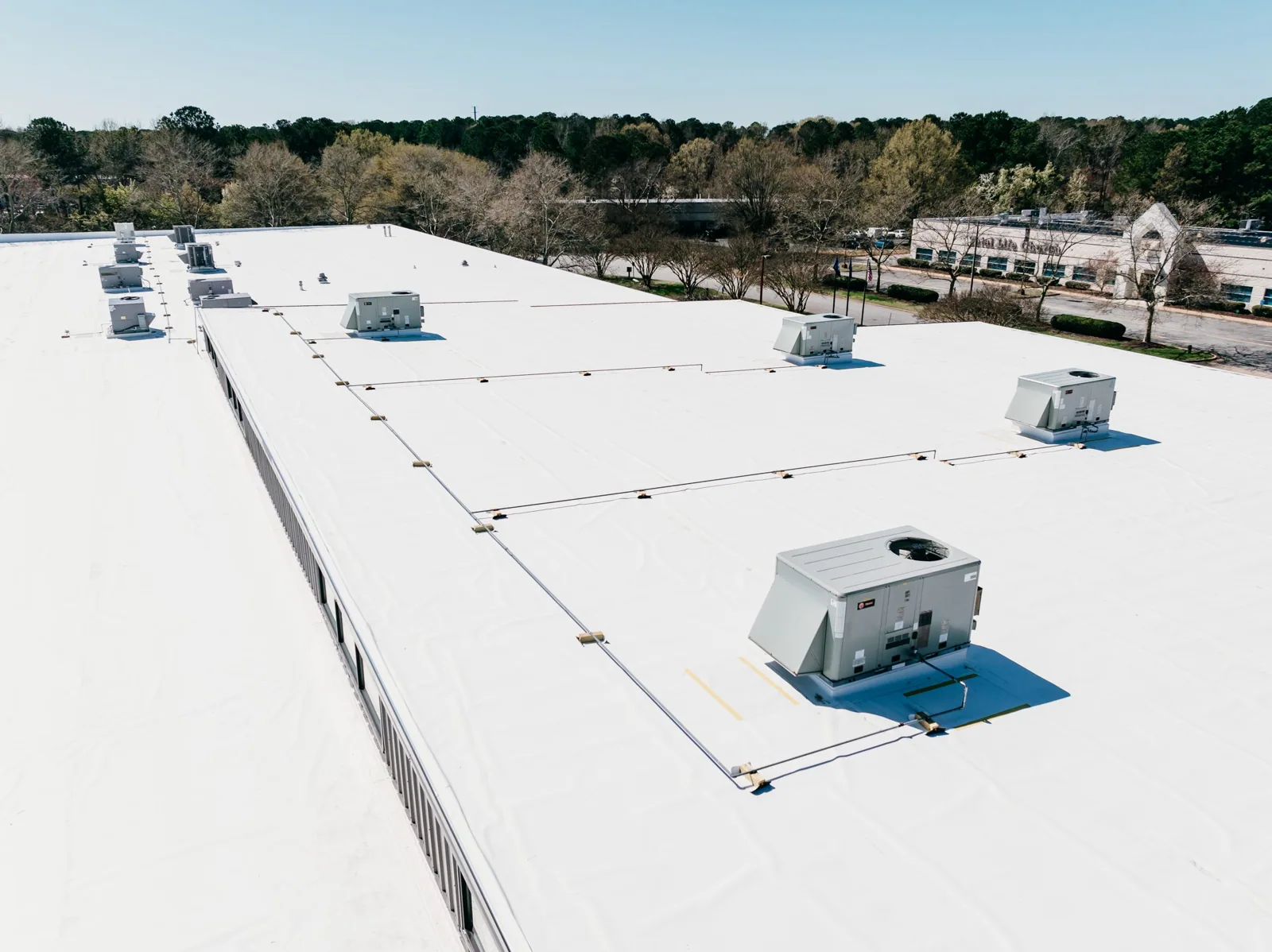
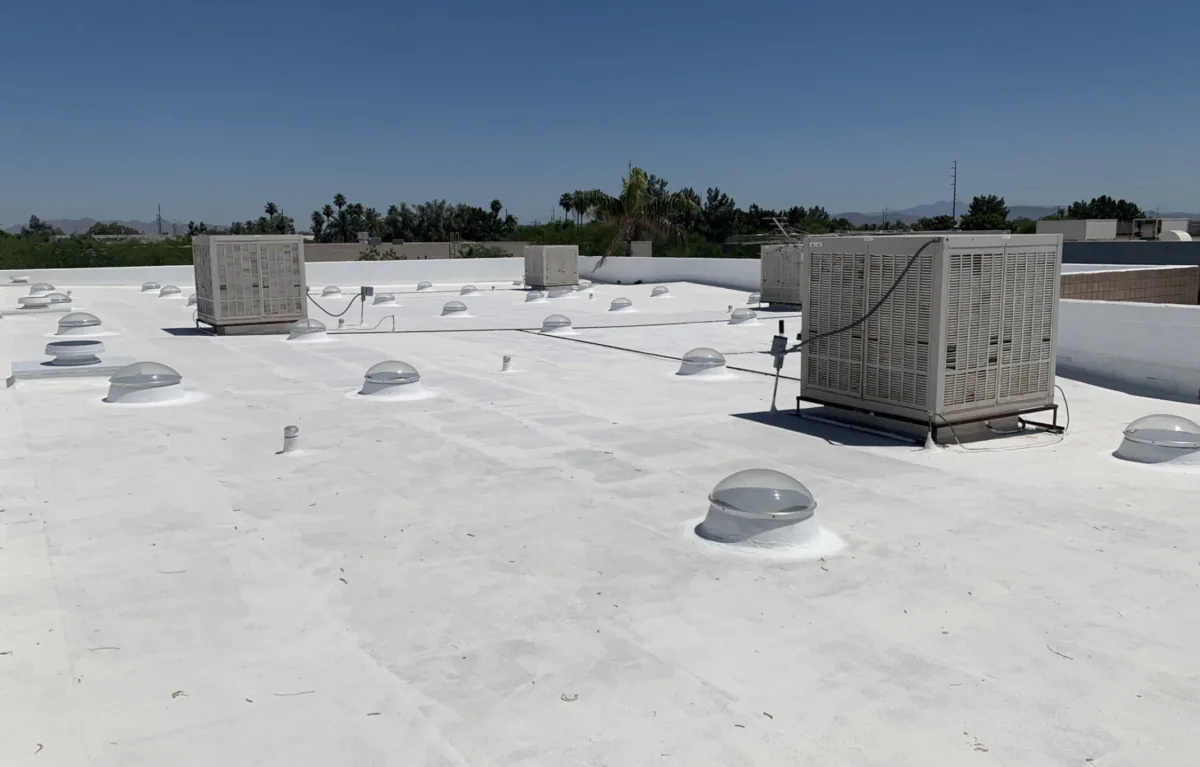
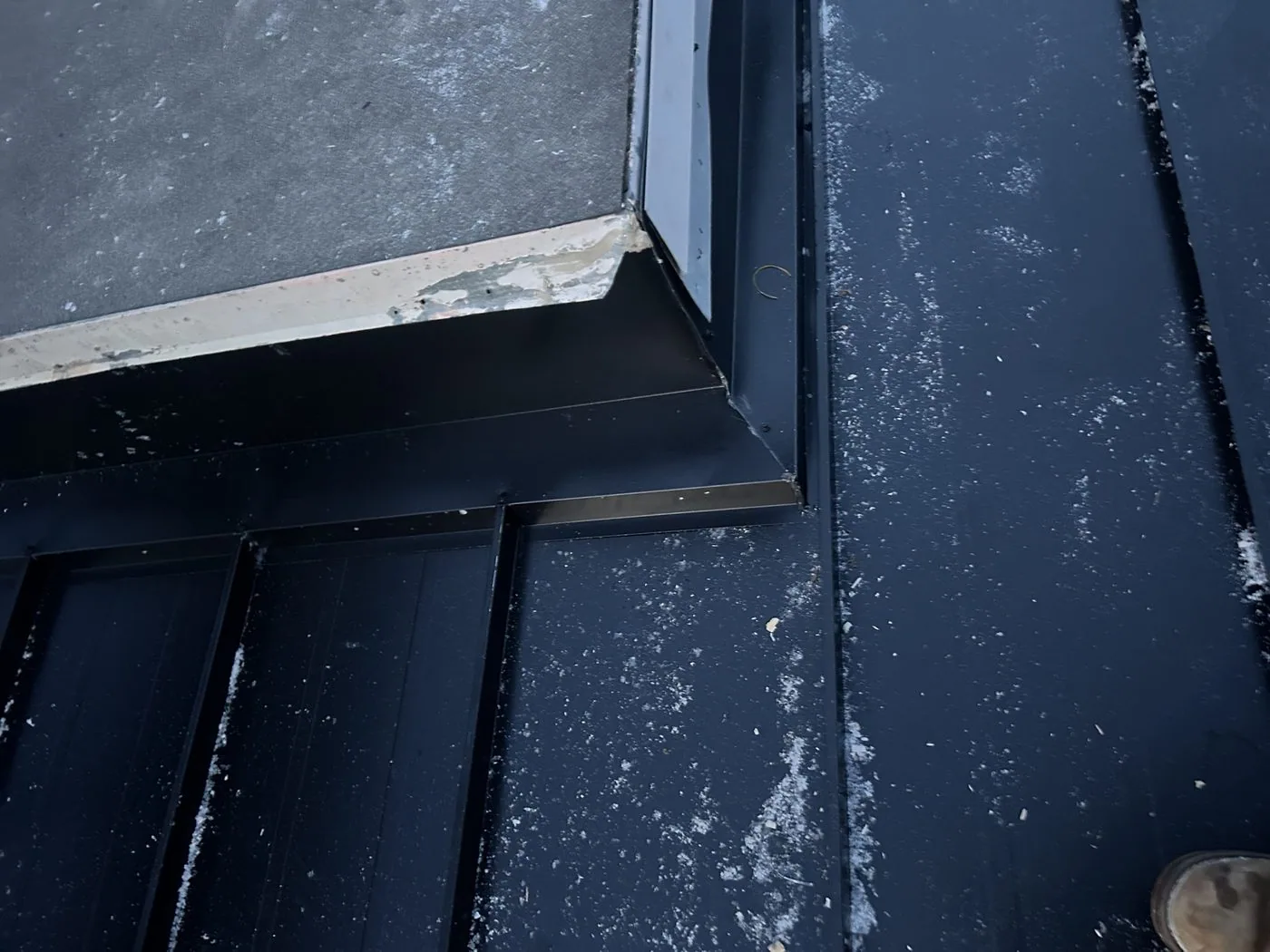
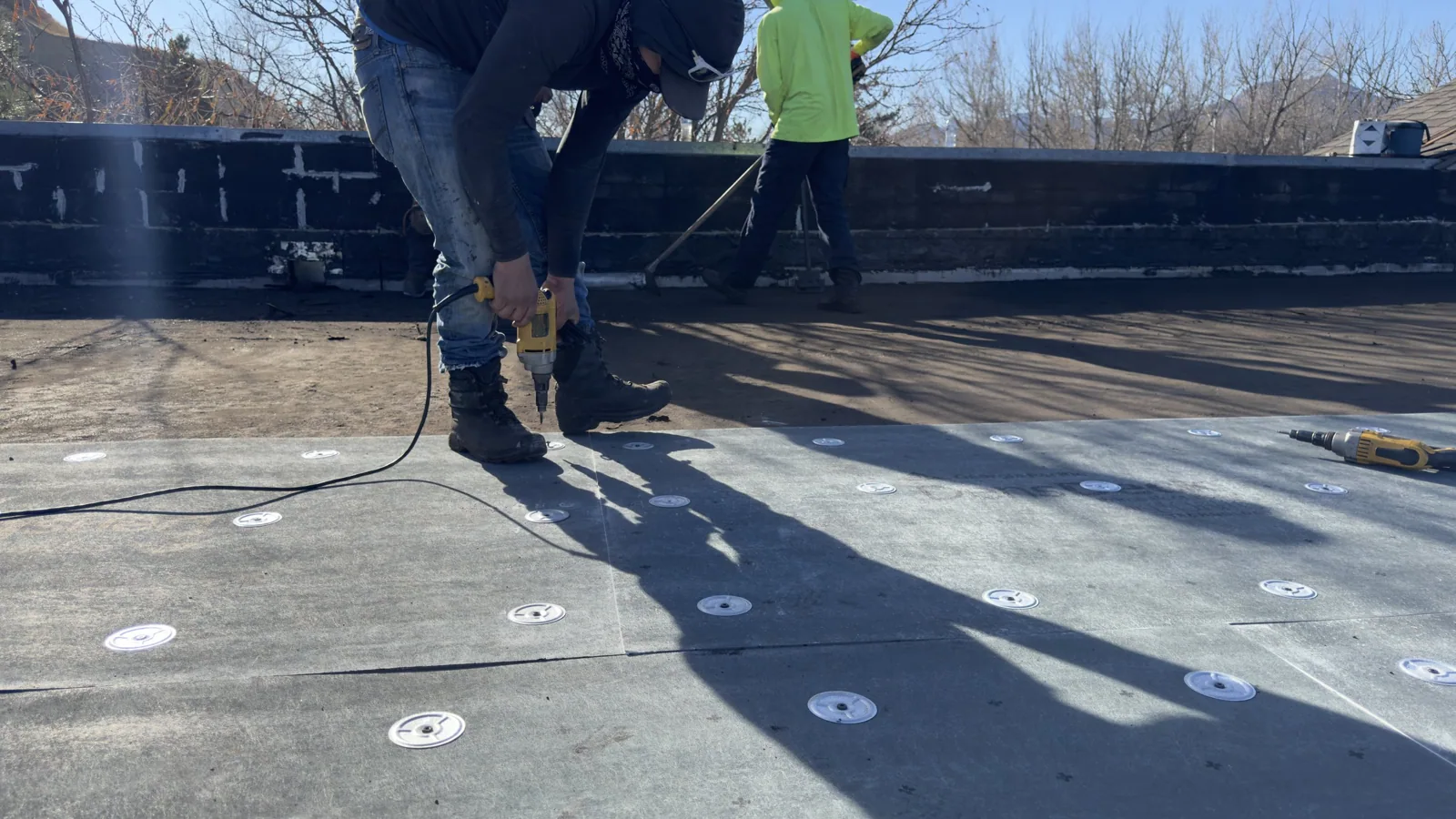

From distribution centers to clinics and schools, we roof the buildings Rochester depends on.
The surface has to be evaluated first. We clean a small area, check whether the sheet remains suitable for welding and confirm that the repair material matches the installed membrane. Weathering, contamination, prior coating or repeated patches can affect preparation. A test weld and probe can help establish whether a local repair is workable before a larger scope is priced.
The substance, concentration, contact pattern and length of exposure all matter. We document what is known about exhausts or process releases and inspect the affected area for visible change, seam condition and surface damage. Product records help identify the membrane formulation. If the exposure remains uncertain, the scope records that limit instead of assuming a standard patch will resolve it.
Replacement becomes a consideration when deterioration is widespread, moisture reaches multiple areas, attachment is compromised or repeated repairs no longer address the roof's condition. We inspect the field, edges, penetrations and hidden layers where a test can change the decision. The written comparison separates localized repair, recover eligibility and full replacement, with the evidence and open questions stated for each option.
Weather history sets inspection context; it does not prove damage at one address. Rochester's snowfall normal and documented hail reports inform seasonal timing, but we look for actual punctures, displaced details, open welds and drainage issues on the property. Any storm-related review identifies the roof section and photographs the observed condition, then recommends testing only where it may change scope.