Water is coming into the building right now
Call us and tell us where the water is showing up. We will get a crew on the roof to stop the leak and protect the space below.

Roof Systems
Repair and replace modified bitumen roofs in Rochester, MN. We assess plies, surfacing, flashings, drainage and moisture before setting the repair boundary.
Call us and tell us where the water is showing up. We will get a crew on the roof to stop the leak and protect the space below.
We walk the roof, photograph what we find and give you a written scope with repair options before any work starts.
Rochester, MN
A split at a modified bitumen lap can begin at a drain, curb or change in roof slope, then travel beneath the surface where it is harder to read. We follow the seam in both directions and inspect the layers that meet at the detail. Rochester's winter conditions make drainage and edge securement part of the same field record, while repair scope depends on the actual membrane, surfacing and substrate.
The roof plan is matched to the building before we open a repair. Rochester's downtown and major-road corridors include retail, office and service uses, while its industrial districts support larger-footprint manufacturing and storage. We confirm roof assembly and access at the property before planning work. We confirm the property, system and work window with records and a site inspection.
Send the Rochester property address, roof concern, available system or closeout records and portfolio contact. We will map the existing layers, inspect laps and flashings, and return a dated scope with tested areas and repair options.
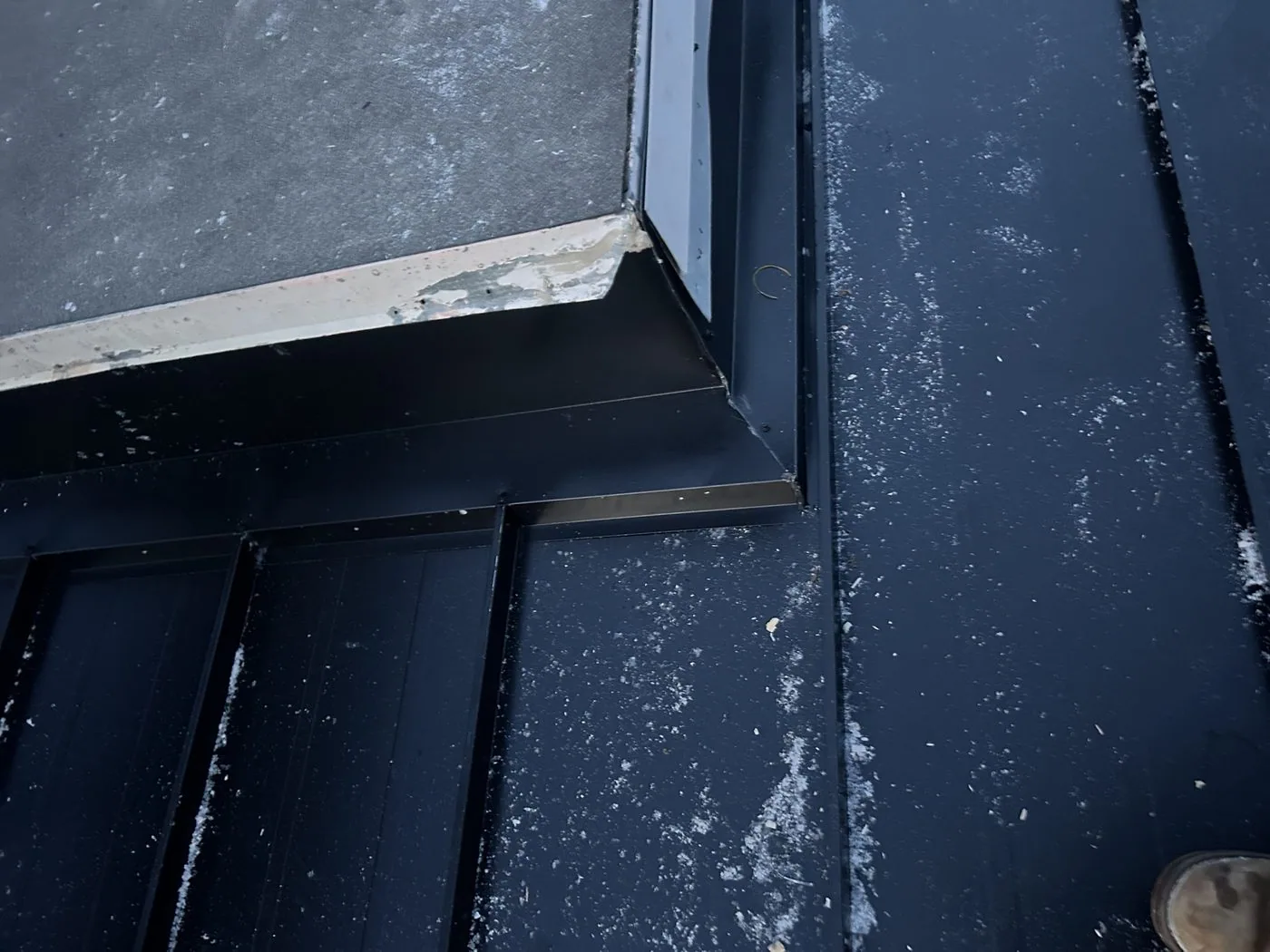
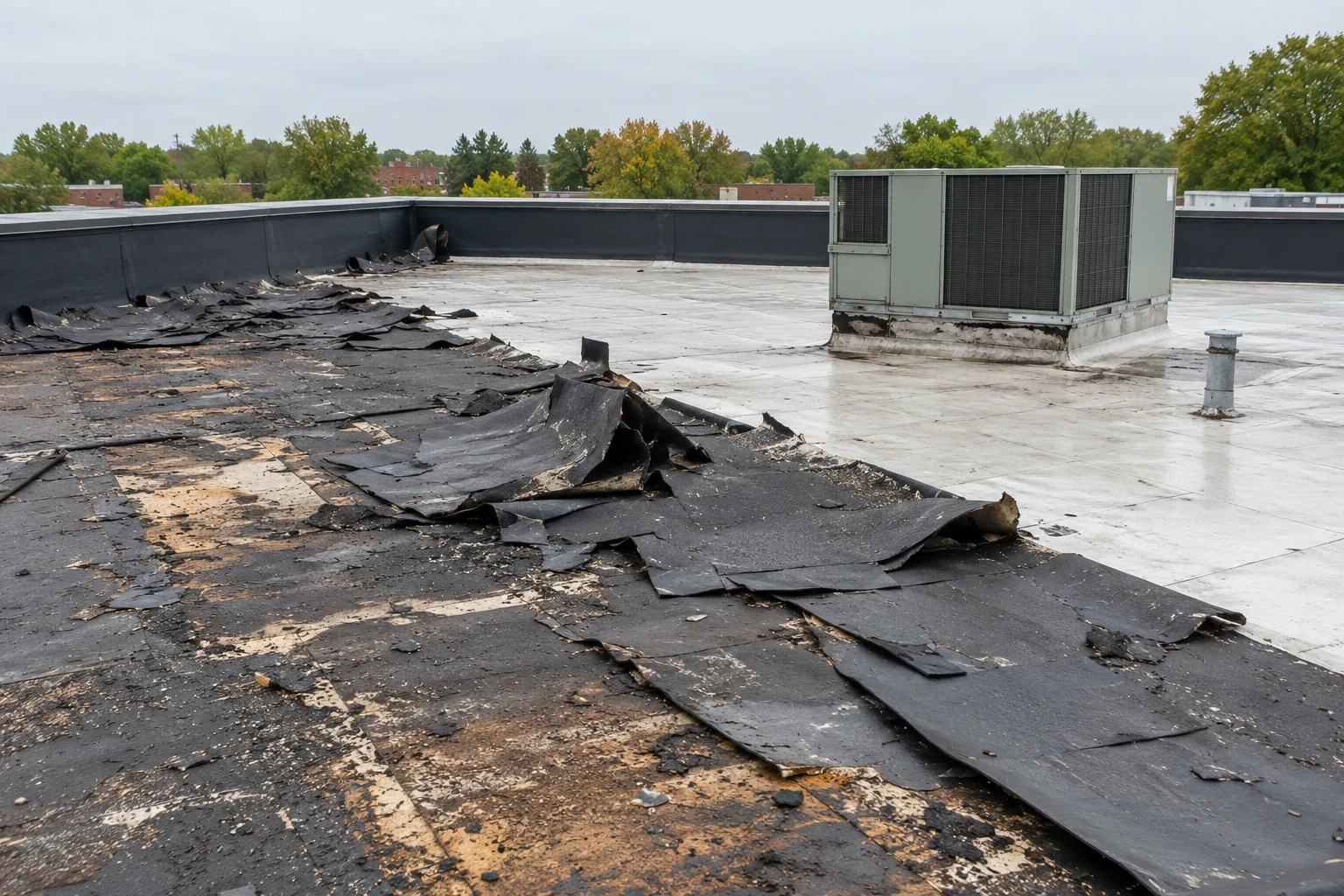
We look for open seams, blisters, fishmouths, exposed reinforcement, cracking, slippage and loss of surfacing. Mineral granules, coating or reflective surfacing can hide the top of a lap, so we identify the surface condition before selecting a repair. At a wall or curb, the flashing height, termination and counterflashing matter as much as the field. The report notes whether an observation is a confirmed opening, surface wear or a detail needing closer access.
Drain bowls, scuppers, crickets and low areas get a measured review. We trace water paths, look for sediment or debris and compare ponding evidence with the roof slope. If a leak appears at the ceiling below a wall, we inspect upslope details before assigning the entry point. A drain and overflow review records outlet conditions; we then compare slope, drainage and assembly condition to locate water that remains on the roof.
Modified bitumen systems may use SBS or APP modifiers and can be installed in multiple plies with different attachment methods. We identify what records confirm, then note visible evidence such as cap sheet, granule surfacing, base layers, flashings and prior coatings. A building addition may leave several assemblies on one roof. We map those transitions so a repair detail is not carried across a boundary without checking material and attachment.
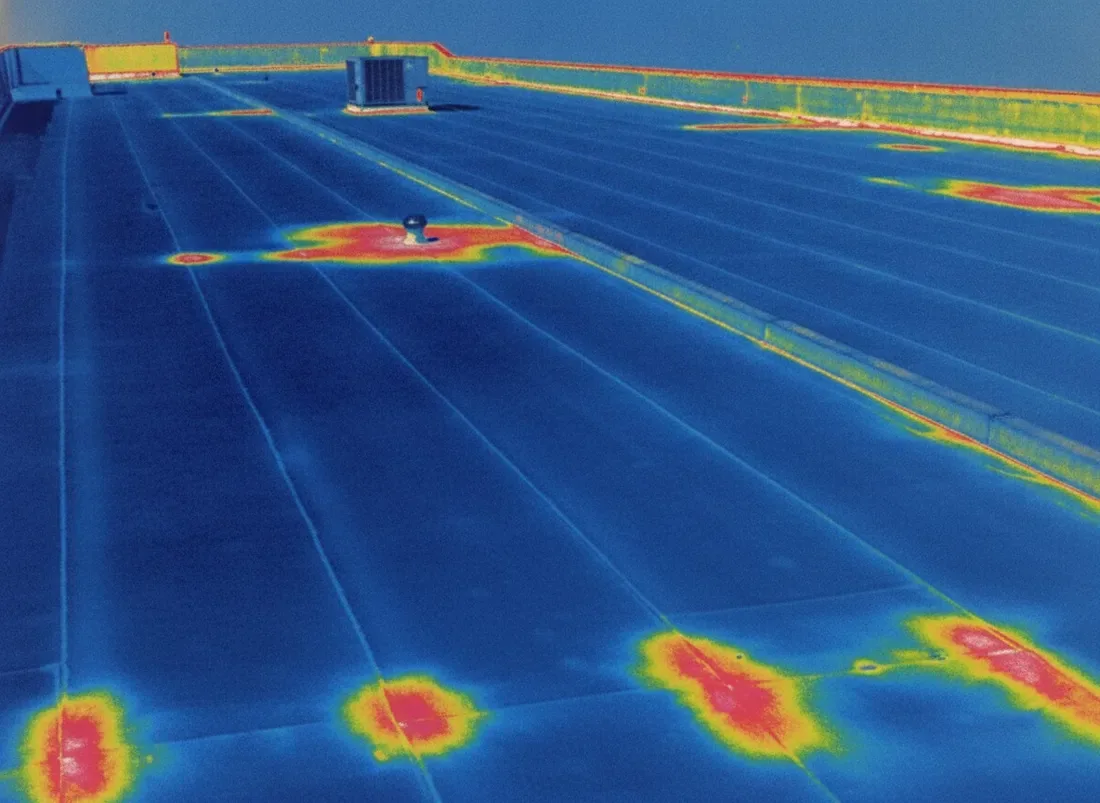
A blister or soft area can have more than one cause. Where the layers below might change the recommended work, we define a test area, record each layer and inspect for moisture, adhesion and substrate condition. The opening is closed with a compatible material sequence. A moisture survey can help select locations for verification, and the condition report states what was confirmed versus indicated by screening.
Repair begins with removing loose surfacing and unsound membrane around the defect, then preparing a dry, stable surface. The patch may use compatible bitumen membrane, reinforcement and surfacing, installed in a sequence suited to the existing system. A field patch alone will not correct loose base plies or a failed wall transition. At a drain or curb, the repair must continue into the detail with secure termination and a clear path for water.
Heat-applied work requires control of ignition sources, substrates, weather and nearby operations. Cold-applied or self-adhered methods have their own surface and temperature requirements. We select a method from the confirmed assembly and site conditions, then document tie-ins and final surfacing. Larger work needs clear daily closures and protection for occupied areas. A repair scope can address isolated damage, while replacement planning considers the full layer sequence, attachment and edge details.
A repair is strongest when the defect is bounded and nearby plies remain bonded and dry. Recurring leaks, widespread splits, wet insulation, saturated cover board or failing flashings can extend beyond the visible opening. We compare a localized patch with broader replacement after checking test results, roof age records where available, drainage, penetrations and perimeter conditions. A recover option also needs layer count, structural capacity, roof heights and code review. Where a property has an older built-up section beside a standing seam metal roof, we map each assembly and plan its transition separately.
Rochester's normal seasonal snowfall is 46.3 inches, with most of the usual accumulation from December through March. Before winter, we review modified bitumen laps, drains and edge details at the property and document observed conditions. Downtown Waterfront sits along the Zumbro River and downtown street network; a roof there still needs its own photos and drainage map. An inspection in the Downtown Waterfront district records actual conditions instead of inferring them from location.
Maintenance checks the repaired perimeter, flashing laps, drain bowls, surfacing loss and places where rooftop trades have cut or fastened through the roof. We compare the current image with prior photographs from the same section, not simply with a building-level summary. The log records the material installed, the repair dimensions and any remaining observation. Those details help the owner plan the next visit without treating a local repair as a warranty for unrelated roof areas.
For portfolio scheduling, pair weather-sensitive work with a defined access and staging plan. A preventive maintenance program can retain recurring observations and next inspection dates. The nearby Discovery Square district is designated for biomedical research, education and technology innovation, while commercial properties along South Broadway have their own operating patterns. Each gets its own roof plan and work sequence. Emergency commercial roof response is available around the clock; give us the address, active leak or damage, roof records and on-site contact to set the first step.
Other services, systems and buildings that often come up alongside this work in Rochester.
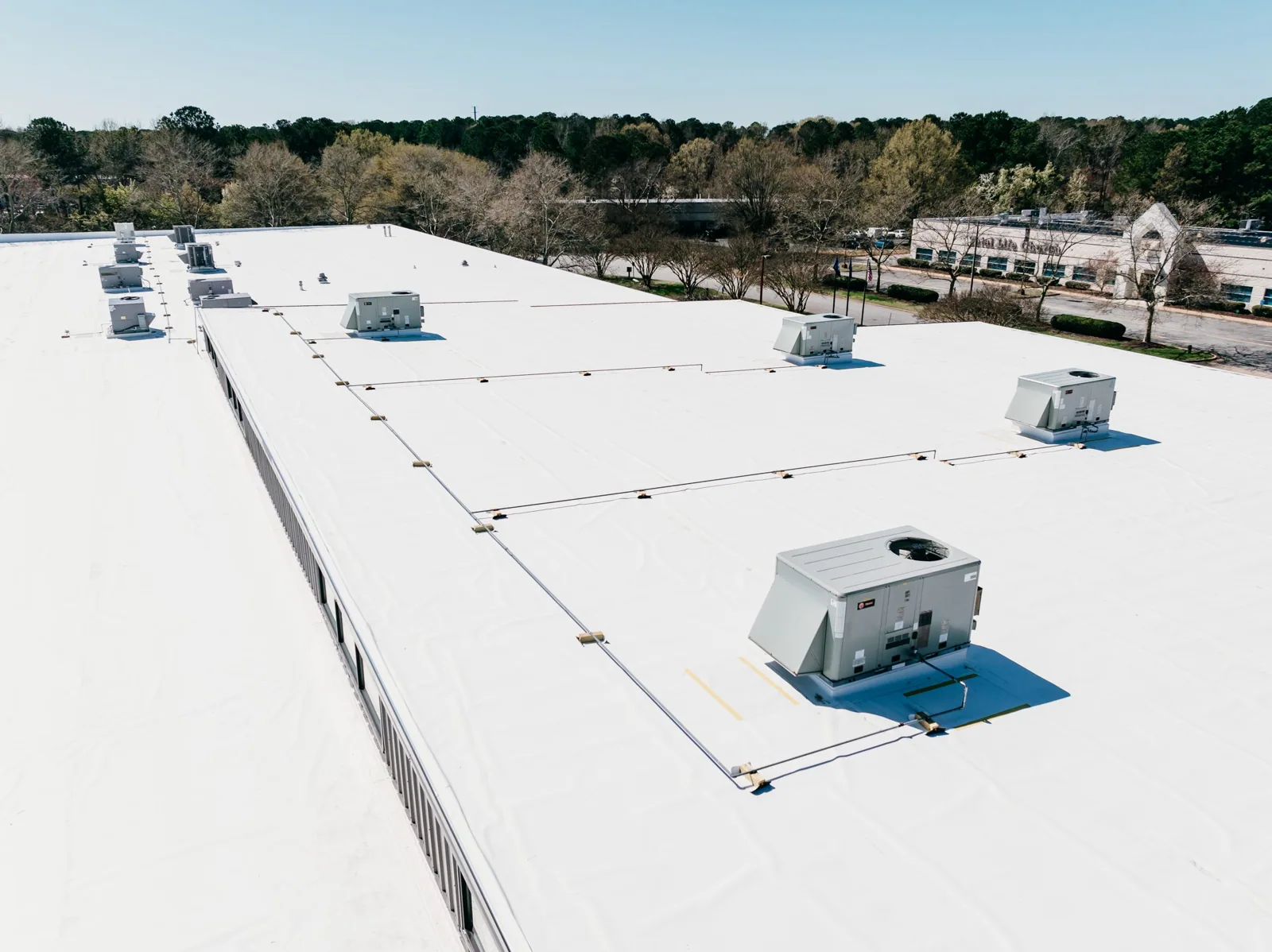
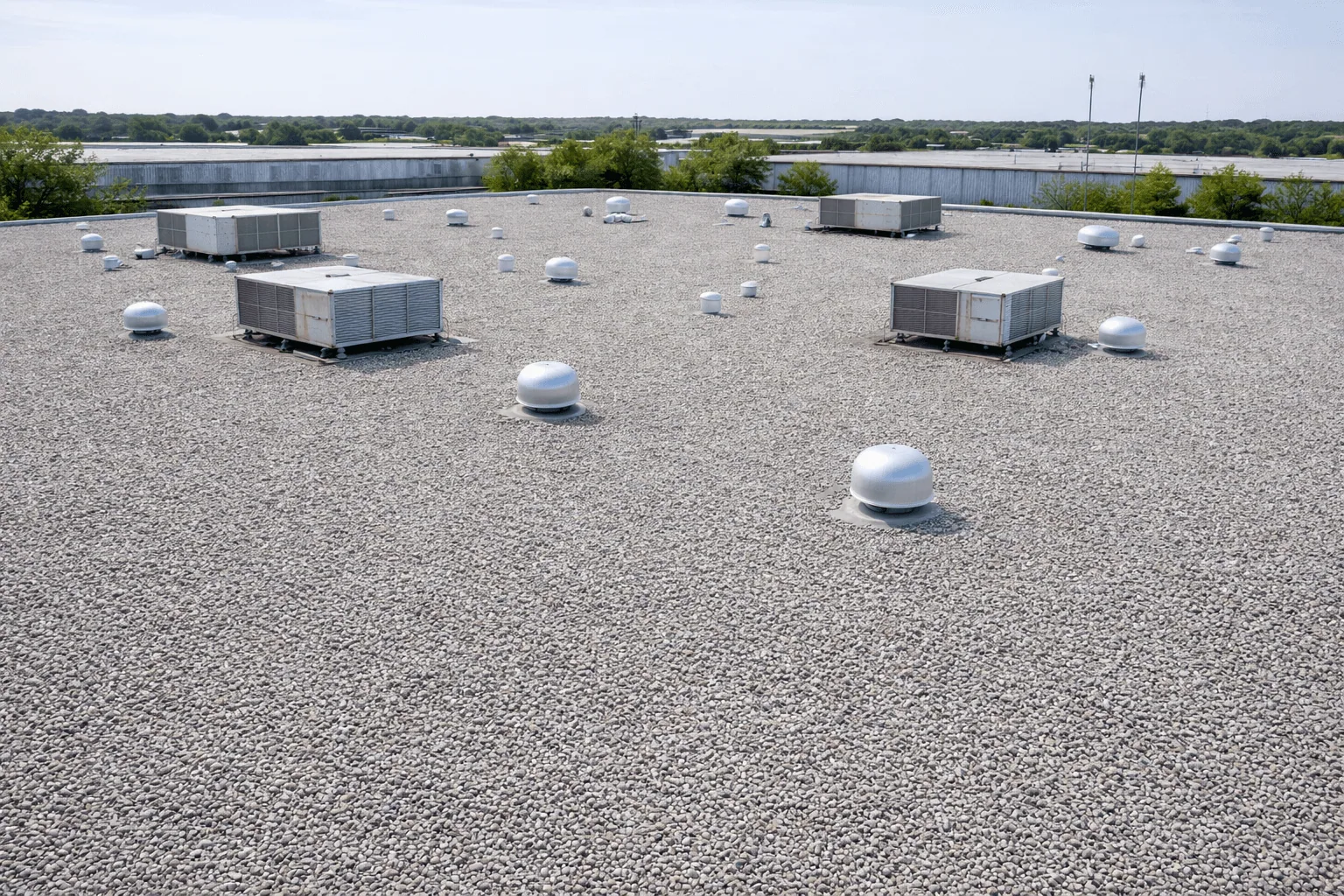
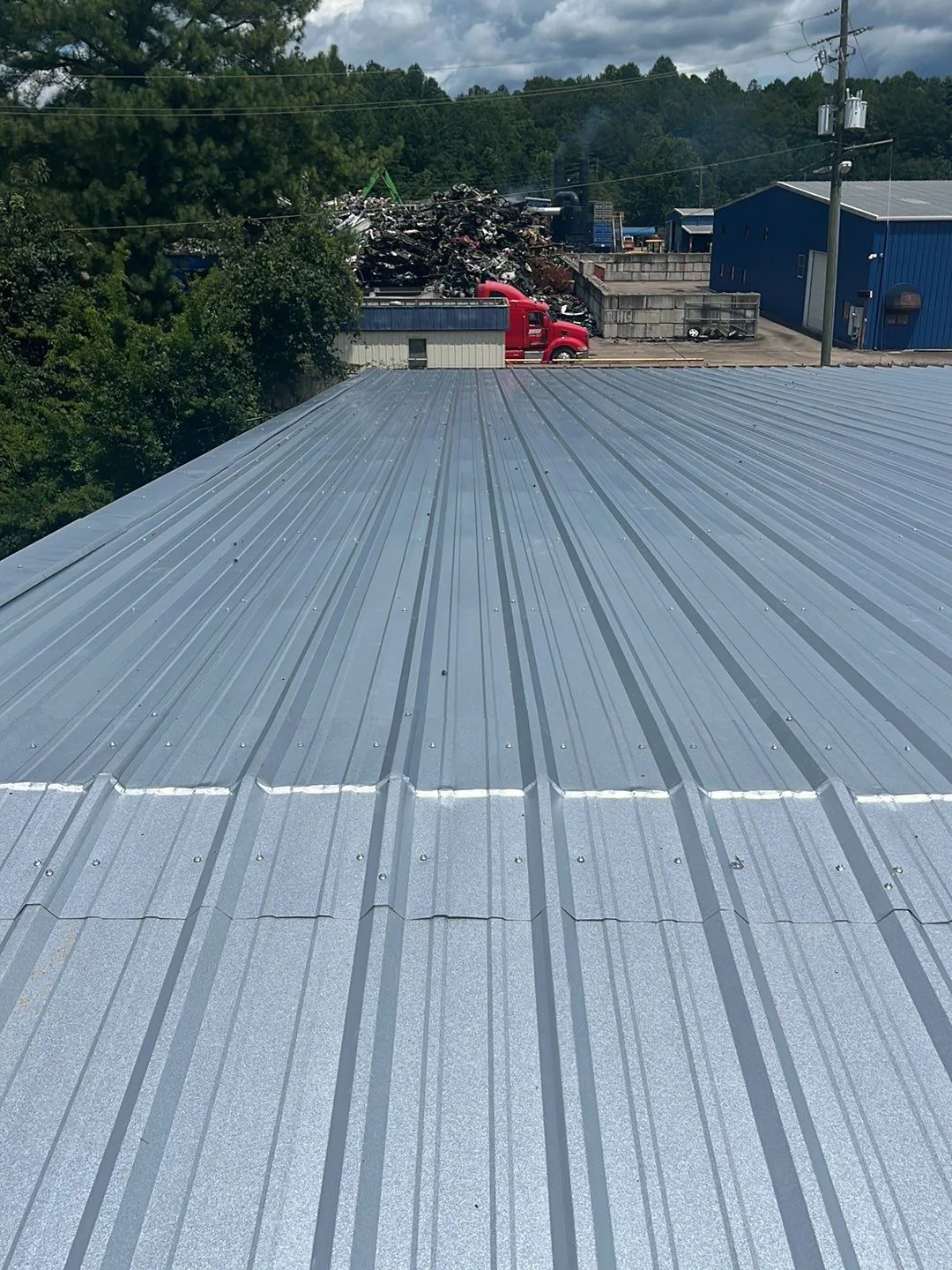

From distribution centers to clinics and schools, we roof the buildings Rochester depends on.
A permanent patch needs a surface and substrate that meet the repair method's preparation requirements. We first protect an active opening if needed, then return when the area can be cleaned, dried and bonded or heat-applied safely. If water has reached underlying plies, we identify how far the condition extends before closing the roof. The repair record separates temporary protection from permanent work.
They use different polymer modifiers and can be installed in systems with distinct product and application requirements. We check manufacturer records and visible assembly details before choosing compatible materials or heat application. A generic cap sheet description may not identify the base ply or flashing. The written scope lists the confirmed system and the repair materials selected for its sequence.
We assess size, movement, surfacing, nearby laps and whether moisture or loss of adhesion is present. A stable surface condition may be monitored, while a blister that opens, traps water at a seam or signals wet layers may require repair. We avoid cutting a sound roof solely to make an image; a test is used where it can change the recommended work.
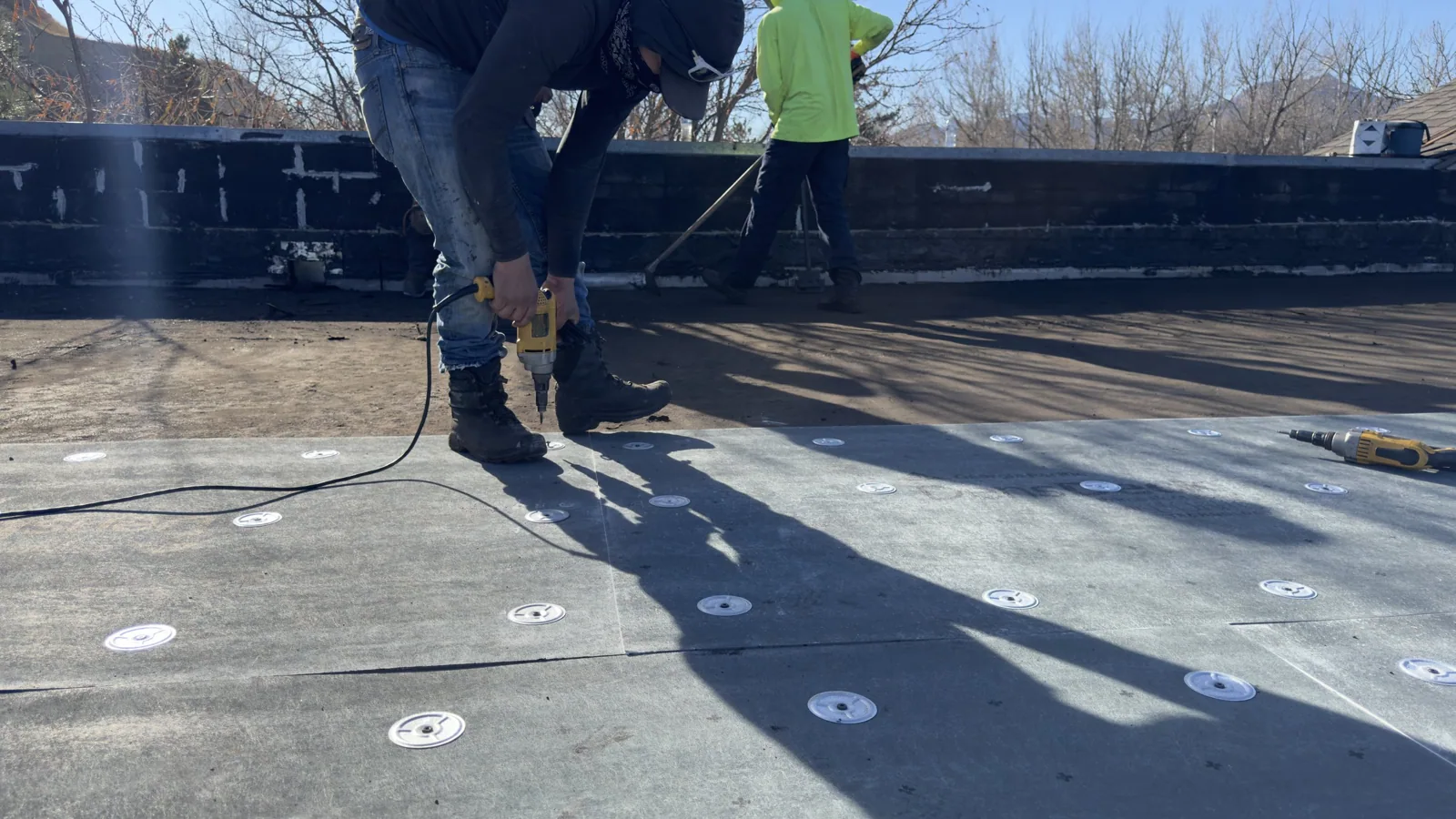
A recover is considered only after layer count, attachment, moisture, substrate strength, drainage heights, edge details and applicable code requirements are reviewed. The existing surface must also be suitable for the proposed assembly. We compare recover with tear-off and repair, identify any test results, and state what could not be confirmed before recommending added material.