Water is coming into the building right now
Call us and tell us where the water is showing up. We will get a crew on the roof to stop the leak and protect the space below.

Roof Systems
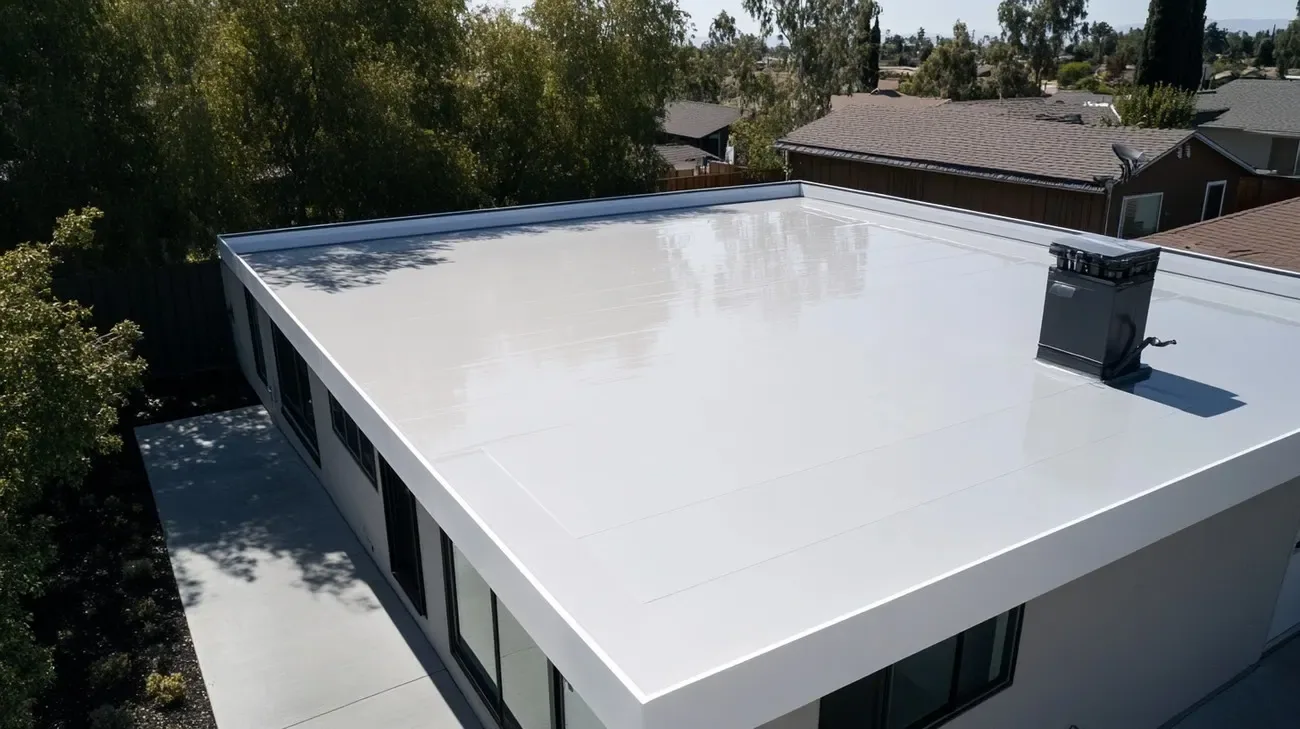
Repair, replace and maintain commercial TPO roofs in Rochester, MN. We inspect welded seams, flashings, drainage and insulation before setting scope.
Call us and tell us where the water is showing up. We will get a crew on the roof to stop the leak and protect the space below.
We walk the roof, photograph what we find and give you a written scope with repair options before any work starts.
Rochester, MN
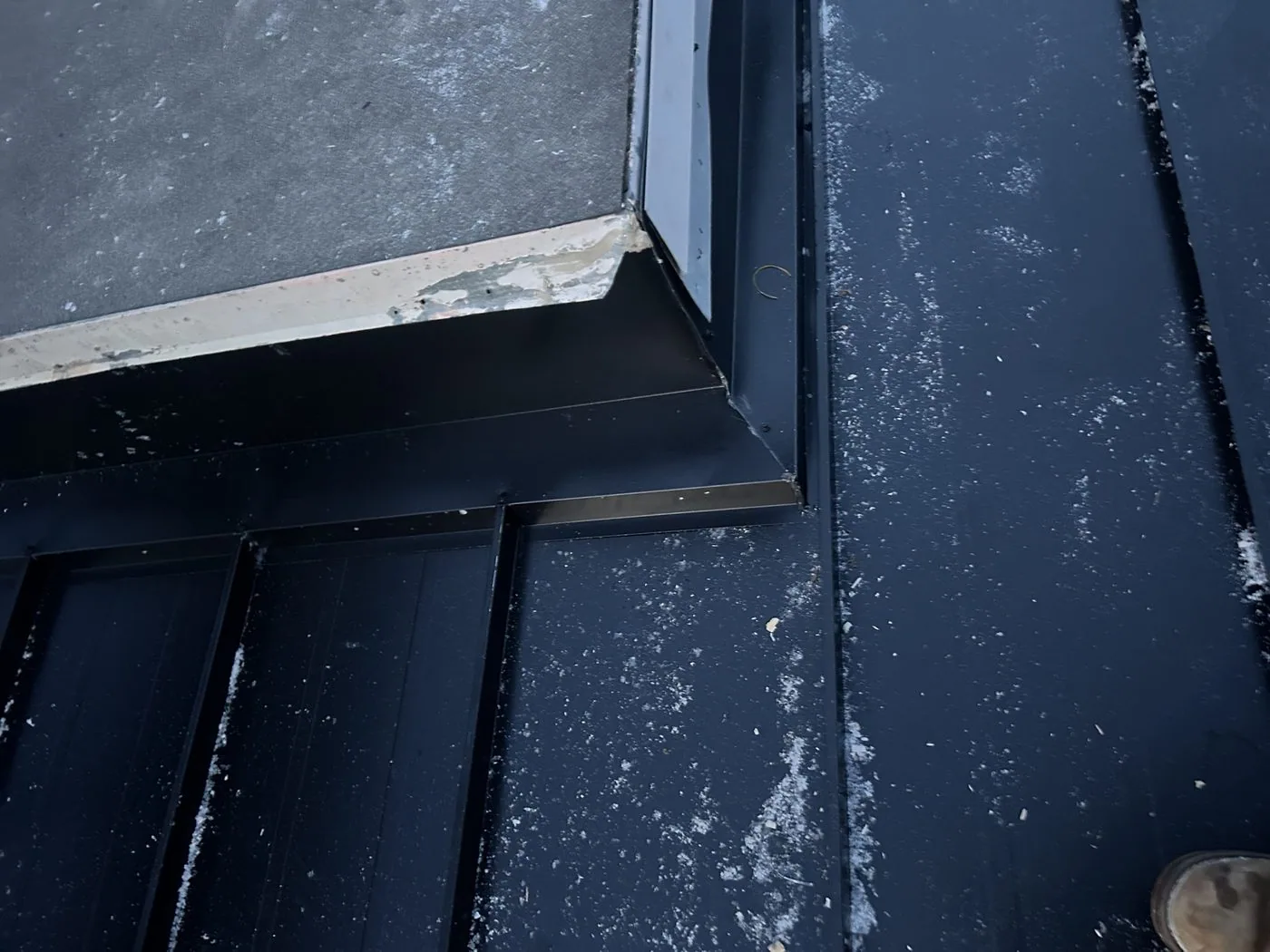
A TPO seam that reaches a curb is a change in the roof assembly, not just a line to weld. The field sheet, curb flashing, cover strip and nearby fasteners have to work together while water moves toward the drain. Our inspection traces that path before a repair boundary is marked. In Rochester, winter exposure makes the condition of laps, corners and drain bowls worth recording before a leak becomes an interior work order.
We begin with the roof plan, available closeout records and the building address. Downtown Rochester properties can sit among offices, civic uses and active retail, while the Mayo Clinic Support Campus includes mapped warehouses and technology facilities. Those settings call for different access and operating plans, even when the membrane is TPO. The report records what is visible, which areas were tested and what still needs confirmation.
Send the Rochester property address, the roof concern, available TPO system records and the portfolio contact. We will tie the visit to the correct building and return a photo record with tested areas, repair boundaries and next steps.
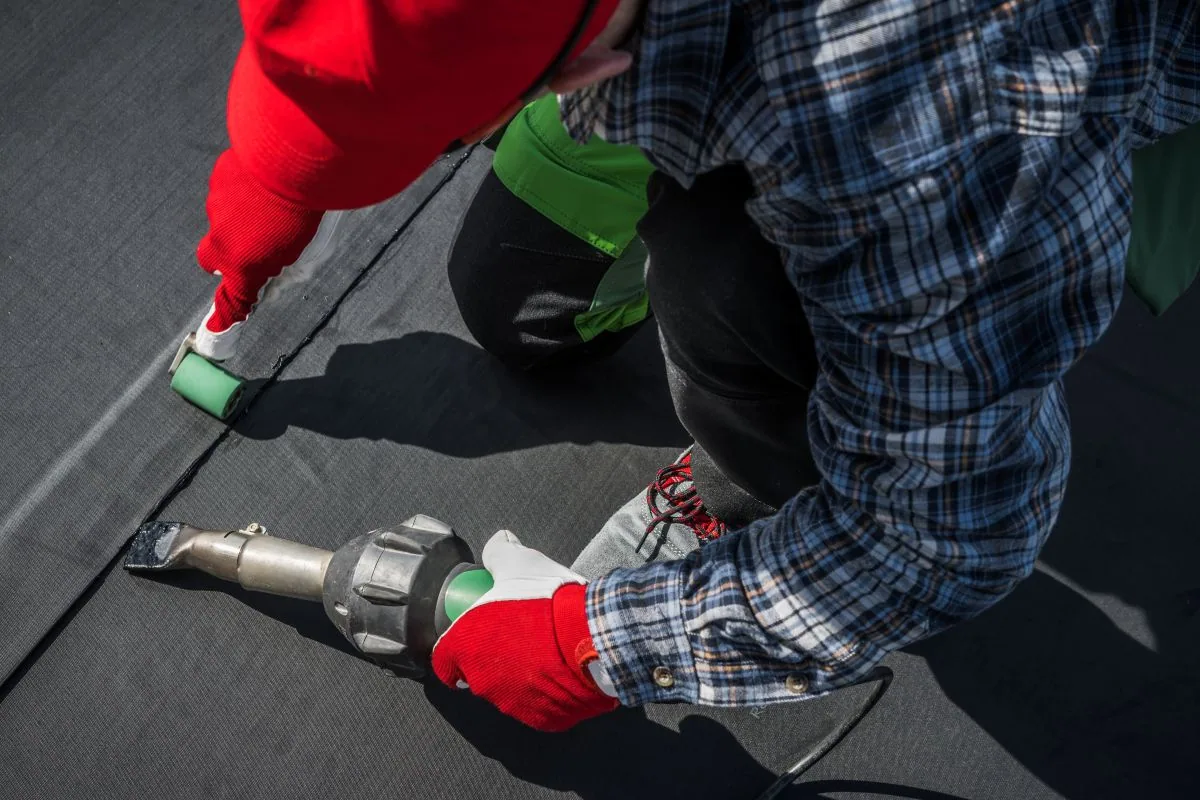
At a TPO roof, we check welded laps for incomplete fusion, fishmouths, contamination, wrinkles and separation at intersections. A probe can identify an open edge, but the result has to be read with the membrane condition and the detail beneath it. We inspect parapets, pitch pans, skylights, equipment curbs and pipe penetrations as separate transitions. A wide photo shows location; a close view records the weld, fastener row or flashing termination that sets the work.
Drainage gets its own pass. We follow the field slope into the drain bowl, check clamping rings and strainers, and note debris, ponding evidence and overflow paths. A drain and scupper inspection helps separate a membrane defect from water held by a blocked outlet or a low area. Broad mapping can organize roof sections, while close access stays reserved for seams and details that need hands-on review.
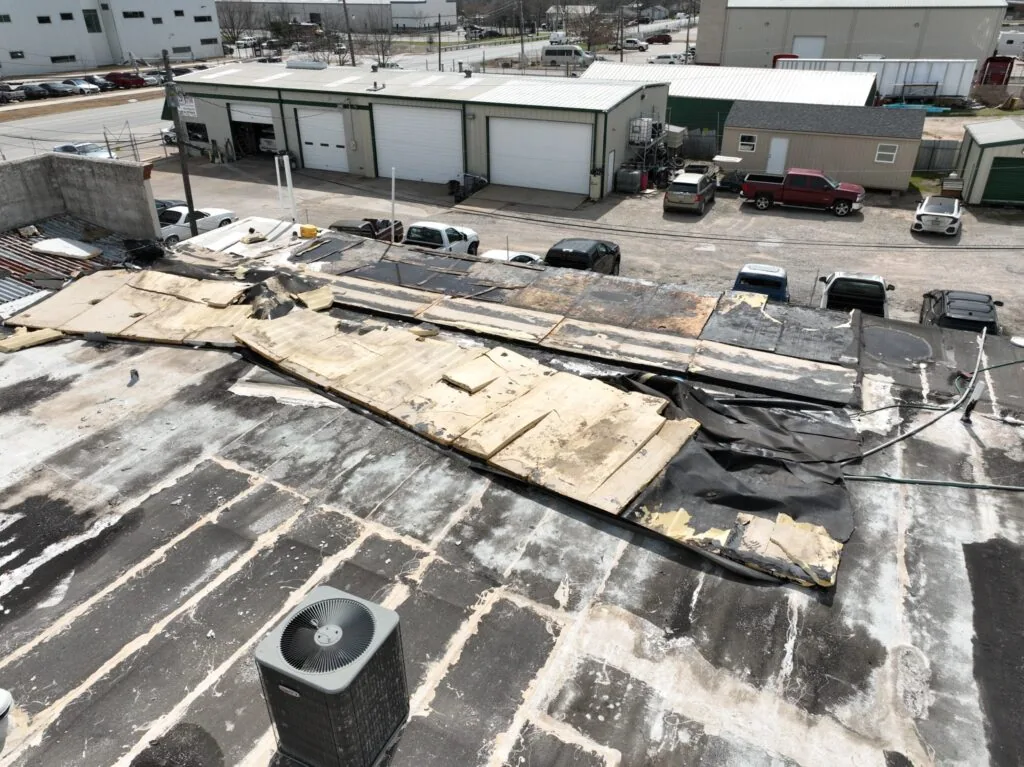
A TPO sheet can be mechanically attached, adhered or held in a roof assembly with different cover boards and insulation layers. We look for exposed fastener patterns, plate movement, surface pull, wet insulation clues and changes in elevation. A wrinkle may relate to installation, movement or a repair beneath it; its appearance alone does not settle the cause. When a test cut is warranted, we agree on the location, document each layer and close the opening with a compatible repair.
Photos and notes identify roof section, orientation, detail and date. That matters where multiple buildings share a maintenance file. Rochester's plan identifies larger-footprint manufacturing uses, and the City review of the former IBM property considers several Rochester Technology Campus redevelopment scenarios. We confirm the membrane and assembly from each building's records and field conditions. The roof condition report keeps findings separate from assumptions.
A dependable TPO repair starts with a sound surface. We remove contamination, check whether the sheet can be prepared without thinning it and select repair material compatible with the installed membrane. The heat-welded patch needs adequate dimensions beyond the defect, rounded corners and a fully fused perimeter. At a seam intersection, the repair has to address the geometry without leaving an exposed channel for water. If the sheet is brittle, saturated below or poorly attached, a surface patch may not answer the condition.
On replacement work, sequencing matters at edges and penetrations as much as across the field. We review attachment, insulation, cover board, perimeter securement, curb heights and transitions before the new sheet is installed. A commercial roof replacement plan can compare recover eligibility with tear-off where the existing assembly supports that review. Where an occupied building needs phased work, occupied-building reroofing planning records access, protection and daily tie-ins.
A localized weld failure with dry, stable layers can support a focused repair. Repeated seam openings, widespread wet insulation, poor attachment or incompatible prior patches can move the decision toward a larger area. A recover may be considered only after checking total roof layers, structural capacity, drainage elevations, code requirements and the condition of the existing surface. The recommendation should identify the known assembly, the test results and the limits of inspection rather than assign a system-wide conclusion from one detail. Where the building has more than one membrane section, we note whether a PVC roof area or an EPDM section changes access or material sequencing.
Rochester's winter normal totals 46.3 inches of snowfall in a season, with accumulation concentrated between December and March. We schedule drainage reviews around that period and set TPO repair recommendations from the seams, attachment and roof conditions inspected at the property. Hail history also needs exact geography: a National Weather Service report lists 1.5-inch hail in northwest Rochester on April 17, 2026. If a property has impact concerns, the hail-damage review should document observed marks and tested areas without presuming hidden damage.
Maintenance visits revisit known seam repairs, perimeter metal, drain strainers, curb flashings and places where other trades have crossed the roof. A dated photo from the same roof section makes change easier to judge. We list debris removal or minor correction separately from a repair that needs material, labor and a defined boundary. If access is limited by equipment or operating schedules, the report states which areas could not be reached and when they should be revisited.
For properties near the Airport Business Park or South Broadway, routing and staging can affect how a roof visit is scheduled, but the roof scope still follows the building itself. A visit to the Airport Business Park starts with the exact property and roof section. Pairing maintenance with a preventive maintenance plan gives the asset manager a repeatable record of open items, completed work and the next portfolio date. Our crews can respond around the clock for urgent commercial roof concerns; the first call should identify the address and active condition.
Other services, systems and buildings that often come up alongside this work in Rochester.
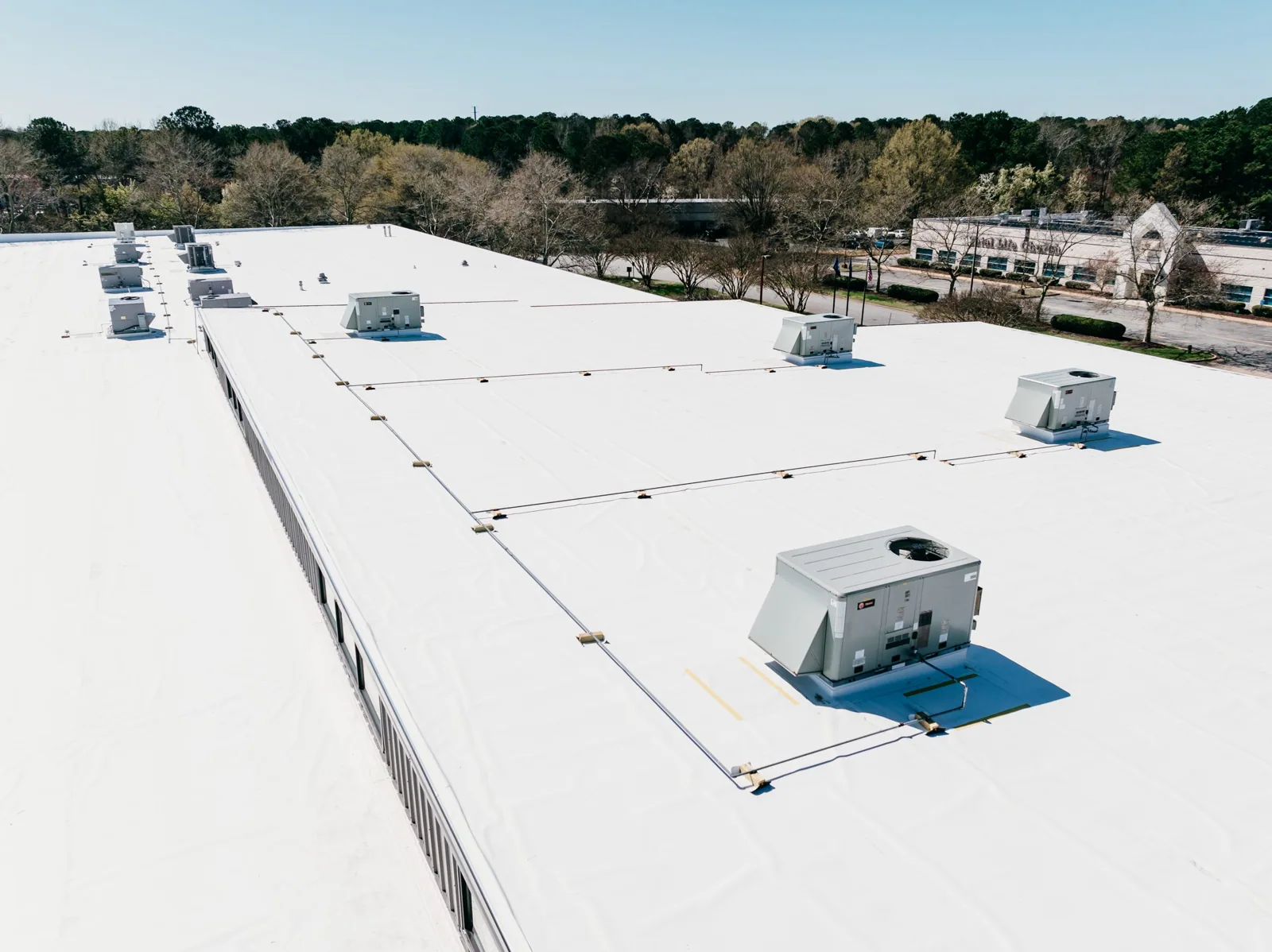
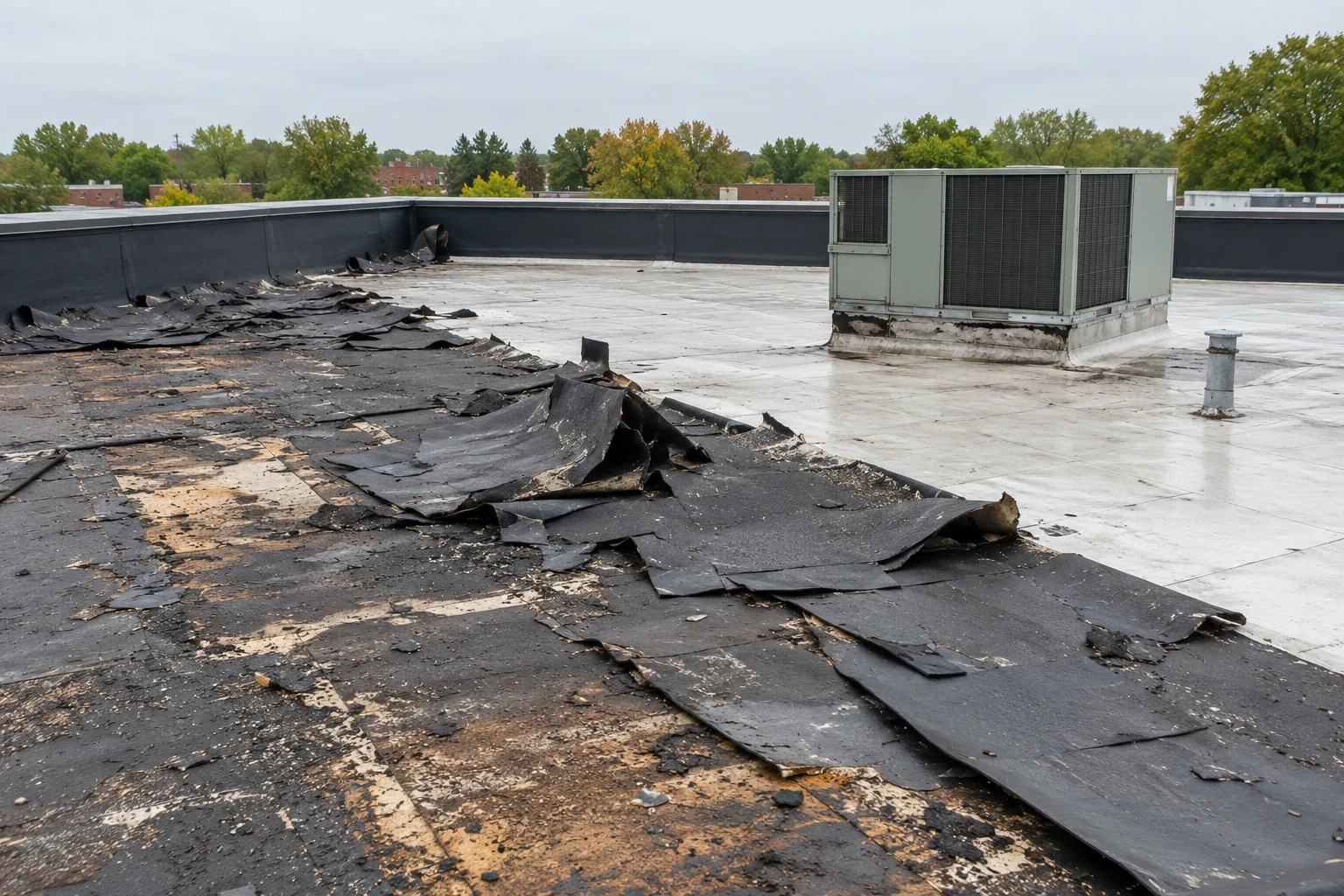
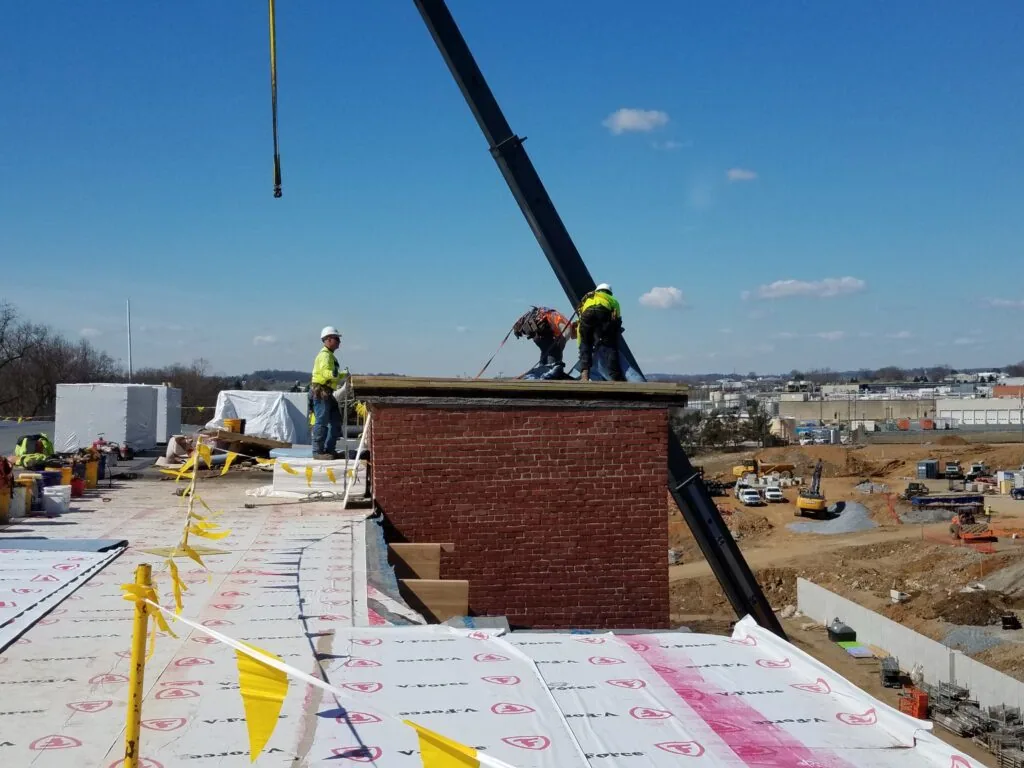

From distribution centers to clinics and schools, we roof the buildings Rochester depends on.
A localized weld can often be evaluated on its own when the surrounding membrane remains sound and the insulation below is dry. We probe the lap, inspect nearby details and confirm the repair material suits the installed sheet. Repeated openings, weak attachment or moisture beyond the visible defect may change the boundary. The written scope states what we tested and what a patch can reasonably address.
Roof plans, prior repair tickets, closeout records and known access restrictions give us a starting point. We compare those documents with the roof in front of us, since an old drawing can omit a curb or field repair. For a portfolio visit, send the building address, system records and a contact who can coordinate roof entry. We return photographs by section, with open questions separated from confirmed observations.
A test cut is useful when the hidden layers could change repair, recover or replacement scope. A soft area, recurring leak, suspected trapped moisture or unclear assembly can justify a limited opening after location and access are agreed. We record each layer and close the test area with a compatible detail. If a test would not affect the recommendation, non-destructive inspection may be the better first step.
We inspect the property, document impact marks where present, check seams and flashings, and identify any areas needing closer evaluation. The National Weather Service recorded 1.5-inch hail in northwest Rochester on April 17, 2026; our report ties findings to the inspected address. A dated record helps separate observed conditions from weather history.