Water is coming into the building right now
Call us and tell us where the water is showing up. We will get a crew on the roof to stop the leak and protect the space below.

Roof Systems
Maintain and repair EPDM roofs in Rochester, MN. We inspect field seams, adhesives, flashings, drainage and underlying layers before recommending work.
Call us and tell us where the water is showing up. We will get a crew on the roof to stop the leak and protect the space below.
We walk the roof, photograph what we find and give you a written scope with repair options before any work starts.
Rochester, MN
An EPDM seam depends on a clean, prepared bonding surface and a continuous lap. Where that seam approaches a curb or turns up a wall, the flashing detail may use a different material and method. We mark those transitions before deciding whether a leak calls for seam work, flashing correction or a broader assembly review. Rochester's winter exposure makes the drain path and edge condition part of the same inspection record.
The first pass pairs the building address with available roof plans, repair tickets and closeout records. The Mayo Clinic Support Campus plan maps Valley High Business Center North and South, warehouses, inventory and technology facilities; downtown Rochester has its own named DMC subdistricts. Those locations help us organize a property visit, but no place name proves the system installed on a specific roof. We verify material, access and roof section on site.
Provide the Rochester property address, roof concern, EPDM records or prior repair details and the portfolio contact. We will identify each roof section, document seam and flashing conditions, and return a clear repair boundary with tested areas and follow-up items.
We look along EPDM field seams for lifted edges, fishmouths, wrinkles, adhesive squeeze-out, contamination and previous repair strips. A seam probe is used carefully because pressure can damage aged material or turn a small opening into a larger one. At the lap end, we check the transition and termination rather than stopping at the visible split. We note whether the rubber remains flexible enough for preparation and whether adjoining areas show the same condition.
Penetrations, drains and perimeter details are reviewed separately. The sheet may be mechanically fastened or adhered, and that difference changes how movement and repair should be evaluated. We inspect drain clamping rings, sump areas and the membrane turn-in, then follow runoff toward overflow points. A roof drain assessment can isolate outlet issues, while a perimeter metal review records edge securement and membrane termination as connected but distinct details.
EPDM repair choices depend on what is present, not only on the membrane color. We document sheet thickness where records allow, seam tape or adhesive evidence, field attachment, cover board and prior coatings. We look for shrinkage at walls and curbs, displaced termination bars, exposed fasteners and stress at corners. If the roof has multiple additions, a transition map avoids treating every section as one continuous assembly.
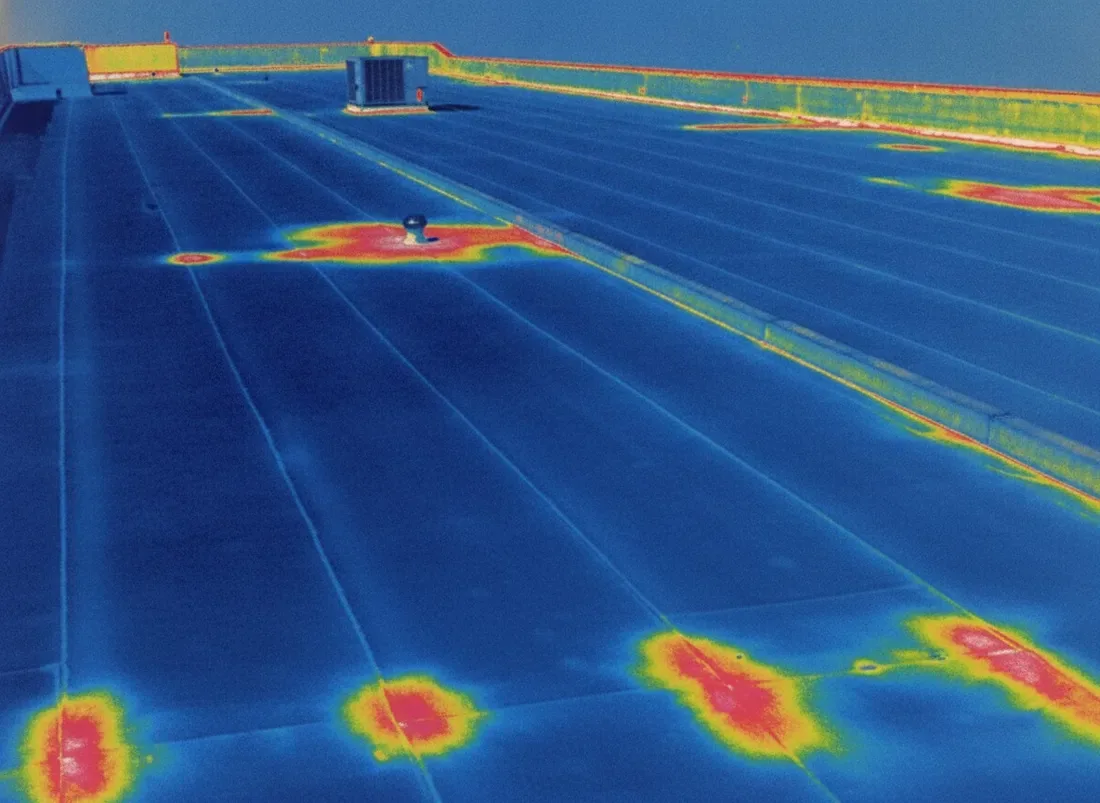
Where a soft area or recurring leak raises a question about insulation, we consider moisture testing or a controlled test cut. An infrared image can suggest a pattern, but the result needs to be interpreted with weather, roof construction and confirmation methods. A moisture survey can help focus follow-up testing. Each opening is photographed by layer and repaired at closeout. Our roof condition record separates confirmed moisture from indications that still need verification.
For a compatible EPDM repair, preparation usually determines whether the patch stays bonded. The repair zone is cleaned, allowed to dry, and prepared with the materials specified for the system. Seam primer is applied where required, tape is placed without wrinkles, and pressure is applied across the full contact area. A patch extends beyond the damaged point with rounded corners. We check its edges and the surrounding sheet after installation rather than relying on visual placement alone.
Cold weather, damp surfaces, wind, surface contamination and limited access affect both preparation and timing. The scope identifies those constraints and any temporary protection needed before permanent work. At a larger replacement, sheet layout, adhesive coverage, attachment, perimeter bars and daily tie-ins need coordination. A focused leak repair can address one detail; replacement planning checks whether the existing assembly and its remaining service life support another repair cycle.
EPDM is a thermoset rubber membrane. TPO and PVC are thermoplastic sheets commonly joined with heat welds. That basic difference affects repair preparation, seam inspection and compatible materials. A transition from EPDM to a TPO area or PVC section requires an intentional detail; one system's patch method cannot simply be carried across the boundary. We document the tie-in and confirm accessory compatibility before the work starts.
Rochester's normal seasonal snowfall is 46.3 inches, with most normal snowfall from December through March. The number informs seasonal inspection and drainage review, not a conclusion about any one roof. We compare repair, recover and replacement using the condition of seams, field sheet, attachment, insulation, drainage and wall details. A coating may be considered only after adhesion, surface condition, drainage and manufacturer criteria are checked; it does not correct saturated insulation or a failed assembly by itself.
At each maintenance visit we return to the seam ends, repaired areas, curb flashings, drains, edge metal and locations where equipment trades have worked. The date, roof section, photo and exact repair boundary make comparison practical. We list an open seam separately from a wrinkle with no confirmed opening, and we note whether a test or closer access is still needed. That record supports maintenance planning without turning an unverified condition into a replacement directive.
US Highway 52 and Interstate 90 connect Rochester to regional routes, while individual property access still depends on the building and its operation. A site near the Rochester Technology Campus and one in Saint Mary's Place require separate staging, entry and roof maps. The Technology Campus area visit starts with the exact address and roof concern. Our commercial crews can answer urgent calls around the clock. Share the address, any active leak location, available EPDM records and a portfolio contact to set the inspection sequence.
Other services, systems and buildings that often come up alongside this work in Rochester.
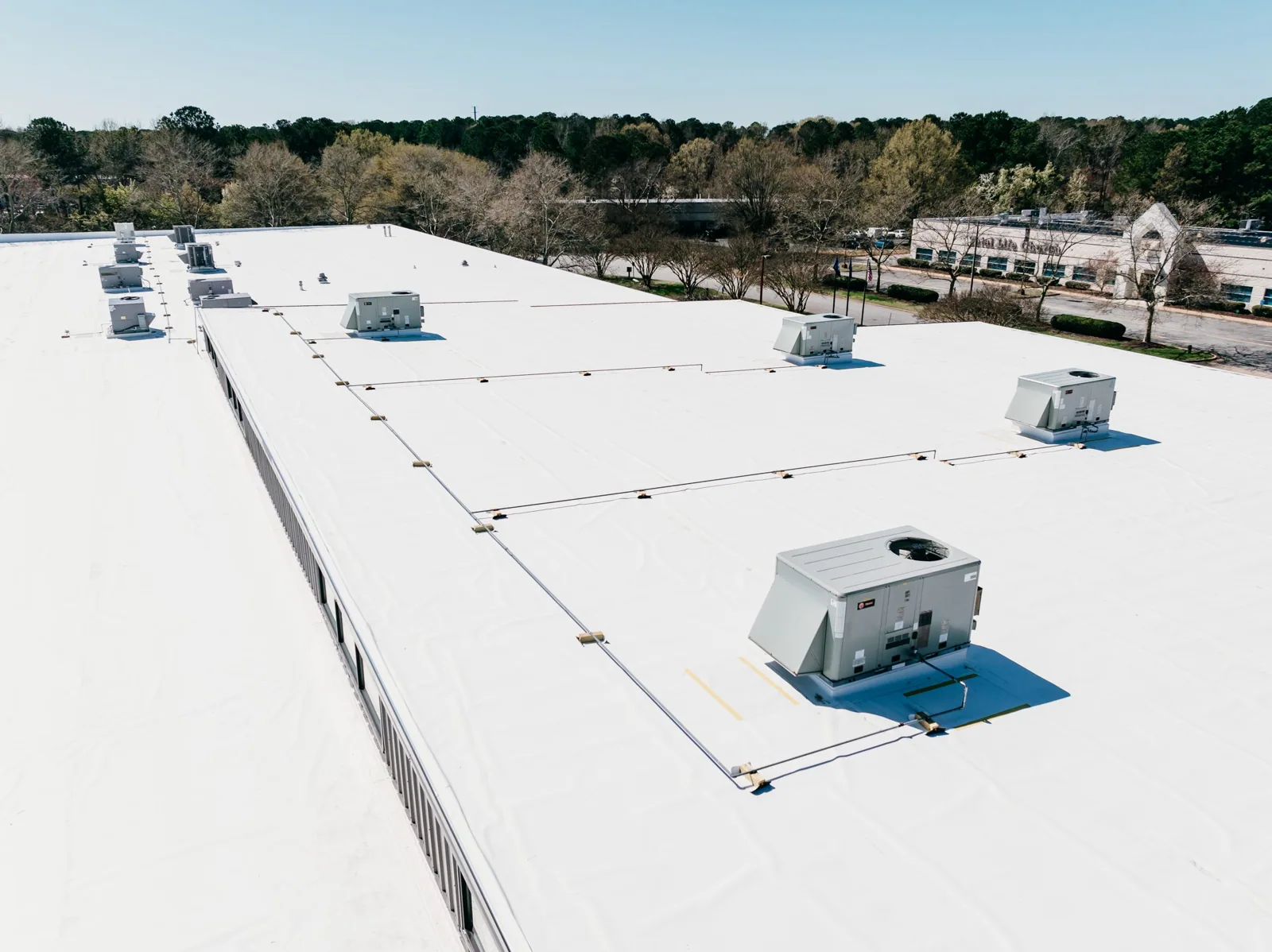
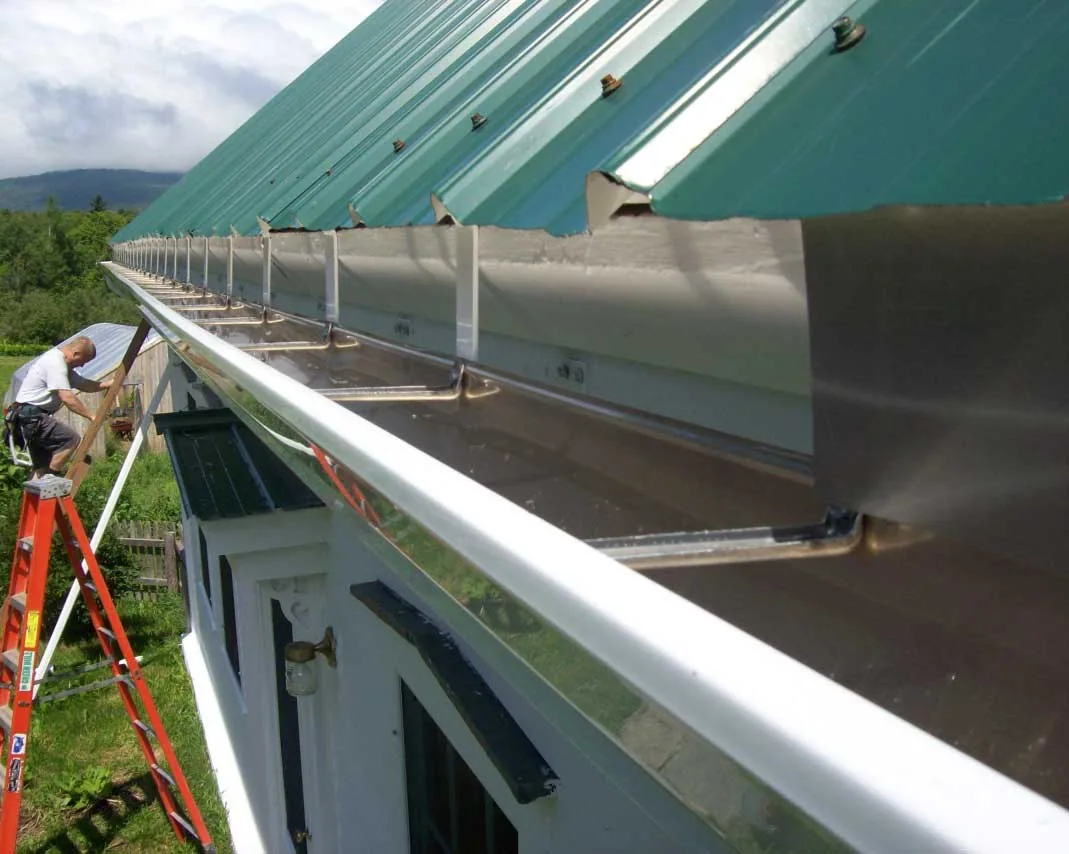
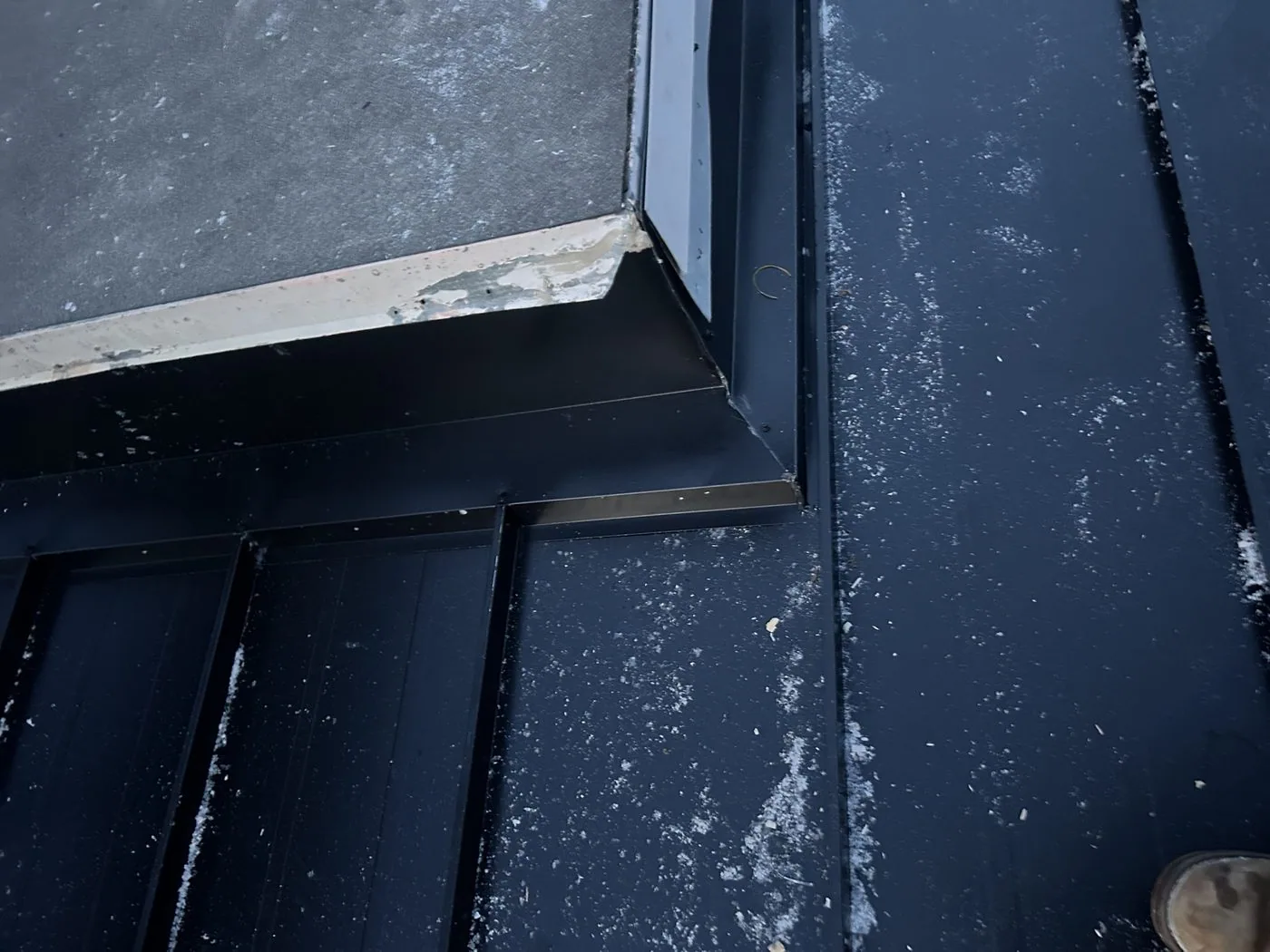
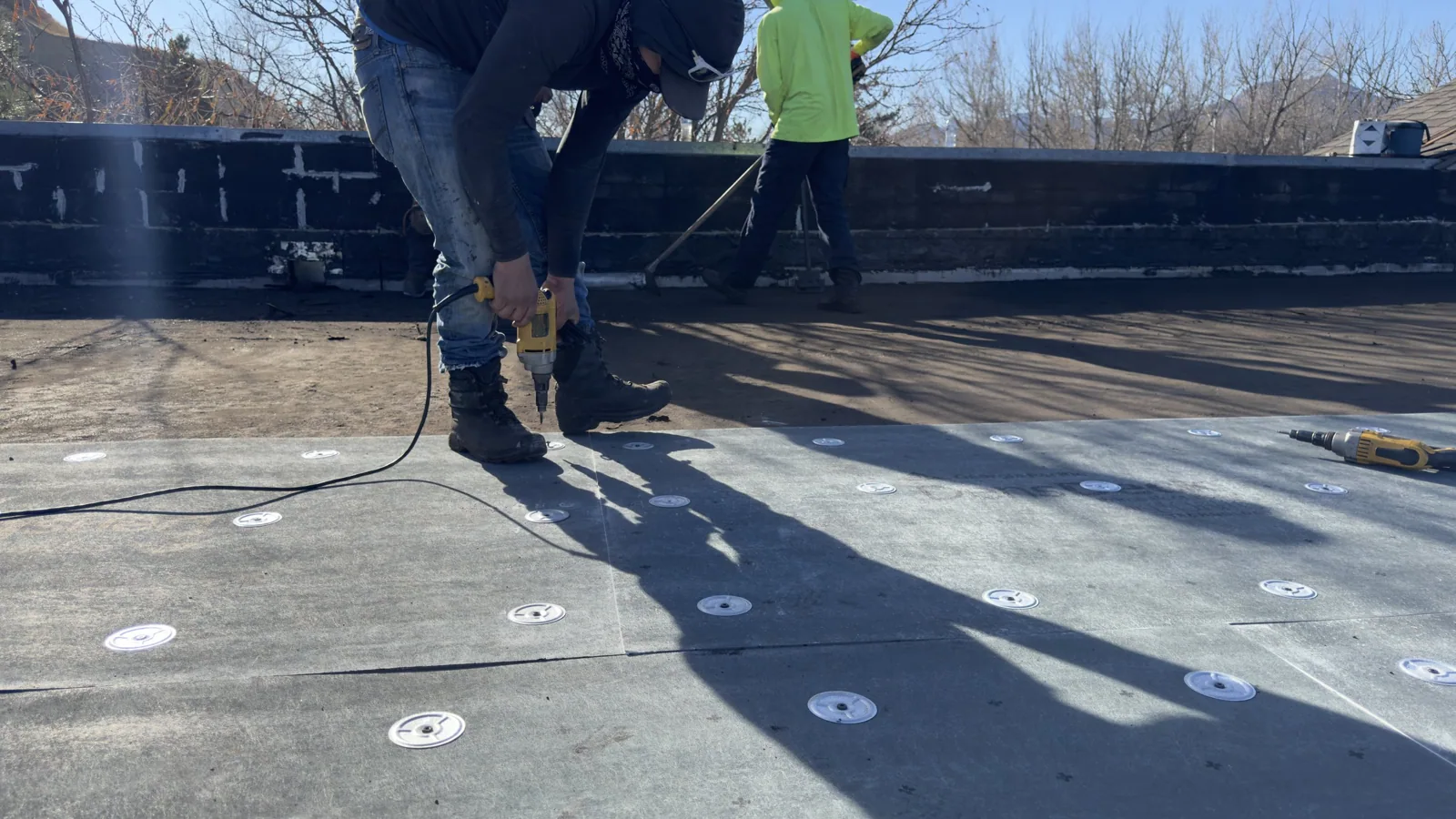
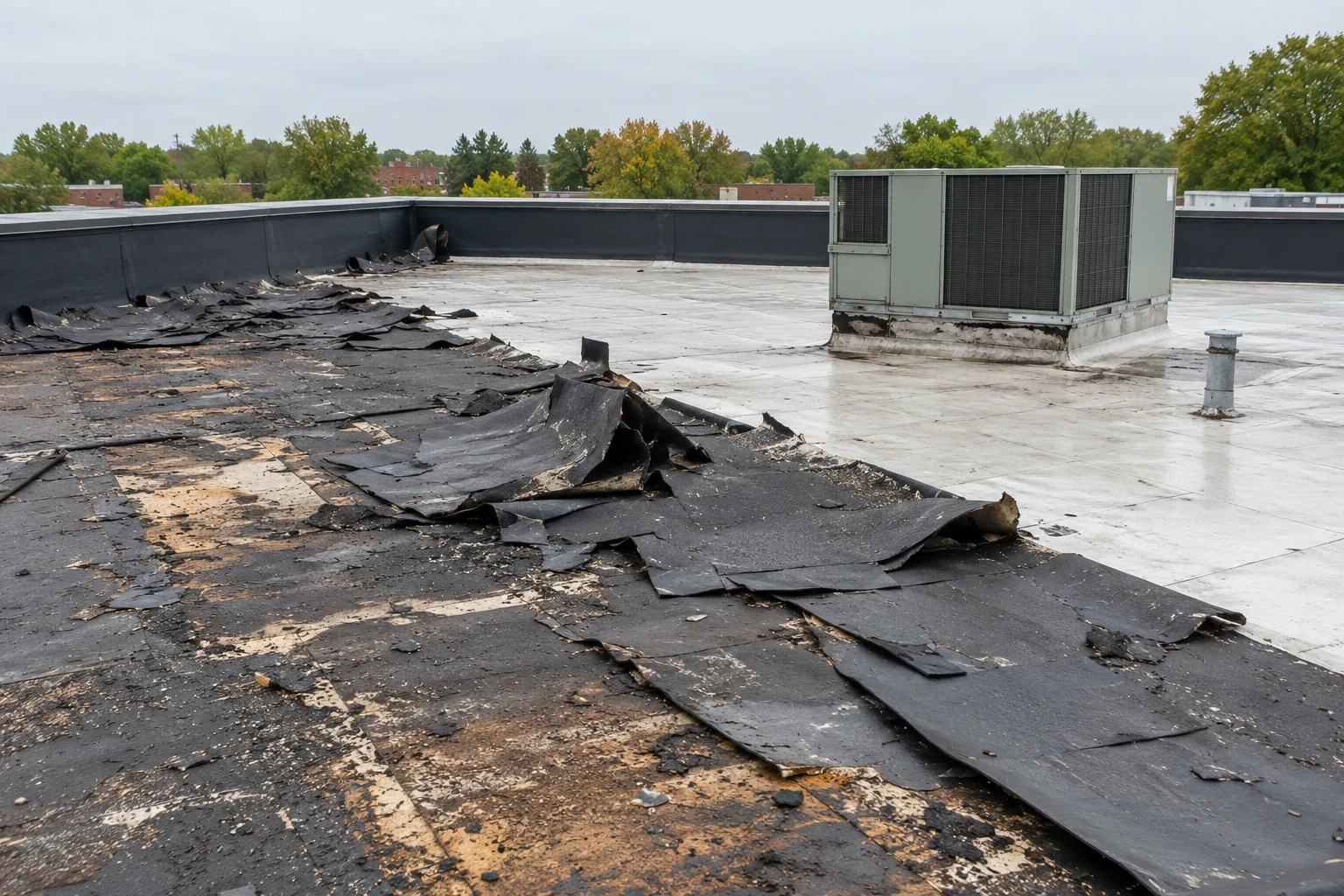
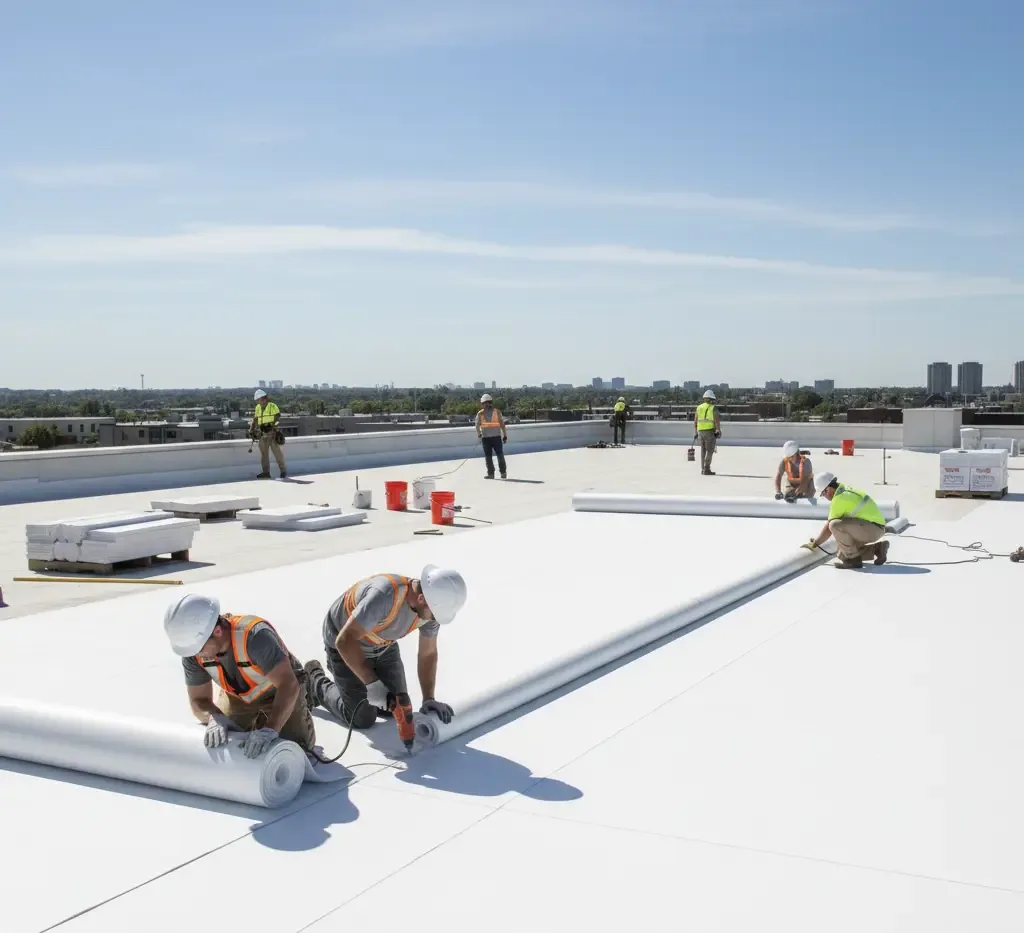

From distribution centers to clinics and schools, we roof the buildings Rochester depends on.
A surface smear may hide the opening without restoring the bonded lap. We first identify the membrane and prior repair materials, then clean and prepare the area using a compatible EPDM detail. If the sheet has shrunk, become brittle or lost adhesion beyond the seam, the repair boundary may need to expand. The scope records what was removed, bonded and checked after installation.
We begin with leak history, interior observations and a visual roof survey. Infrared or other non-destructive methods can help identify areas for closer evaluation, but they do not by themselves prove wet insulation. If the result could change the repair decision, we identify a limited test location, inspect the layers and document how the opening was closed. The report states both findings and limits.
Shrinkage at one edge is a condition to measure, not a roof-wide verdict. We check seam stress, termination bars, corner details, attachment and adjacent sheet condition. A localized correction may be possible if the material and substrate remain serviceable. Widespread movement, brittle sheet or moisture beneath the roof can support a larger scope, which we compare with the smaller repair option.
Coating requires a prepared surface, confirmed adhesion and compatibility with the existing membrane and prior repairs. We check whether seams, flashings and drainage are sound and whether the assembly is dry enough for the proposed work. A coating can protect a suitable surface; it does not reattach loose insulation or correct an unresolved leak path. The recommendation distinguishes coating preparation from underlying roof repairs.