Water is coming into the building right now
Call us and tell us where the water is showing up. We will get a crew on the roof to stop the leak and protect the space below.

Roofing Manufacturers
Inspect and repair Versico commercial roofs in Rochester, MN with verified TPO or fleece-backed details, seam checks, drainage notes, and repair scopes.
Call us and tell us where the water is showing up. We will get a crew on the roof to stop the leak and protect the space below.
We walk the roof, photograph what we find and give you a written scope with repair options before any work starts.
Rochester, MN
Fleece backing changes the underside of a membrane, while the seam and perimeter still need a complete detail. On a Versico roof in Rochester, MN, we identify whether the field is VersiWeld reinforced TPO, VersiFleece TPO or another membrane before choosing a repair material. That first check keeps a patch compatible with the installed sheet and reveals whether the concern lies in the field, attachment, flashing or a transition to another roof system.
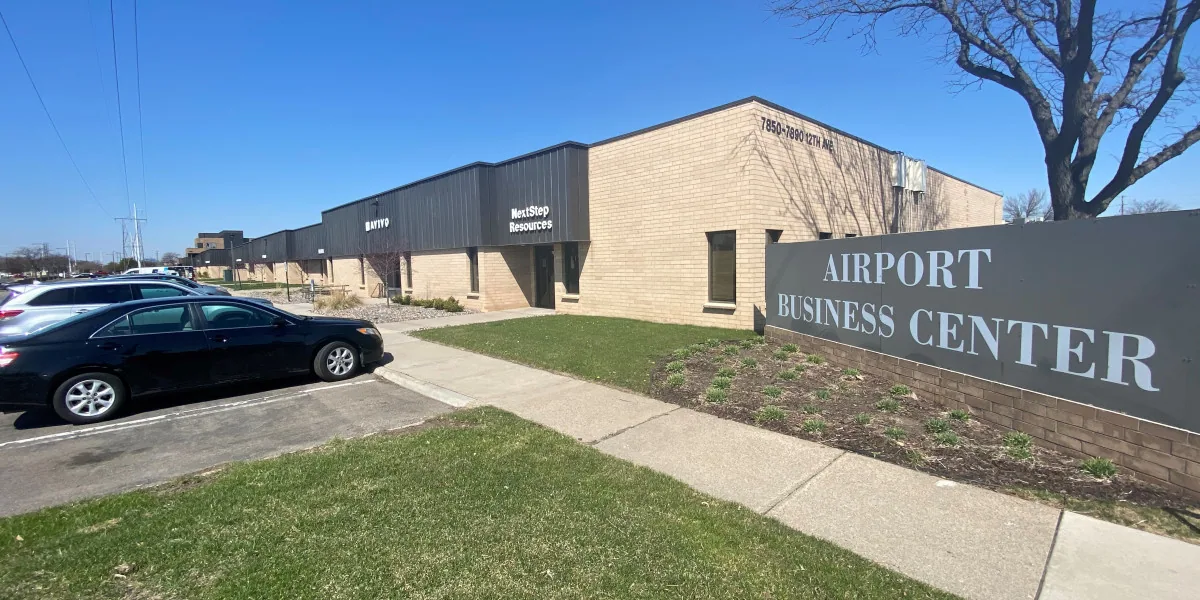
Airport Business Park is part of the Rochester International Airport campus, which serves passenger travel and cargo activity. That setting can affect access and staging, but it does not describe the building's roof. Within Rochester, the Mayo support-campus map labels two Valley High Business Centers and places warehouse, inventory and technology uses in the facility area. We confirm the address, access contact and system records for each inspection. Rochester's winter snowfall normal is 46.3 inches, so we also note how drain bowls, overflow routes and parapet edges appear before winter conditions limit visibility.
Send the Rochester property address, roof concern, system records and facility contact. We will inspect accessible sections, identify visible membrane details and return a dated repair or testing scope.
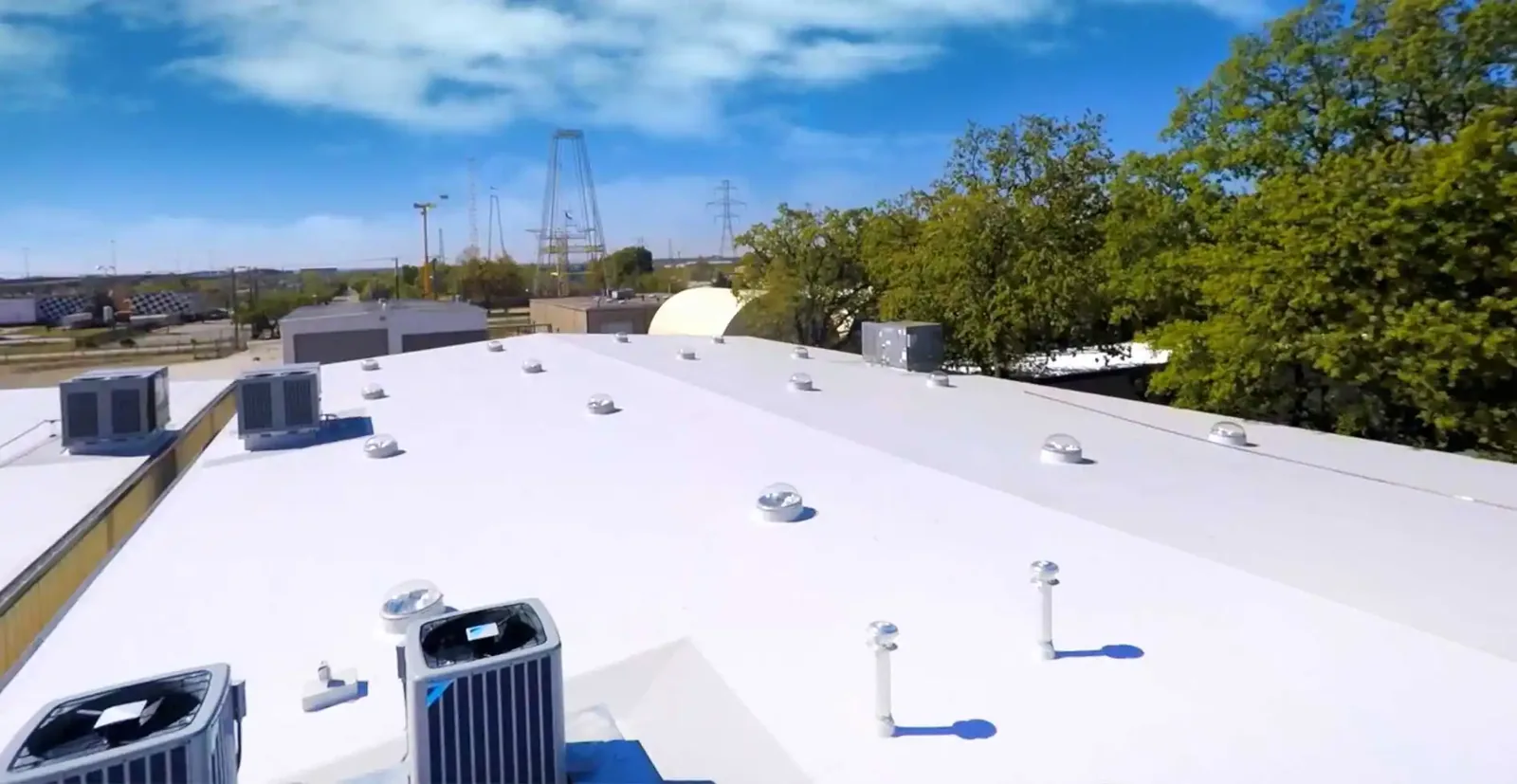
VersiWeld is a reinforced TPO membrane, and VersiFleece TPO combines TPO with a nonwoven polyester fleece backing. We review labels, closeout documents and visible cut edges, then check welds, field sheet, attachment pattern, walk pads and flashings. A TPO assembly inspection verifies seam condition and the roof layers we can see. If a fleece-backed product is installed, we confirm the particular system detail before treating it like smooth-back TPO.
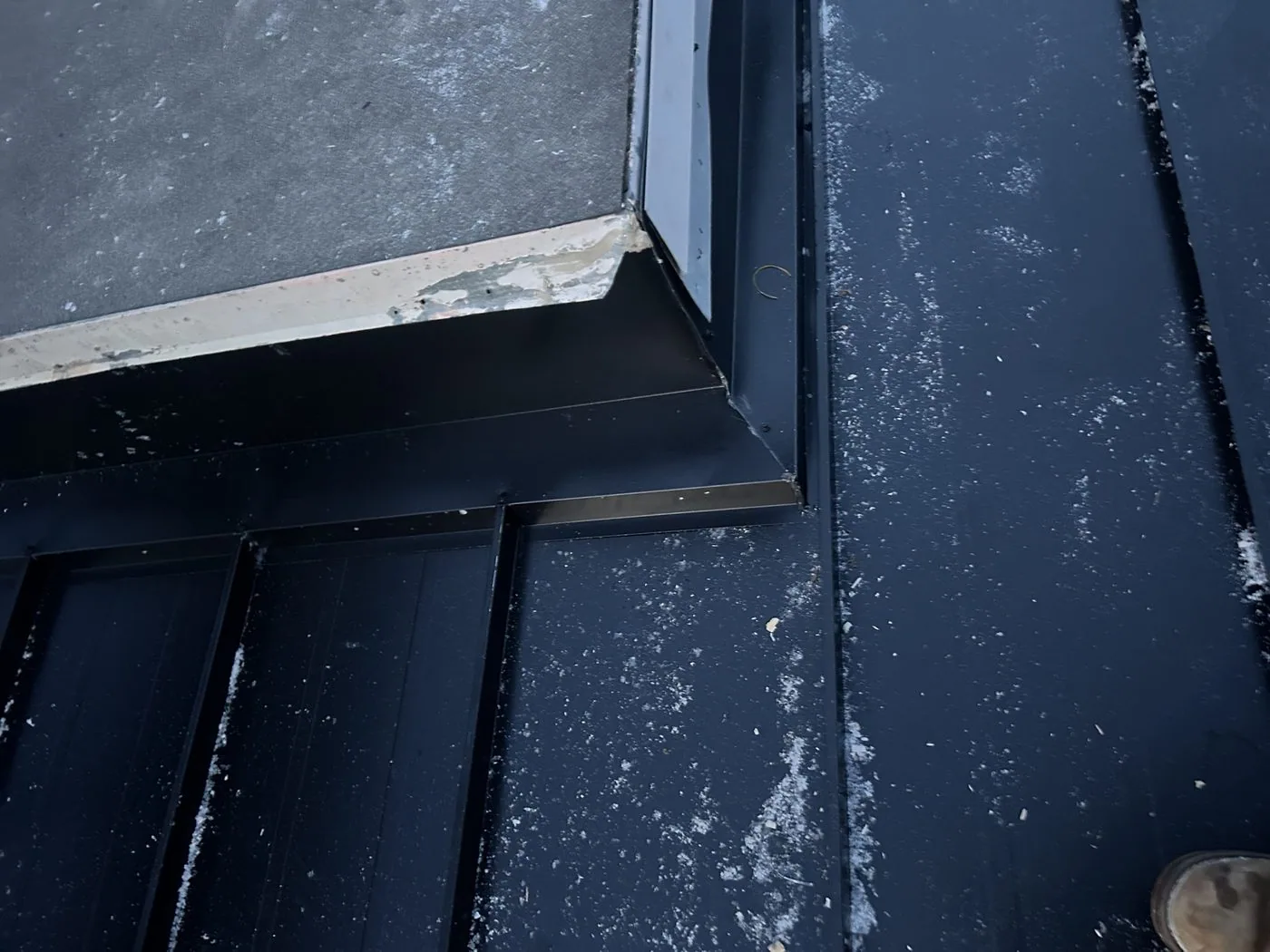
At a curb or pipe boot, we inspect how the membrane turns up, how the edge is secured and whether movement has opened the corner. A modified bitumen tie-in, old coating or incompatible patch can obscure the original assembly. The report names what is confirmed and records where a sample or document review is needed. A written roof survey includes section-specific photographs and notes any locked or weather-covered area that could not be evaluated.
A standard TPO seam repair starts with surface preparation and a test weld under the conditions present on the roof. We verify fusion, then install a compatible patch that extends beyond the defect onto sound membrane. For fleece-backed sheets, the repair detail and adhesion method must account for the backing rather than relying on an assumed weld surface. The work record identifies the product detail used, weld perimeter, corners and any change to the original repair boundary.
Fasteners and perimeter details can influence whether an opening is isolated. We look for loose plates, shifted laps, stress at corners and movement where the sheet terminates at metal. If the attachment has failed beyond the patch area, we describe that separately and request direction before expanding the work. A commercial repair proposal lists the measured area, access assumptions and test needs, while a puncture assessment documents a discrete opening in the field sheet.
A single puncture or open weld may be a localized item where the membrane around it remains secure. A cluster of failures, broad bond loss, soft cover board or repeated leakage can justify testing or a wider project comparison. We map each location and state whether the inspection supports repair, additional investigation, recover or replacement. Concealed insulation and deck conditions are not inferred from surface appearance; an authorized test opening is used when its result can change the work.
Rochester's long-term seasonal snowfall normal is 46.3 inches, with the main accumulation months running December through March. We relate that climate context to drain paths, edge metal and a safe seasonal inspection plan without claiming that a normal predicts damage at a specific property. At the Airport Business Park, passenger and cargo operations make the individual access plan important. A roof visit at the business park is coordinated with the building contact and recorded under the property's exact name.
The closeout describes the inspected membrane, roof zone, repair material, test location, photographs and any adjacent condition left outside the approved scope. For a fleece-backed membrane, we note how the field repair joins the backing and surface sheet. We also photograph curb corners, drains and edge transitions because later service can reopen a detail away from the original puncture. If access prevented a complete review, the limit stays visible in the file.
Manufacturer instructions can help identify an appropriate detail, but they do not identify the product installed at a building or prove warranty status. We compare submitted records with the field condition and mark discrepancies. A dated condition report keeps those findings ready for the property team. If a portfolio includes Carlisle SynTec Sure-Weld or GAF EverGuard TPO, each system is listed under its own verified roof area.
Later visits return to weld perimeters, flashing corners, drains, roof access paths and equipment supports. We compare date-stamped images and ask whether any other trade worked near the section. A fresh cut next to an older patch is recorded as a new condition, not folded into the previous repair. This keeps maintenance decisions and future budgeting tied to a known date, system and roof location.
Weather, tenant operations and access controls can shift the visit sequence. If snow or ice prevents a safe review, we mark the affected section for return rather than report it as clear. Our emergency response is available at night, on weekends and through holidays for active water entry. The initial protection and later permanent work have separate scopes, materials and closeout records so the owner can see what remains open.
Other services, systems and buildings that often come up alongside this work in Rochester.
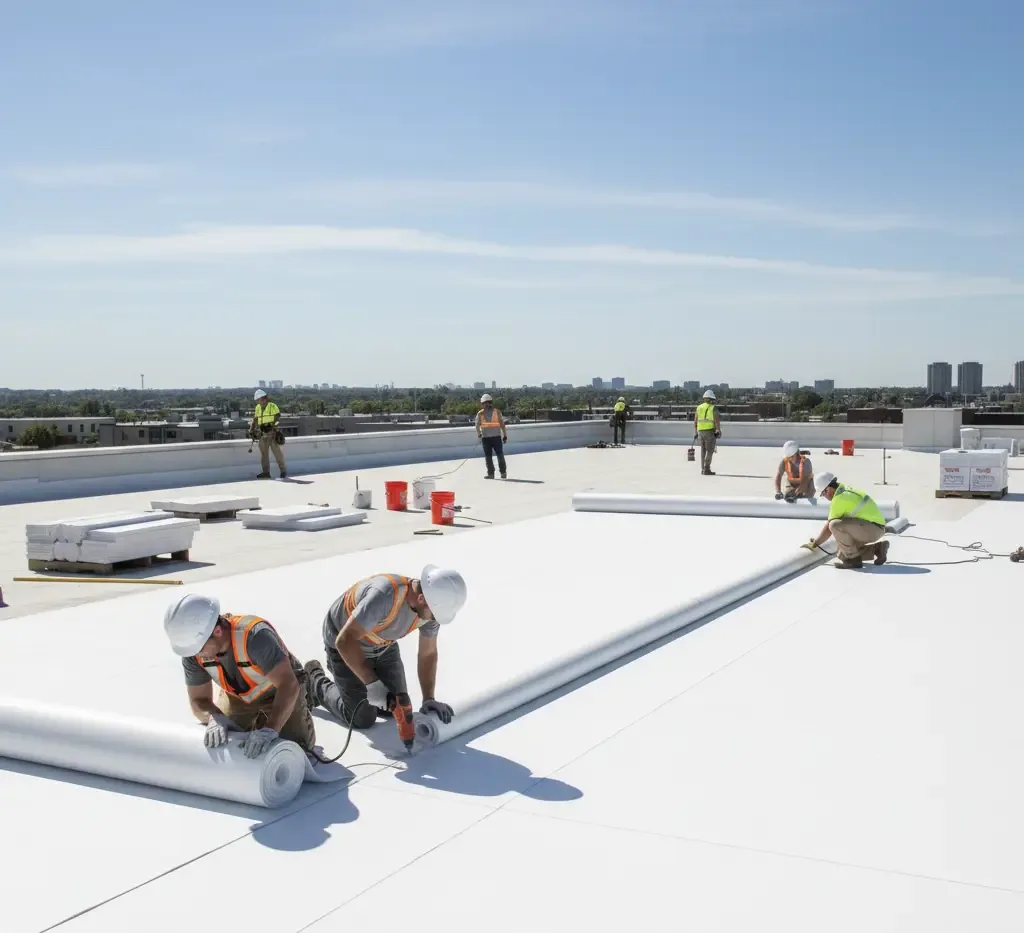
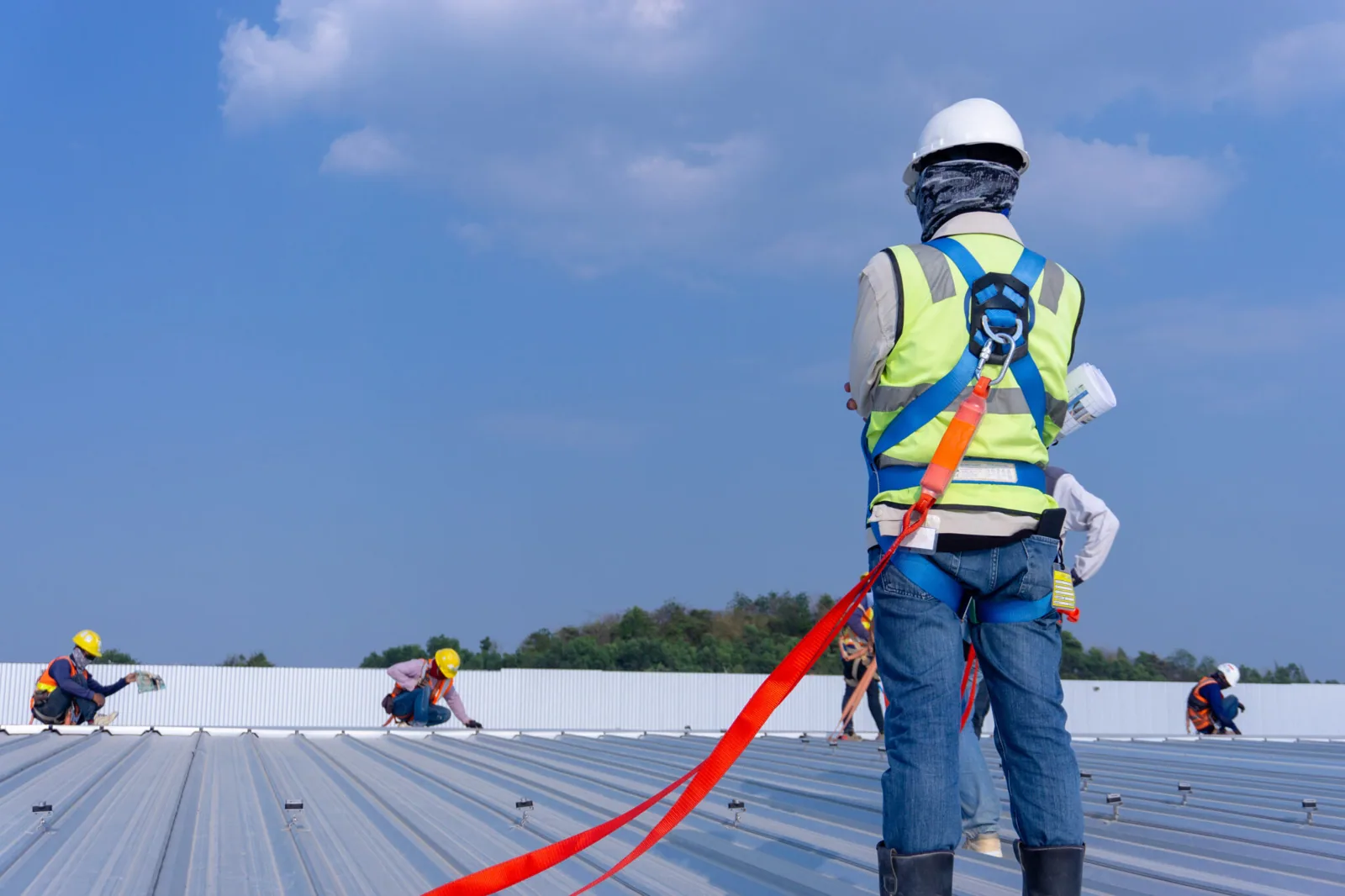
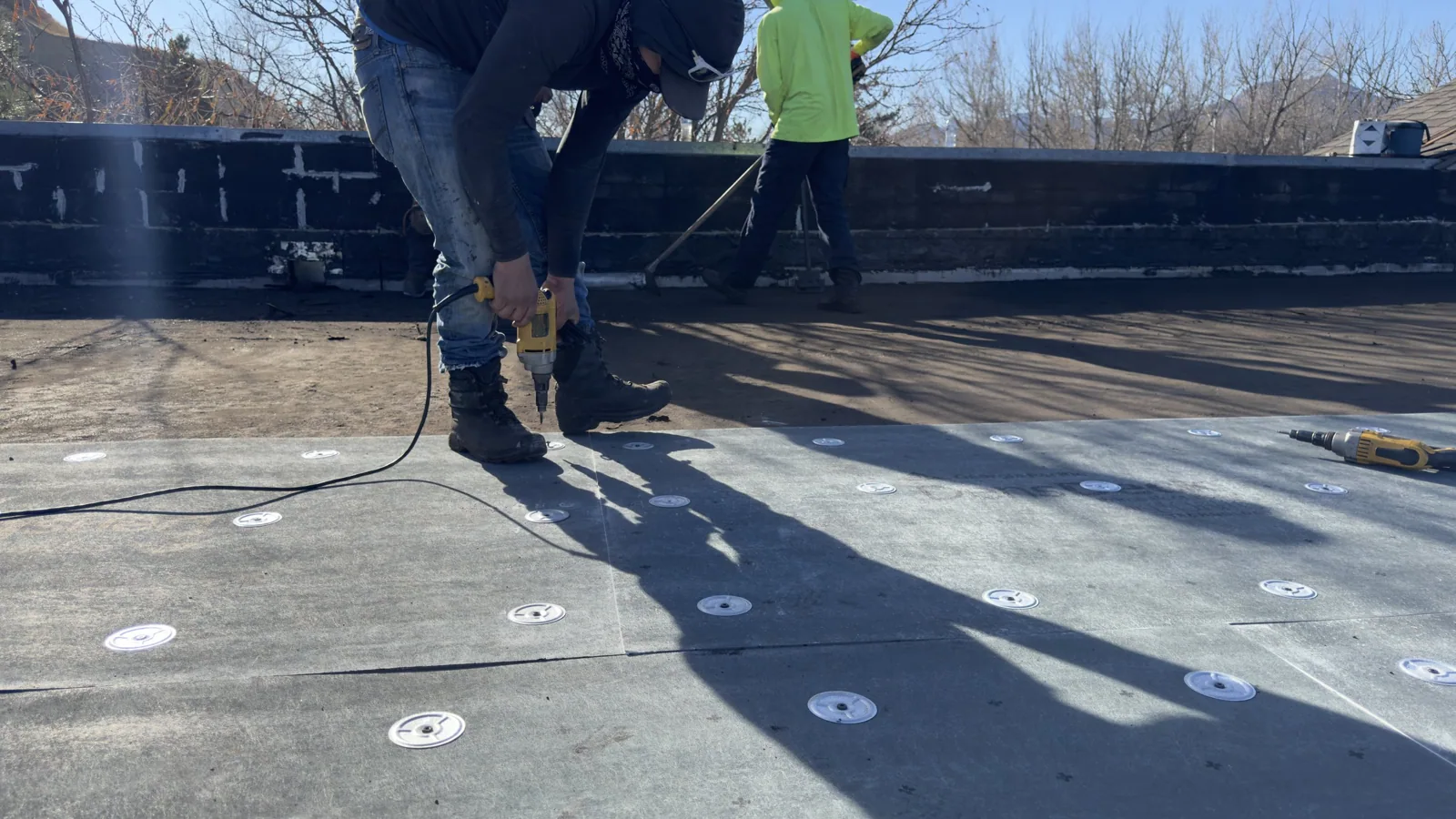
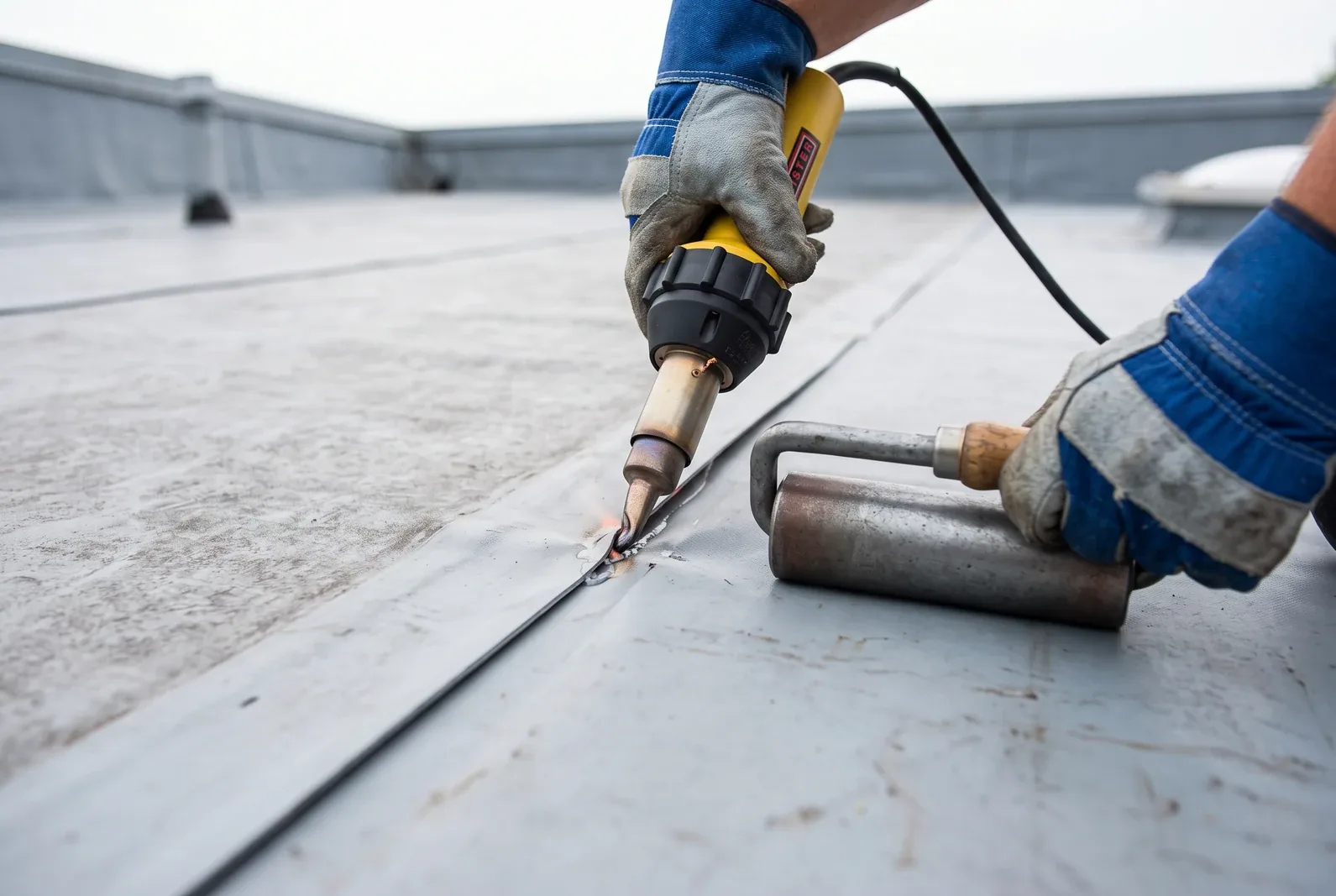

From distribution centers to clinics and schools, we roof the buildings Rochester depends on.
The exact product and repair location matter. Fleece backing affects the underside and may require a detail suited to that surface, while the exposed TPO seam still has to meet the appropriate weld procedure. We identify the membrane, review the system detail and test the selected area before fixing the boundary.
We inspect the seam, drain bowl, sump, surrounding slope, flashing and any nearby repair. Water may follow the field before reaching the interior, so the visible mark does not set the repair limit. The report identifies the tested area, any obstruction and whether additional moisture testing is warranted.
The manufacturer describes fleece backing as adding puncture resistance, but traffic routes, equipment work and the installed assembly still matter. We inspect walk pads, service paths and exposed damage, then recommend protection or repair for the observed condition. A backing feature does not make a roof immune to puncture.
We can inspect accessible, safe areas when weather and roof conditions permit. Snow, ice, wind or wet surfaces may conceal seams and limit access, so those sections are marked for a later visit. The report separates what was visible on that date from the areas still requiring review.