Water is coming into the building right now
Call us and tell us where the water is showing up. We will get a crew on the roof to stop the leak and protect the space below.

Commercial Roofing Services
Plan a Rochester cool roof with substrate review, reflective-system selection, drainage details and a documented comparison of roof options.
Call us and tell us where the water is showing up. We will get a crew on the roof to stop the leak and protect the space below.
We walk the roof, photograph what we find and give you a written scope with repair options before any work starts.
Rochester, MN
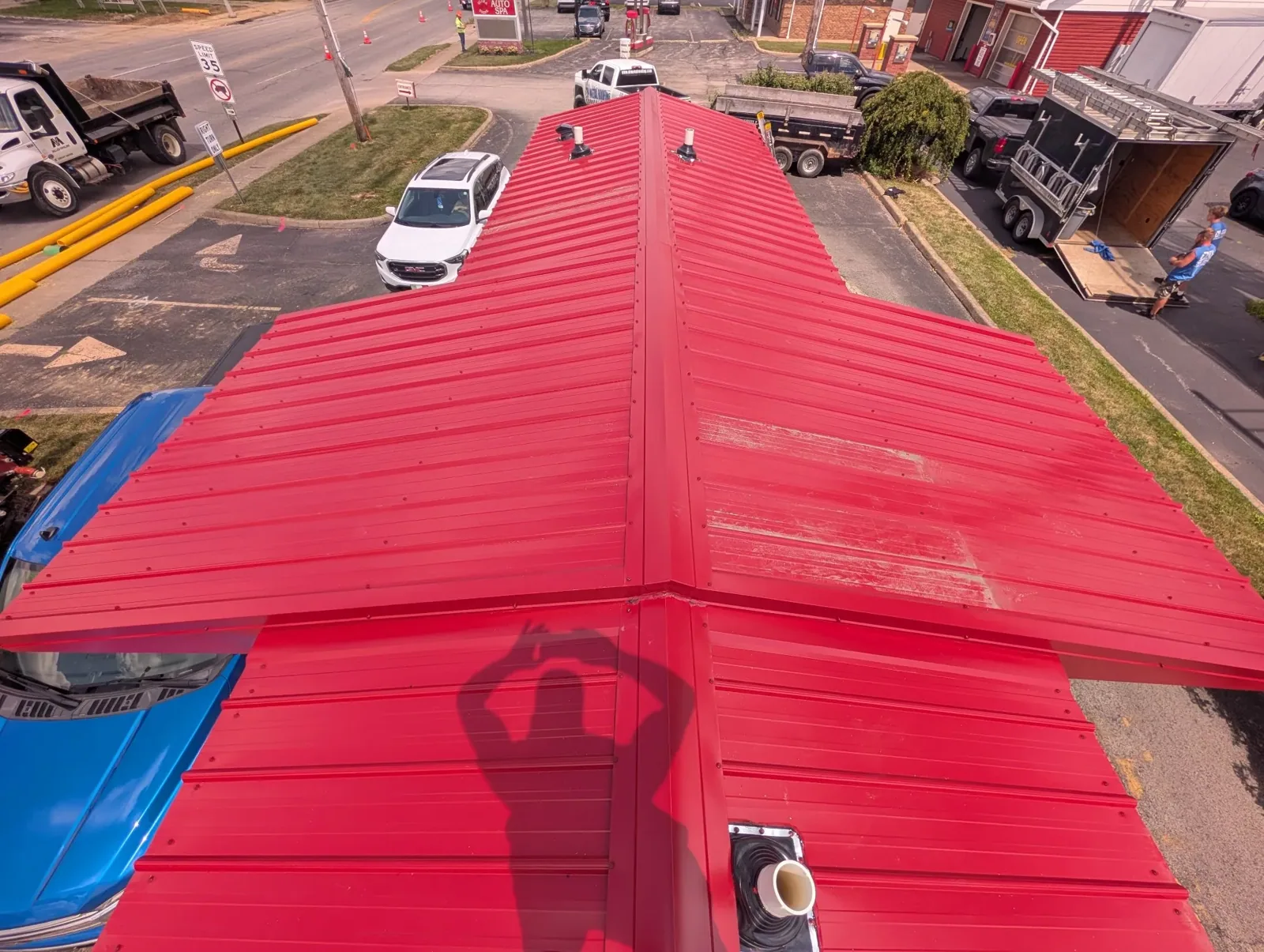
A weathered roof coating that has lost continuity can leave the darker substrate exposed in strips beside the seams. We inspect the surface, attachment, insulation and drainage before recommending a reflective roof. A lighter or reflective finish can change how the roof surface absorbs solar energy, but the result depends on the full assembly, building use and installed system. We document the existing material and the decision a cool-roof scope is meant to support.
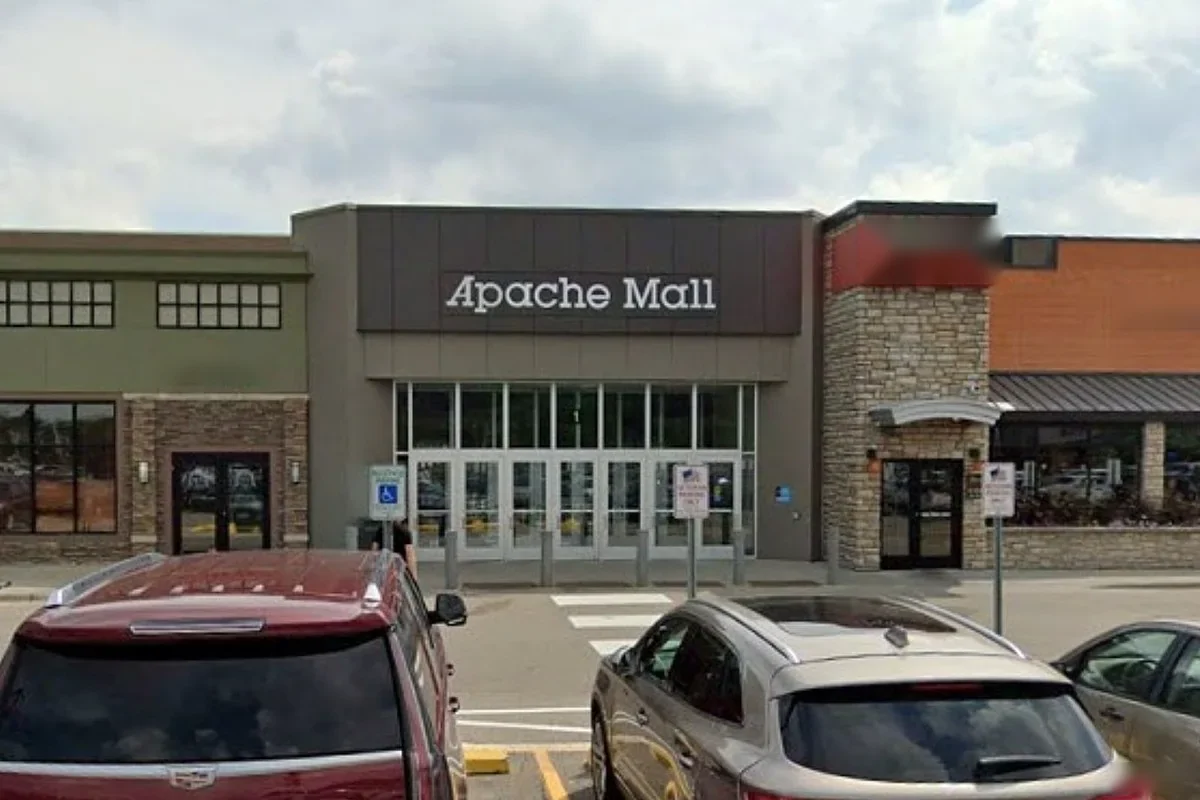
Rochester recorded a local high of 108°F on July 14, 1936. That historical extreme is useful climate context, not a current summer forecast or an energy-savings estimate. At a retail property near Apache Mall or a facility in the Rochester Technology Campus area, roof orientation, existing layers and operating hours still need to be checked at the building. A coating restoration review can determine whether the current assembly is suitable for a reflective finish or needs another scope.
Provide the Rochester property address, roof concern, system records and portfolio contact. We will map the assembly and return a scope that separates reflective finish from drainage and repair needs.
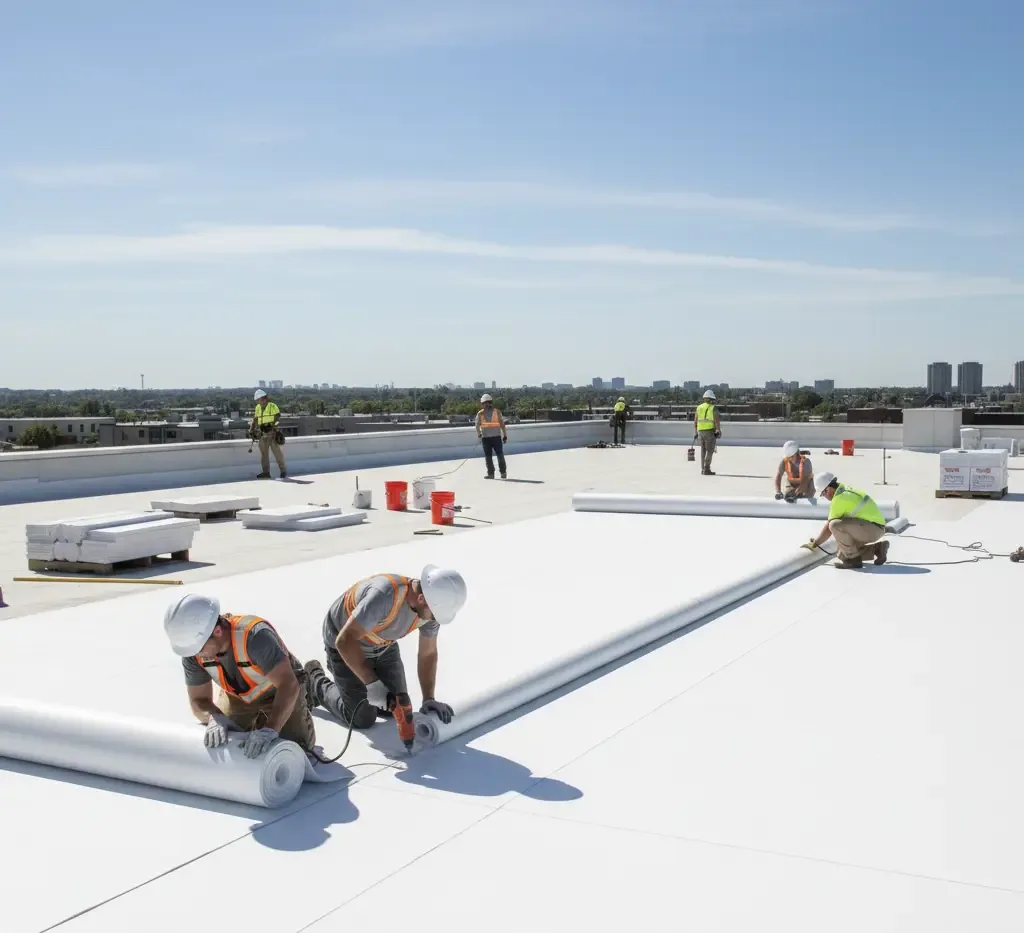
A cool roof can use a reflective membrane, a coating system or another roof assembly with specified surface properties. The selection begins with deck condition, insulation, slope, edge heights, drainage, fire requirements and the owner's performance priorities. A coating requires a suitable substrate and verified adhesion; a new membrane requires a compatible attachment and flashing plan. We compare the layers and details that will be installed, not color alone.
Any energy analysis also needs the building's insulation, HVAC operation, internal loads and hours of use. A roof surface is only one part of that calculation, so we do not promise a particular utility reduction from a color choice. Rochester's plan describes medical, office, retail, civic and industrial activity across the city. Those properties have different equipment, occupancy and temperature-control needs; we keep the estimate tied to the actual building. An owner considering a silicone coating system can compare it with a new TPO membrane after the existing assembly is identified.
We check seams, blisters, exposed reinforcement, chalking, loose coating, ponding, drains, terminations and prior repairs. The walk also records roof areas blocked by equipment or not safely accessible. A visual review can identify defects, but it cannot confirm that concealed insulation is dry. If that question could change a coating or reroof decision, we map potential test areas and explain what a core cut or moisture survey can establish.
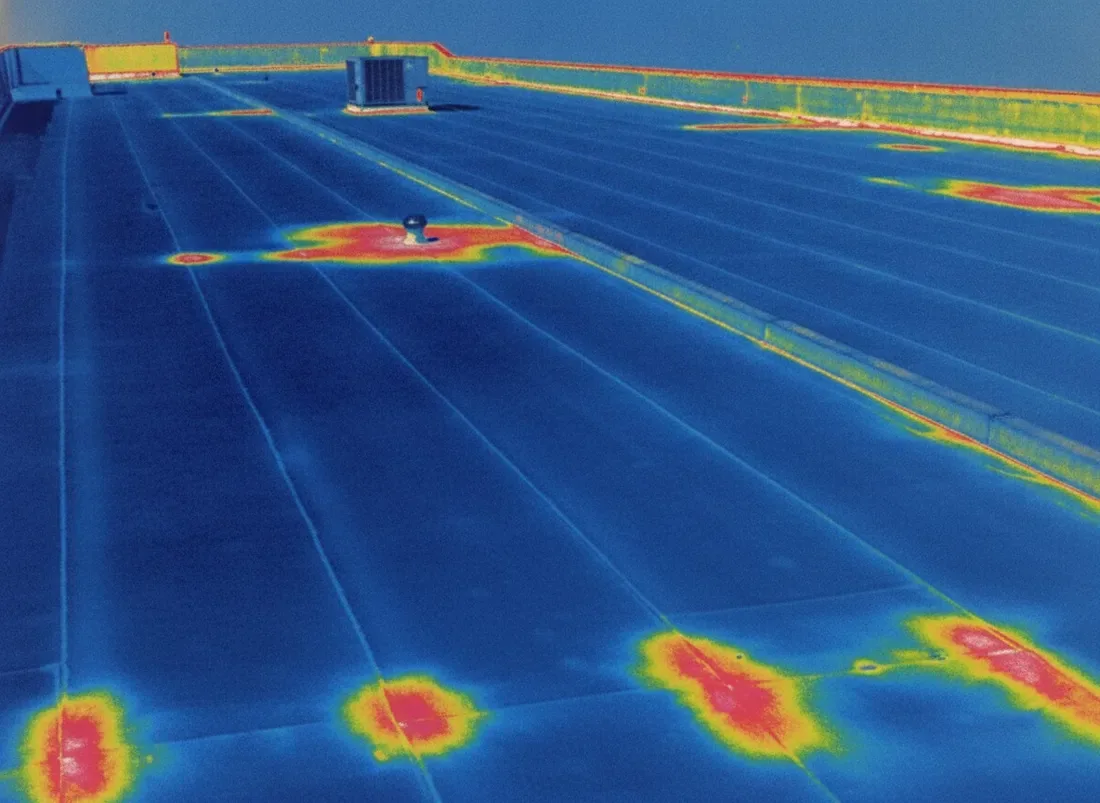
At a large retail or industrial property, broad areas may contain different materials or repair histories. We divide the roof plan into sections, note where conditions change and select representative tests only where the result can affect the recommendation. A clean patch in one area does not establish adhesion across an entire roof. The moisture survey can locate thermal patterns for follow-up, while a hands-on inspection checks the details that an image cannot confirm. Findings stay labeled as observation, test result or unresolved condition.
Reflective material does not replace drainage design. We review drain bowls, scuppers, crickets, overflow routes and low areas before specifying the new field surface. A coating may follow an existing depression without correcting it; a new assembly may change the height at a parapet, curb or door threshold. The scope lists those transitions and states whether tapered insulation, a drain change or localized correction is included.
Perimeter details carry the membrane or coating into metal, walls and equipment curbs. We check termination height, attachment and compatibility at each change in plane, then show the repair boundary on the roof plan. A drainage review can identify whether water needs a service correction or design change. If the existing assembly cannot support a restoration, the replacement scope can compare removal and new insulation with a qualified recover. Each option states the layers retained and the conditions that could change the plan.
We set work zones, material staging, equipment access and daily dry-in limits before opening the roof. Surface preparation, adhesive or fastener placement and membrane installation follow the selected system requirements. A reflective surface must be clean and continuous at seams, corners and penetrations; details receive the same inspection as the field. If moisture, poor adhesion or damaged deck appears, we record it and obtain direction before covering it.
Rochester's normal seasonal snowfall is 46.3 inches, with the main accumulation from December through March. That context makes drainage and winter work planning relevant, while actual weather and surface conditions control application timing. The schedule should preserve water pathways and safe access if conditions change during the shift. For an occupied retail or medical property, we coordinate deliveries, noise windows and routes with the building contact. A phased reroof plan can show how the work area moves while entrances and essential operations remain available.
The closeout file records the installed product and material sequence, tested areas, details repaired, drainage changes and any excluded section. Photographs show the surface, seams, transitions and drains before and after work. If an energy model or building measurement is used, its assumptions should accompany the roof record so a later reviewer can compare like conditions. The report distinguishes modeled expectations from measured operating results.
The Rochester Technology Campus review considers commercial, industrial or warehouse development scenarios alongside residential development. That planning context does not establish current roof conditions or energy use for a specific property. We use the building's actual records and operating information when preparing recommendations. A condition report can retain the baseline, portfolio date and maintenance items with the roof plan. At a Rochester Technology Campus property, the exact building and access contact still need to be identified before service is scheduled.
At completion, we inspect reflective coverage, seams, curbs, penetrations, metal edges and drainage. The record identifies any surface that was not included or could not be reached, along with the next maintenance step. If an owner is comparing utility use before and after installation, the review should account for weather, occupancy and HVAC changes instead of attributing every shift to the roof. We can preserve the installed-system information needed for that comparison.
To discuss a cool roof in Rochester, provide the property address, roof concern, available system records and portfolio contact. Include known leak points, access limitations and any operating data the owner wants to evaluate. We will inspect the assembly, identify the tests that could change the selection and return a scope for reflective restoration, recover or replacement. The proposal will define materials and transitions without treating a reflective finish as a substitute for a sound roof detail.
Other services, systems and buildings that often come up alongside this work in Rochester.
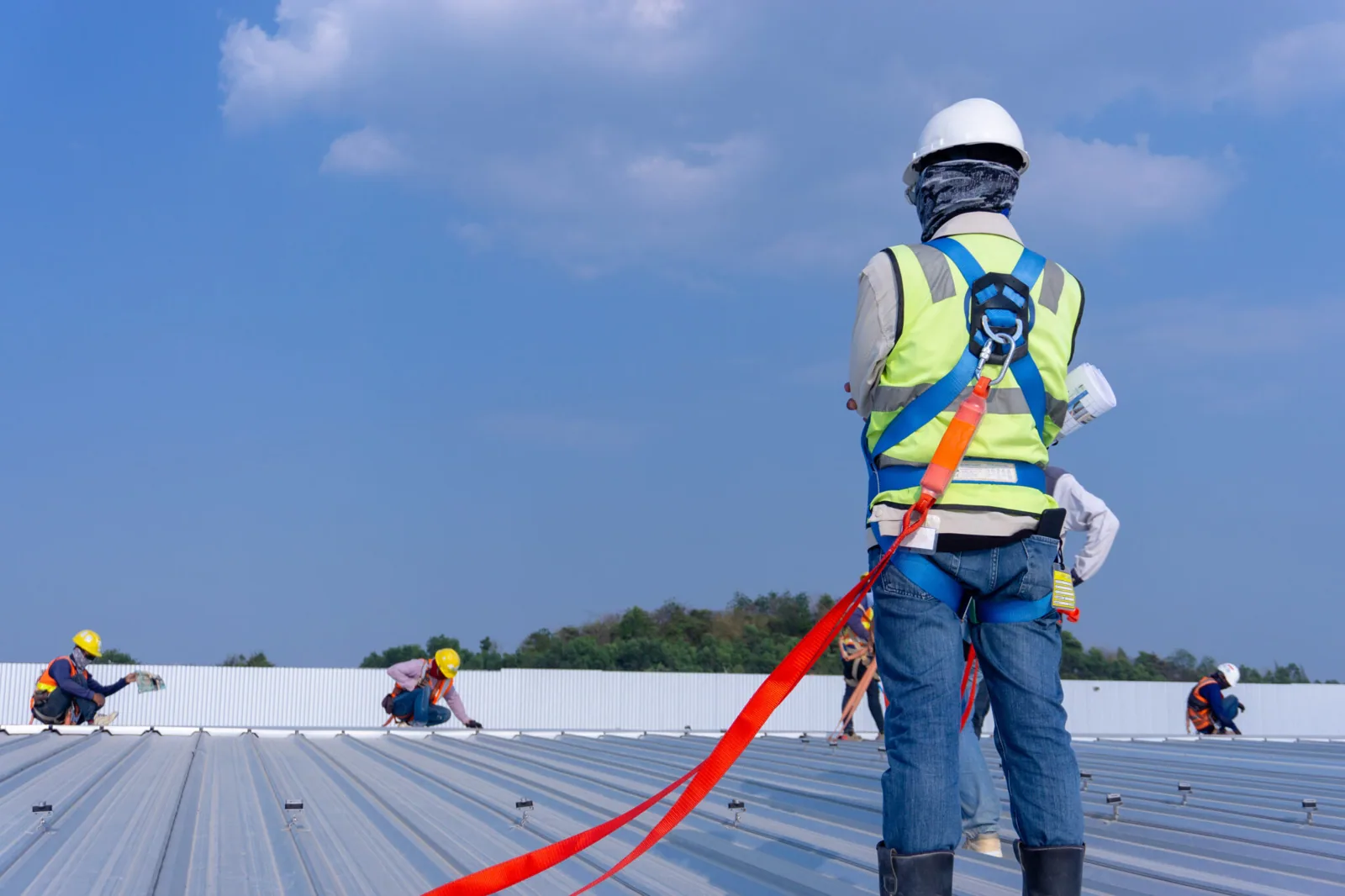
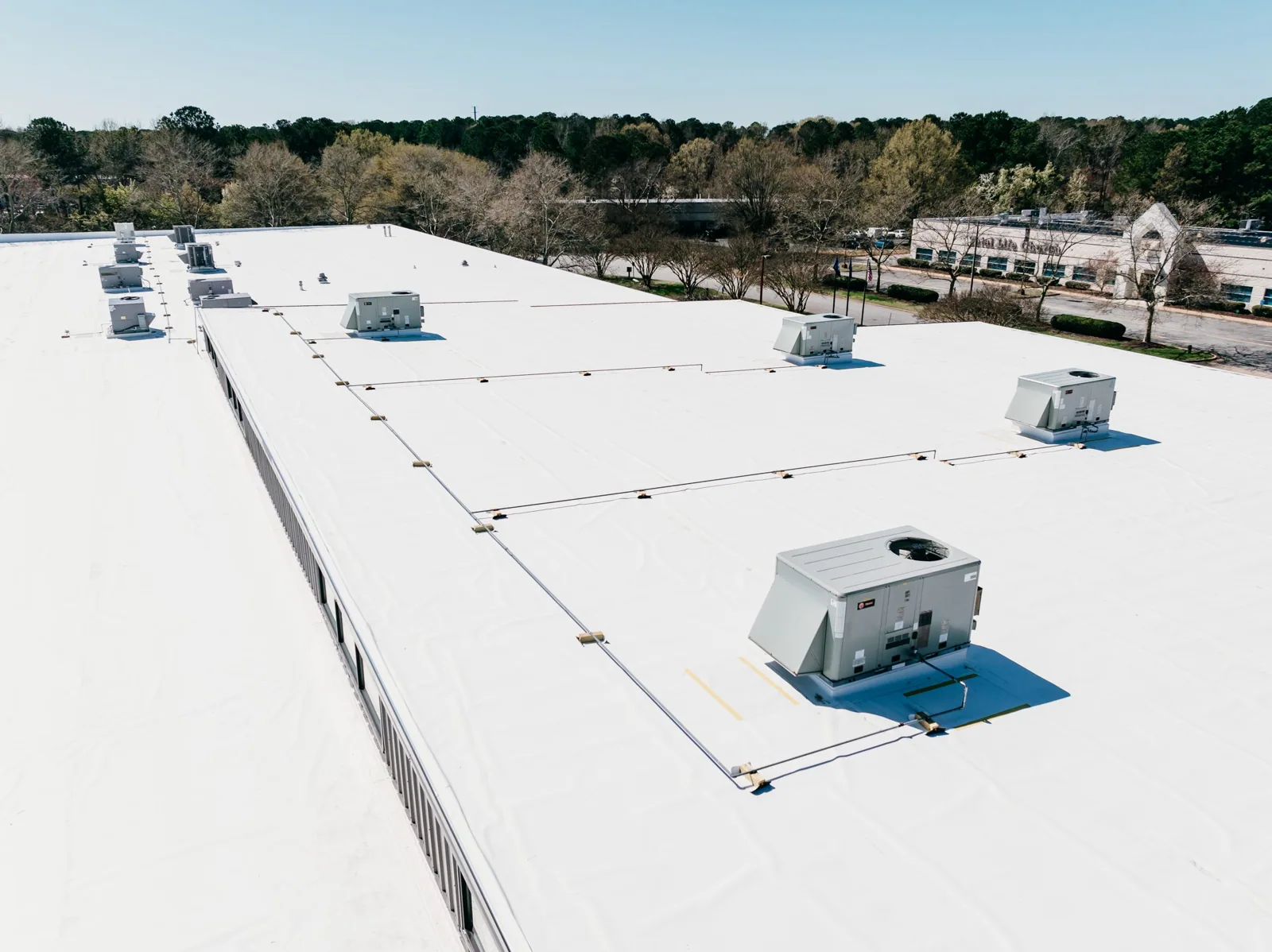
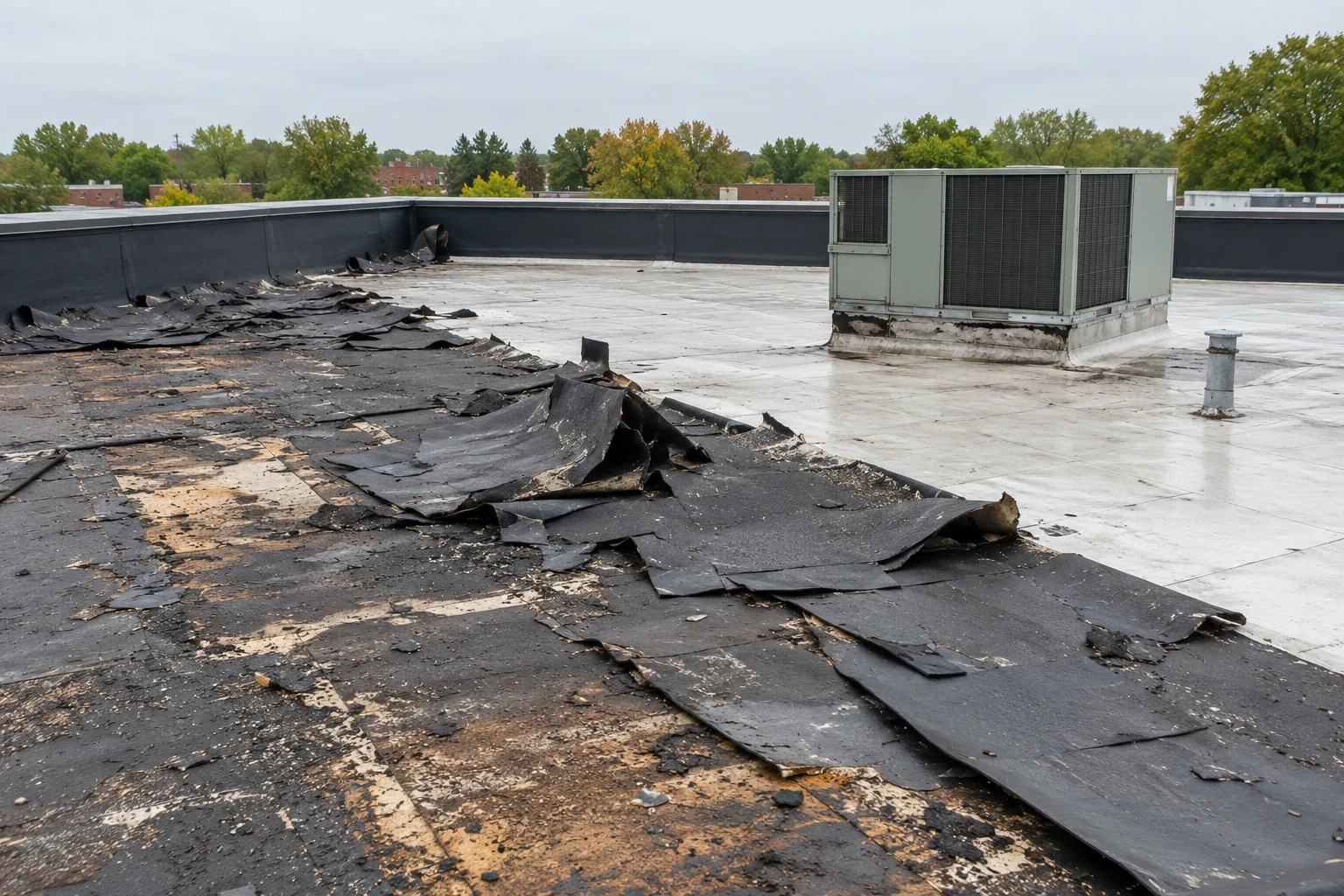

From distribution centers to clinics and schools, we roof the buildings Rochester depends on.
We cannot assign a savings figure from roof color alone. Building insulation, HVAC equipment, operating hours, internal loads and weather all affect energy use. We can document the roof assembly and coordinate a comparison using the owner's building data, with assumptions kept alongside the result.
Only after we identify the substrate, check its condition and test representative areas for compatibility. Wet insulation, loose material or failed flashing can make coating unsuitable. We map repairs and exclusions before proposing a system so the owner can compare restoration with recover or replacement.
The finish does not correct low points, blocked bowls or poor slope. We inspect drainage before installation and show any needed correction separately. Rochester's snowfall normal is climate context; roof elevations and the actual outlet path determine whether the assembly needs slope work.
Compare the existing layers, test results, insulation, slope, drainage, perimeter details, attachment, access and maintenance requirements. We state what each proposed system retains or replaces and identify conditions that remain unverified. That produces a useful comparison of complete assemblies rather than a finish sample alone.