Water is coming into the building right now
Call us and tell us where the water is showing up. We will get a crew on the roof to stop the leak and protect the space below.

Service Areas
Roof inspection and repair at West Transit Village in Rochester, with access planning, membrane checks, documented work limits, and maintenance decisions.
Call us and tell us where the water is showing up. We will get a crew on the roof to stop the leak and protect the space below.
We walk the roof, photograph what we find and give you a written scope with repair options before any work starts.
Rochester, MN
A roof edge above an active access route needs a measured inspection before a ladder or lift is placed. West Transit Village is a named DMC subdistrict on the western side of downtown Rochester, and the district was added as DMC planning evolved alongside mobility work. The city ties transit-oriented development to concentrated jobs, access and mixed-use centers. For a roof visit, those plans make the entry sequence worth confirming with the property contact before we mark the repair boundary.
We identify the building, inspect the membrane and record the details the crew can safely reach. A roof near Central Station or the University of Minnesota Rochester and Recreation area receives a separate scope and photo record. District planning does not tell us what membrane is installed or how a specific tenant operates, so we verify those conditions at the address.
Provide the West Transit Village address, roof concern, available system records and access contact. We will inspect the agreed area and return a documented scope.
We begin at the access point and trace the route to the reported leak or maintenance concern. On the roof, we inspect parapet metal, membrane termination, seam laps, curbs, penetrations and drains within the approved zone. A small opening near an edge can be driven by a loose termination, a failed splice or movement at the metal transition. We photograph those points in context and close detail so the owner can see why a repair is limited to one component or extends to the adjacent sheet.
Transit-oriented planning can shape public access at district level, but building rules are set at each property. The contact confirms escort, staging, delivery time, lift placement and any route that must remain clear. If the roof includes a locked enclosure or equipment block, we identify the area that needs additional access. A written inspection separates observed conditions from sections that were not available for review, giving the property team a usable record before work is priced.
The roof system determines how we prepare and close a repair. We confirm the field sheet through markings, attachment details or an appropriate test, then select a compatible weld, splice or adhesive. The patch extends past the damaged area to sound material, with corners and edges finished to suit the installed assembly. A TPO repair needs a different tie-in than a PVC or EPDM field sheet, so we do not build the work sequence around a guess based on color.
At the edge, we inspect membrane turn-up, coping attachment, joint cover and termination bar as a connected detail. If a seam failure appears away from the reported ceiling mark, we trace the likely water route and note whether opening the assembly would change scope. Membrane-puncture repair remains bounded to the puncture and stable surrounding material. Separate corrosion or loose metal is listed as its own item rather than folded into a patch allowance.
Before a crew starts, we agree where materials can be staged, which entrance needs protection and how the work area will be closed at day end. The plan names the point where a repair can pause safely if rain, wind or an unexpected layer changes the sequence. When a test opening is authorized, the owner knows its size and what evidence it is meant to reveal. That check prevents an approved seam repair from expanding into concealed work without a documented decision.
The seasonal snowfall normal for Rochester is 46.3 inches, with most accumulation between December and March. We schedule drain, edge and access reviews ahead of snow cover, then document the conditions observed at each property.
A single failed termination with dry, stable field material can support a focused repair. A broad moisture map, multiple leak paths or repeated edge movement may justify testing more than one roof zone. We show the owner the measured area, system identification and unresolved conditions, then compare a local repair with recovery or replacement where the evidence supports it. A replacement evaluation can consider tear-off, access, insulation and operating constraints without presuming that the district needs one uniform solution.
West Transit Village sits within the same broader DMC network as Downtown and the Heart of the City, but a portfolio schedule should preserve each address's own repair history. A roof asset register can keep dates, roof sections and outstanding tests attached to their properties. If preventive work is due, a maintenance visit can address verified drains, seams and metal details before they become a larger scope.
At closeout, we tie photographs to the work area and identify the installed material where it was confirmed. The record states whether the repair is permanent, whether any temporary seal remains, and which detail still needs owner direction or testing. If access stopped the inspection short of an edge or rooftop unit, that zone stays marked as unexamined. A condition report lets facilities staff carry the same roof-section labels into the next inspection or budget review.
Send the West Transit Village address, reported condition, system records and access contact. We will agree on the roof zone, confirm a safe route and return a repair or test scope with the opening and closure sequence described. Emergency response is available overnight, on weekends and holidays. When temporary protection is required, we show it as a separate completed action and identify the permanent work still needed.
Other services, systems and buildings that often come up alongside this work in Rochester.
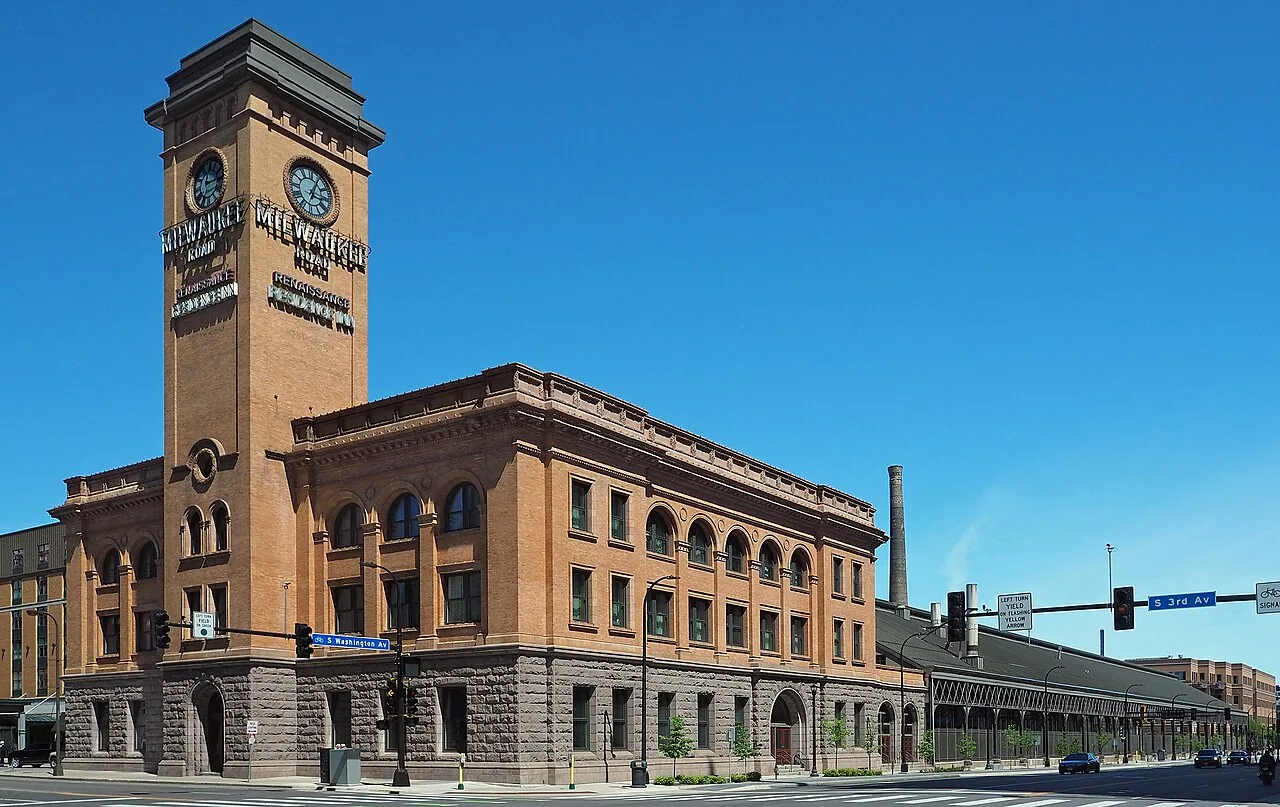
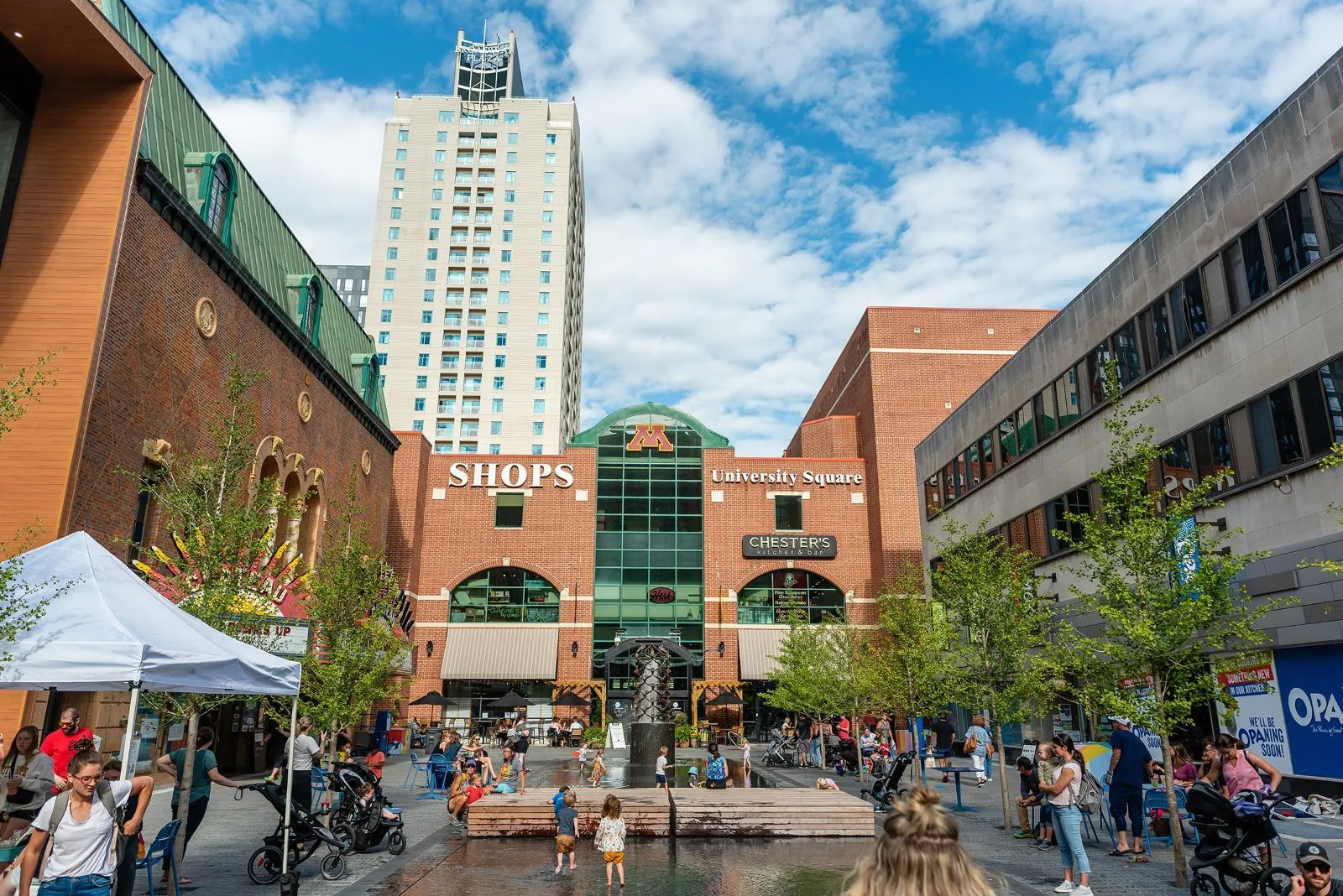
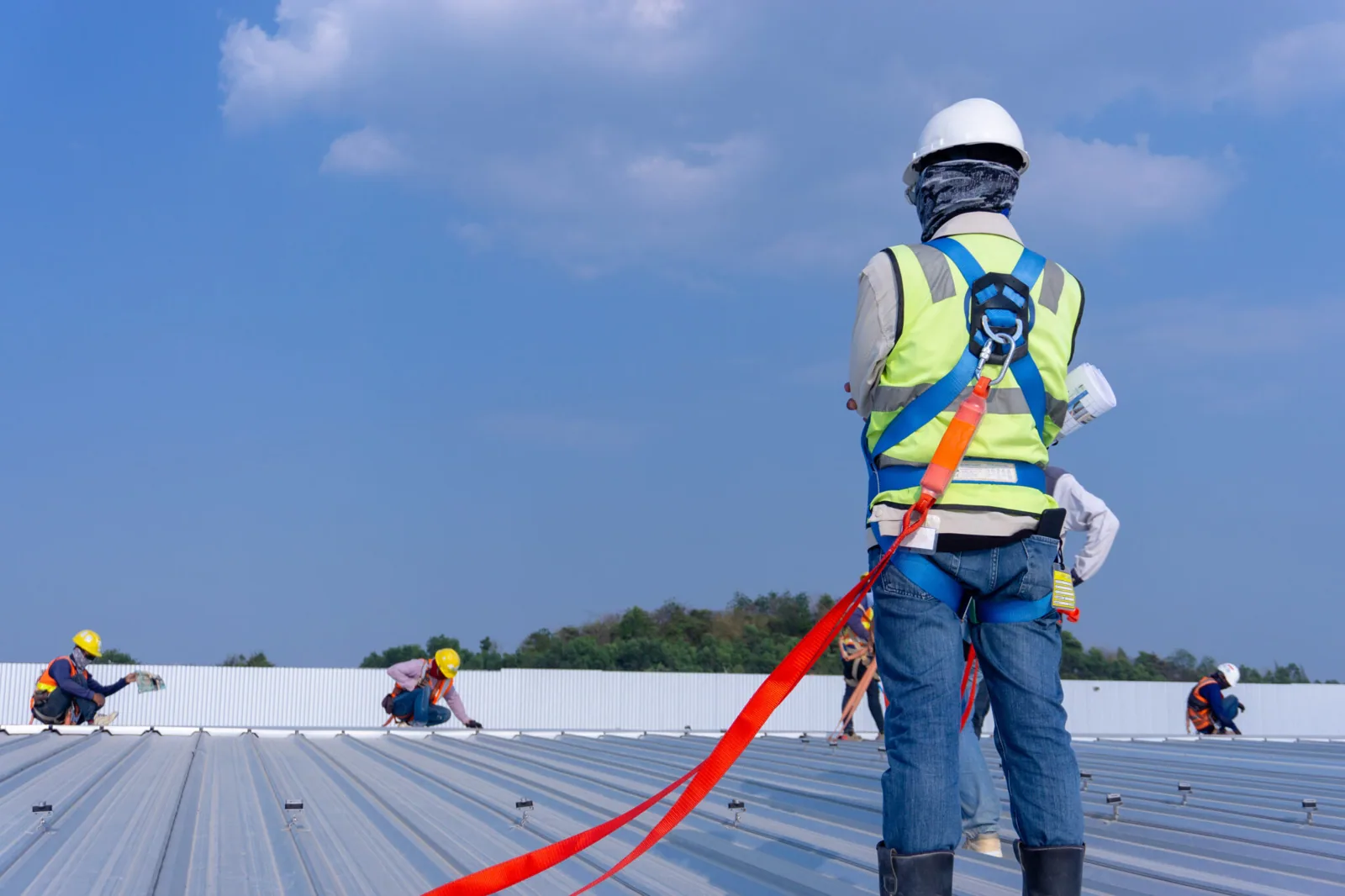
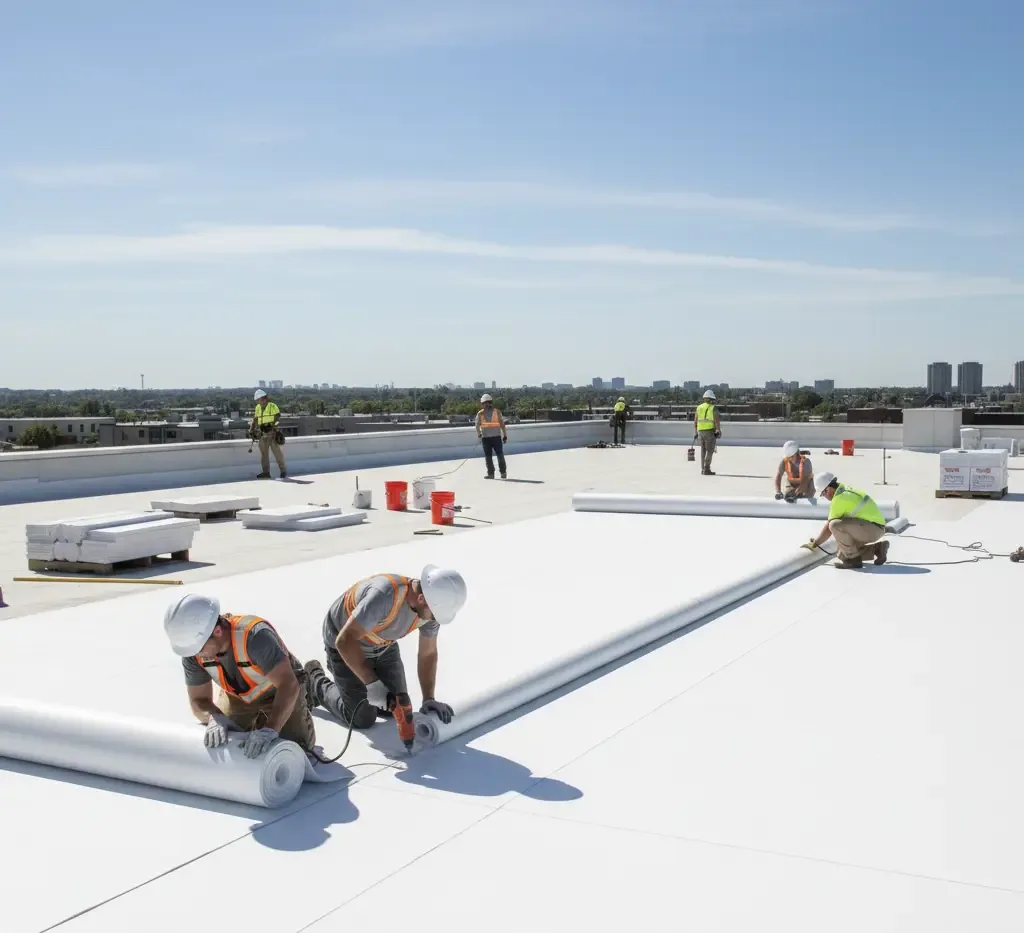
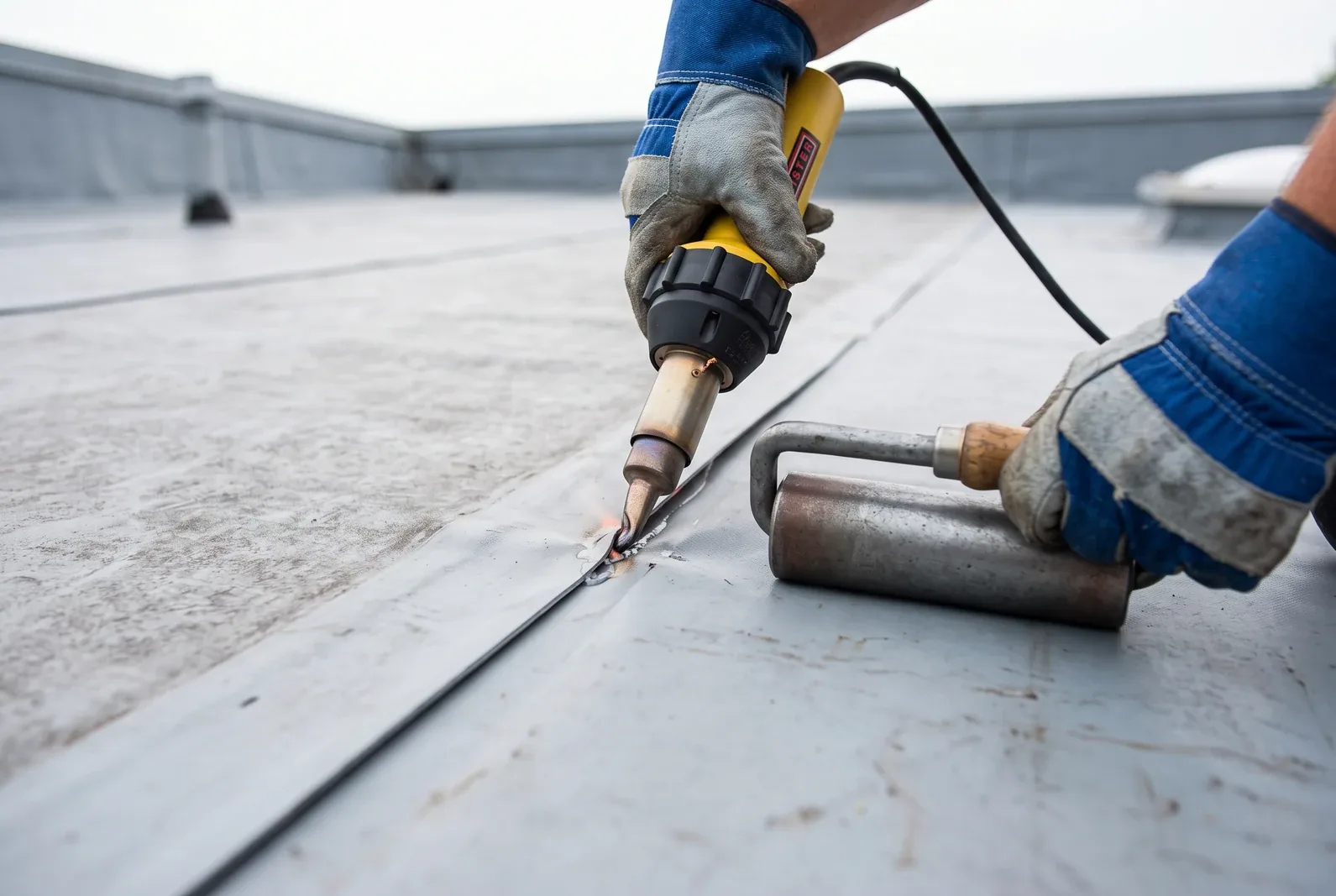
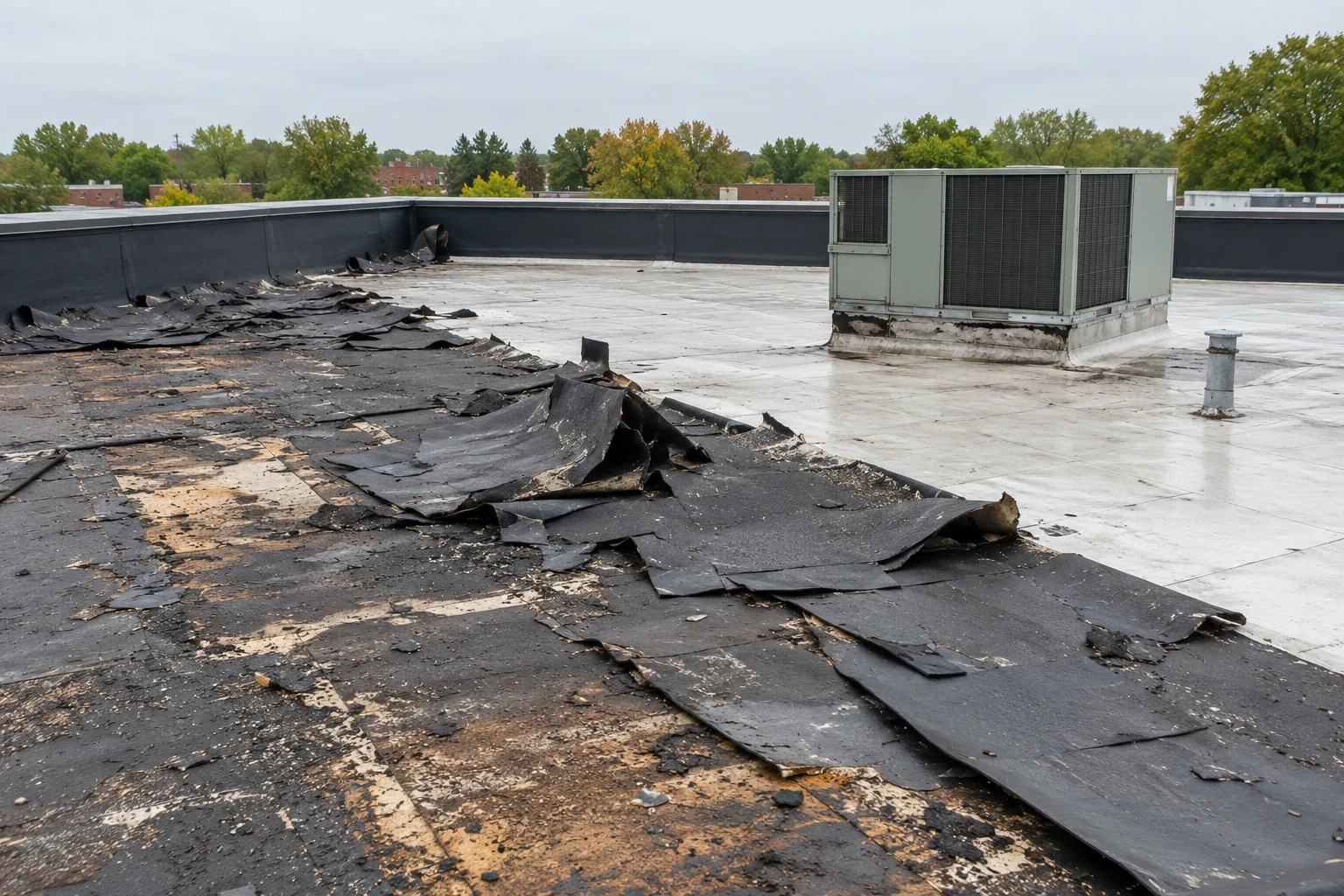


From distribution centers to clinics and schools, we roof the buildings Rochester depends on.
The plan describes district development and mobility, while the property contact confirms current access. We check entry, roof hatch, escort, staging and any route that must remain open. The visit record lists the access used and any roof zone that needs a separate arrangement.
The transition is inspected as a connected assembly. We check the field sheet, termination bar, coping joints, fasteners and substrate, then identify the component that has separated. The scope can keep a local membrane repair distinct from loose or corroded metal if both conditions are present.
Yes. We document the temporary tie-in, its location and the permanent detail still outstanding. The opening remains protected according to the agreed sequence while the owner resolves access, testing or material questions. Closeout records distinguish that stabilization from the final repair.
Wet insulation, a membrane that will not accept a compatible tie-in, or damage that continues beyond the visible edge can change quantity and sequence. We stop at the authorized boundary, photograph what was uncovered and request direction before adding concealed work.